Inside Westminster Abbey, a procession of 56 flags moves slowly down the nave — each one representing a nation in the Commonwealth, from the vast expanse of Canada to the tiny archipelago of Tuvalu. Schoolchildren sit alongside diplomats, hymns echo off medieval stone, and the Head of the Commonwealth delivers a message intended for 2.7 billion people scattered across every continent. Commonwealth Day is an annual observance that brings this extraordinary network of nations into sharp focus, reminding us that shared history — however complicated — can be a foundation for cooperation.
The Story Behind Commonwealth Day
The roots of Commonwealth Day reach back to the height of the British Empire. In the early 20th century, 24 May — Queen Victoria’s birthday — was celebrated as Empire Day across British territories. It was a day of patriotic pageantry: parades, flag-waving, and speeches about imperial unity. As the empire began to dissolve after the Second World War, and former colonies gained independence, the spirit of the celebration shifted. The word “empire” no longer fit the reality of a voluntary association of equal, sovereign nations.
On 18 December 1958, British Prime Minister Harold Macmillan announced in the House of Commons that Empire Day would be renamed Commonwealth Day. The change was more than cosmetic — it signalled a fundamental reorientation from imperial dominion to cooperative partnership. The day continued to be observed on 24 May for nearly two decades, but at a meeting of senior Commonwealth officials in Canberra in May 1976, a new fixed date was agreed: the second Monday of March. This timing was chosen partly because it did not clash with existing national holidays in member states and partly because March sits in a neutral season for the globally dispersed Commonwealth.
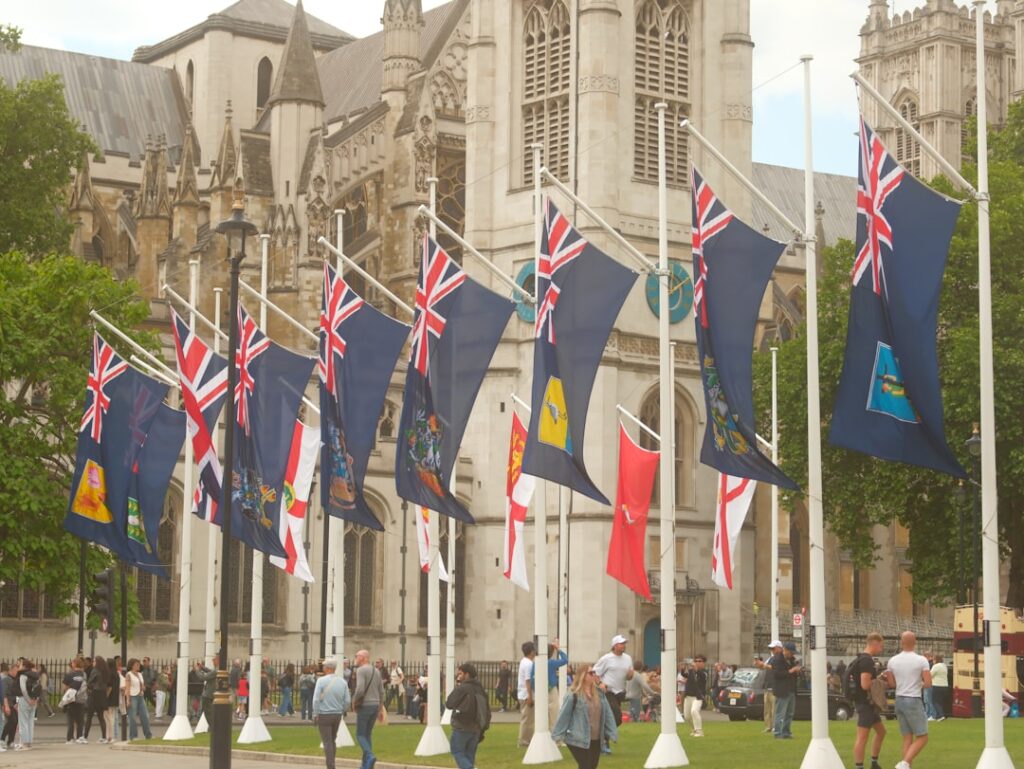
Since then, Commonwealth Day has evolved into a platform for discussing shared values: democracy, human rights, good governance, the rule of law, and sustainable development. The centrepiece is the annual Commonwealth Day Service at Westminster Abbey in London, held since 1972. His Majesty The King, as Head of the Commonwealth, attends alongside members of the Royal Family, Commonwealth High Commissioners, diplomats, faith leaders, and schoolchildren from across the United Kingdom. The service features music, readings, and the famous procession of flags representing all 56 member states. Parallel events — flag-raising ceremonies, cultural festivals, educational programmes — take place in Commonwealth countries around the world.
Each year carries a new theme. For 2026, the theme is “Unlocking opportunities together for a prosperous Commonwealth”, emphasising the need to create fair and inclusive opportunities for all citizens regardless of where they live. This focus on shared prosperity reflects the Commonwealth’s growing emphasis on economic cooperation, digital connectivity, and climate resilience — issues that bind small island nations and continental powers alike.
When and Where is Commonwealth Day Celebrated?
Commonwealth Day falls on the second Monday of March each year. In 2026, this is Monday, 9 March. The day is observed across all 56 Commonwealth member states, from the United Kingdom and Australia to India, Nigeria, and the Caribbean nations. The flagship event is the Commonwealth Day Service at Westminster Abbey in London, but celebrations range from flag-raising ceremonies at government buildings to school assemblies, cultural performances, and community gatherings worldwide.
| Year | Date |
|---|---|
| 2026 | Monday, 9 March |
| 2027 | Monday, 8 March |
| 2028 | Monday, 13 March |
| 2029 | Monday, 12 March |
| 2030 | Monday, 11 March |
Traditions and Customs
Commonwealth Day is marked by a combination of formal ceremony and grassroots celebration:
- Westminster Abbey Service — The annual multi-faith service at Westminster Abbey is the most high-profile event of the day. Attended by the King, Royal Family members, and dignitaries, it features a procession of all 56 Commonwealth flags, hymns, readings, and music reflecting the diversity of the Commonwealth’s cultures.
- The King’s Commonwealth Day message — As Head of the Commonwealth, the monarch delivers a written message reflecting on the year’s theme. The Commonwealth Secretary-General also issues an accompanying statement.
- Flag-raising ceremonies — Government buildings, schools, and institutions across Commonwealth nations raise the Commonwealth flag alongside their national flags, often accompanied by brief ceremonies and pledges of commitment to shared values.
- Cultural and educational events — Schools across the Commonwealth hold assemblies, lessons, and creative projects exploring what it means to be part of the Commonwealth family. Community groups organise festivals showcasing food, music, art, and traditions from member nations.
- Commonwealth Big Lunch — In the United Kingdom, the “Big Lunch” concept has expanded to include Commonwealth Day celebrations, encouraging neighbours and communities to share a meal and learn about the 56 nations that make up the Commonwealth.
Ways to Celebrate Commonwealth Day
You do not need to live in a Commonwealth country to appreciate the day’s message of cooperation and diversity:
- Learn about a Commonwealth country you have never visited — The Commonwealth spans Africa, Asia, the Americas, Europe, and the Pacific. Pick a member state at random and spend the day exploring its history, culture, food, and music.
- Watch the Westminster Abbey Service — The service is typically broadcast live, giving anyone in the world the chance to experience the flag procession and hear the King’s Commonwealth Day message.
- Cook a dish from a Commonwealth nation — From Jamaican jerk chicken to Indian biryani, Australian lamingtons to Kenyan ugali, the culinary traditions of the Commonwealth are vast and delicious.
- Host a Commonwealth quiz — Test your friends’ knowledge of the 56 member states. How many can they name? What are the smallest and largest by population? Which was the most recent to join?
- Explore the Commonwealth Games — Research the history of the Commonwealth Games, which bring together athletes from member nations in a celebration of sport and unity. If you enjoy National Sportsmanship Day, the Games are a natural extension of that spirit.
- Read literature from Commonwealth writers — The Commonwealth has produced some of the world’s greatest authors, from Chinua Achebe and Margaret Atwood to Arundhati Roy and Chimamanda Ngozi Adichie. Pick up a novel from a writer whose country you would like to know better.
Facts and Figures
- The Commonwealth comprises 56 member states with a combined population of approximately 2.7 billion people — nearly a third of the world’s population.
- The smallest Commonwealth nation by population is Nauru, with around 10,000 people; the largest is India, with over 1.4 billion.
- The Commonwealth Day Service has been held at Westminster Abbey since 1972, making the 2026 service the 54th at that venue.
- Before being renamed Commonwealth Day in 1958, the holiday was known as Empire Day and was observed on 24 May, Queen Victoria’s birthday.
- The most recent country to join the Commonwealth was Gabon, which became a member in 2022 at the Commonwealth Heads of Government Meeting in Kigali, Rwanda.
Frequently Asked Questions
What is Commonwealth Day?
Commonwealth Day is an annual observance marking the shared history, values, and aspirations of the 56 member states of the Commonwealth of Nations. It is celebrated on the second Monday of March with events worldwide, centred on a flagship service at Westminster Abbey in London.
When is Commonwealth Day in 2026?
Commonwealth Day falls on Monday, 9 March 2026.
Is Commonwealth Day a public holiday?
Commonwealth Day is not a public holiday in most member states, including the United Kingdom. However, it is a public holiday in some nations, including Belize, Fiji, and parts of Canada. Government and civic organisations may hold events, but businesses and schools generally remain open in the UK.
Spread the Word
Share Commonwealth Day with your community using #CommonwealthDay and #CommonwealthDay2026. Whether you mark the occasion with a flag-raising, a meal from a Commonwealth country, or by learning about a nation you have never heard of, every bit of awareness helps celebrate this remarkable network of cultures, histories, and shared ambitions.
Related Awareness Days
- International Day of Happiness — Celebrated on 20 March, this UN observance promotes wellbeing across borders, echoing the Commonwealth’s focus on shared prosperity and human development.
- St Patrick’s Day — Falling on 17 March, this cultural celebration has deep connections to Commonwealth nations with Irish diaspora communities, from the United Kingdom to Australia and Canada.
- World Book Day — Held on 5 March in 2026, this event celebrates literature — a natural companion to Commonwealth Day given the extraordinary literary tradition spanning Commonwealth nations.
Links

Related Events

March 1 - March 30

March 1 - March 30
March 1 - March 30

March 1 - March 30