CalendarAwareness campaign
World Breastfeeding Week
Sunday 1 August to Saturday 7 August 2027
ConfirmedDate confirmed with worldbreastfeedingweek.org, checked 18 November 2026.
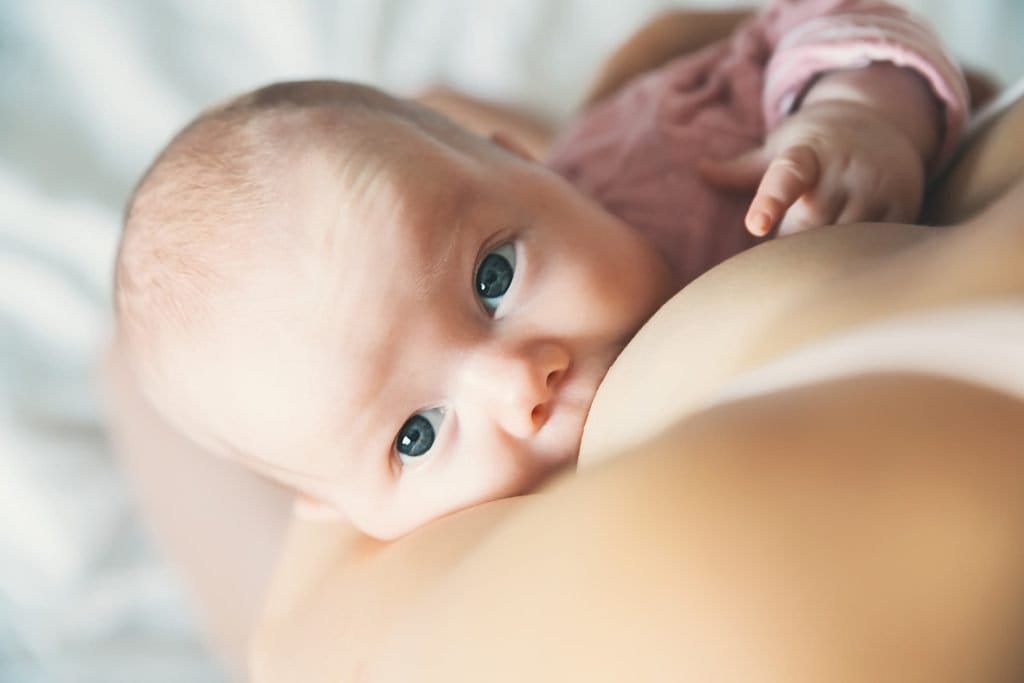
World Breastfeeding Week is an annual global campaign coordinated by the World Alliance for Breastfeeding Action to encourage and support breastfeeding.
- Rule
- 1 August every year
- Length
- 7 days
- Type
- Awareness campaign
- About
- Children and family, Health
- Standing
- Official United Nations observance
- Run by
- World Alliance for Breastfeeding Action
- Observed in
- Worldwide
- Search rank among awareness campaigns
- UK: 85th of 618 · US: 76th of 618
- Official website
- worldbreastfeedingweek.org
- Official hashtag
- #WBW2026
Download the 2027 template Get the data Every date on this site as an editable calendar, or as an API and data feed.
When interest builds
Interest starts around 19 June, 43 days out. Half of it has arrived by 12 July.
How big it is
- US29%
- India17%
- UK12%
- Australia5%
- United Arab Emirates3%
Dates by year
| 2026 | Saturday 1 August to Friday 7 August 2026 |
|---|---|
| 2027 | Sunday 1 August to Saturday 7 August 2027 |
| 2028 | Tuesday 1 August to Monday 7 August 2028 |
What is World Breastfeeding Week?
World Breastfeeding Week (WBW) is an annual global campaign coordinated by the World Alliance for Breastfeeding Action (WABA), in partnership with the World Health Organization (WHO) and UNICEF. Since its inception in 1992, WBW has aimed to protect, promote, and support breastfeeding worldwide. The week serves as a platform to raise awareness about the benefits of breastfeeding and to advocate for supportive environments that enable mothers to breastfeed successfully.
When is World Breastfeeding Week?
World Breastfeeding Week runs from 1 to 7 August every year. In 2027 it begins on Sunday 1 August and ends on Saturday 7 August.
Not every country uses those dates. WABA's frequently asked questions say the week is officially 1 to 7 August but that "some countries choose to celebrate it at different times of the year". Canada is one example: the Baby-Friendly Initiative Ontario says National Breastfeeding Week in Canada runs from 1 to 7 October each year.
The 2026 theme
The 2026 theme was Breastfeeding for a sustainable start in life: strengthen what works. The WHO's 2026 campaign page says it "focuses on tracking progress, evaluating impact, and scaling proven approaches that improve breastfeeding outcomes".
WABA has aligned the week with the United Nations Sustainable Development Goals since 2016. Its 2026 campaign site explains that 2026 was the start of the third cycle of that work, concentrating on nutrition, food security and poverty reduction, and on what is working in countries that report good progress on breastfeeding. WABA's four stated objectives for 2026 were to inform people about the importance of tracking progress, anchor breastfeeding in policies and guidelines, engage individuals and organisations, and galvanise action using lessons learnt.
Why World Breastfeeding Week Matters
The health case is set out in the WHO's fact sheet on infant and young child feeding, dated 4 August 2026. WHO and UNICEF recommend that infants start breastfeeding within one hour of birth, are fed only breast milk for the first six months, and continue breastfeeding up to two years of age or beyond alongside safe complementary foods. The same fact sheet says nearly 400,000 deaths of children under five could be prevented every year if those recommendations were met, and that longer breastfeeding reduces a mother's risk of ovarian and breast cancer.
The WHO's campaign page adds that fewer than half of infants under six months old are currently exclusively breastfed. The WHO's 2026 campaign called on governments, health systems, workplaces, communities, civil society organisations and families to strengthen support for breastfeeding.
How to Get Involved in World Breastfeeding Week
WABA publishes a set of campaign materials on worldbreastfeedingweek.org each year. For 2026 these were:
- Action folder: the campaign document for the year, downloadable as a PDF in several languages.
- Logo and poster: the official artwork for the year.
- Social media kit: guidance for advocacy before, during and after the week, with the year's hashtags, which in 2026 included #WBW2026.
- Pledge and pledge map: organisers send WABA details of a planned activity, virtual or in person, and it is shown on a public map. WABA also asks organisers to report on their event afterwards.
The materials come with conditions that planners should read first. WABA's copyright notice says the logo and materials must not be used in any event or activity sponsored, supported or organised by companies that make, distribute or market breastmilk substitutes, feeding bottles or teats, and that written consent is needed before any commercial use.
History of World Breastfeeding Week
World Breastfeeding Week was first celebrated in 1992, following the 1990 Innocenti Declaration by WHO and UNICEF, which recognised the importance of breastfeeding for child health and development. Since then, WBW has grown into a global campaign, each year focusing on a specific theme to address various aspects of breastfeeding support and promotion. According to WABA, a World Health Assembly resolution in 2018 endorsed the week as an important breastfeeding promotion strategy.
Links
Related awareness days
- Group B Strep Support (GBSS) Awareness MonthAwareness campaignConfirmed
- National Breastfeeding MonthAwareness campaignConfirmed
- NICU Awareness MonthAwareness campaignConfirmed
- Foetal Alcohol Spectrum Disorders National Awareness DayAwareness campaignConfirmed
- National School Backpack Awareness DayAwareness campaignBy convention
- National Neonatal Nurses DayProfessional recognitionTo be confirmed
More from the calendar
August awareness daysInternationalCommunity & Inclusion AwarenessHealth & Wellbeing AwarenessFull calendar
From the Almanac
Record 61627. Guide last edited 19 November 2026. Spotted a wrong date? Tell us and we will check it with the organiser.
Get this record as data