CalendarNovelty day
National Draw A Dinosaur Day
Saturday 30 January 2027
By conventionNo organisation sets this date. Independent calendars agree on it, checked 18 November 2026.
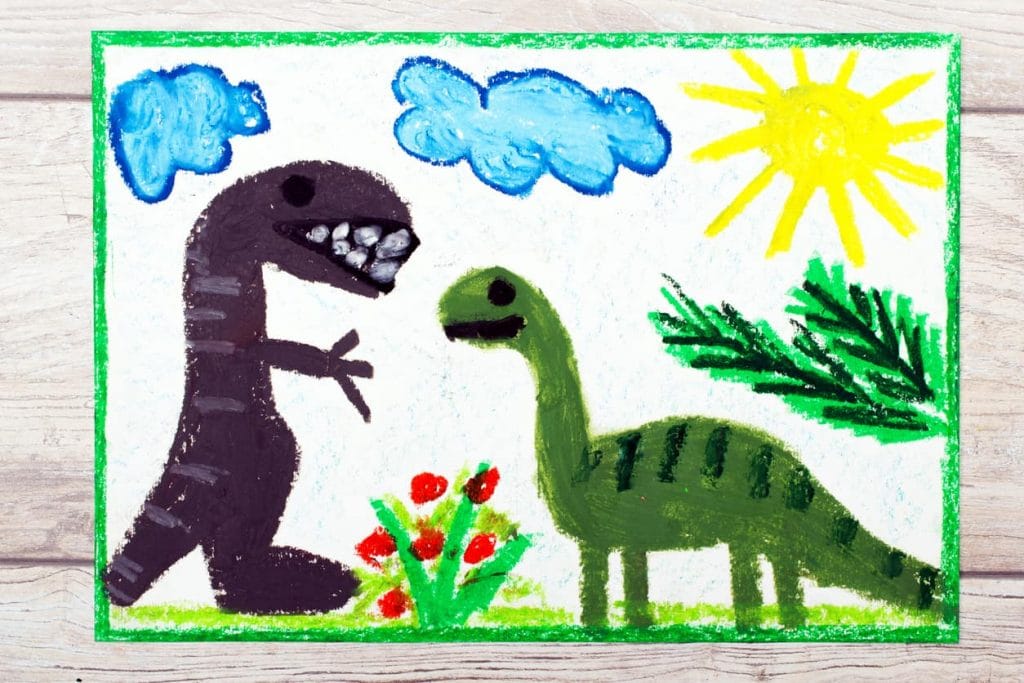
A light hearted day inviting people of all ages to pick up a pen or paint and draw a dinosaur.
- Rule
- 30 January every year
- Length
- One day
- Type
- Novelty day
- About
- Arts and culture
- Standing
- No owner; kept by custom
- Search rank among novelty days
- UK: 168th of 356 · US: 236th of 356
- Official website
- port.ac.uk
- Hashtag
- #NationalDrawADinosaurDay
Download the 2027 template Get the data Every date on this site as an editable calendar, or as an API and data feed.
When interest builds
Interest starts around 27 January, 3 days out. Half of it has arrived by the day itself.
How big it is
Dates by year
| 2026 | Friday 30 January 2026 |
|---|---|
| 2027 | Saturday 30 January 2027 |
| 2028 | Sunday 30 January 2028 |
What is National Draw A Dinosaur Day?
National Draw A Dinosaur Day is an informal creative day held on 30 January each year, started in the United States by Todd Page, on which anyone of any age or ability is invited to draw a dinosaur. There is no theme, no competition and no organisation behind it: the only instruction is to draw one and, if you like, to share it.
The day is popular with primary schools, libraries and museums because it joins two things children are already keen on, drawing and dinosaurs, and because it needs nothing more than paper and a pencil.
History of National Draw A Dinosaur Day
The day dates from the mid-2000s. The commonly repeated account is that Todd Page began it in 2007 after drawing dinosaurs to pass the time in an anthropology class and encouraging his classmates to do the same. That story appears on many calendar websites but none of them cites an original source for it.
What is documented is that the idea spread online. In January 2013 the Seattle newspaper The Stranger reported that Page had created the day "for the joy of drawing and dinosaurs", that it had by then been running for about seven years, and that nearly 1,000 dinosaur drawings had been submitted the previous year through the day's website and Facebook event. The original website no longer appears to be maintained, and the day now continues mainly through schools and social media.
People have been drawing dinosaurs for almost as long as science has known about them. According to the palaeontological artist Dr Mark Witton of the University of Portsmouth, the oldest known restoration of a dinosaur dates from 1831 and shows Megalosaurus, the first dinosaur to be named. Pictures of that one animal have changed repeatedly since: it was drawn first as a gigantic lizard, then as an upright, bear-like animal on four legs, and eventually as the two-legged, short-armed predator shown today.
How to take part in National Draw A Dinosaur Day
Any drawing counts. For those who want to make theirs more accurate, the University of Portsmouth has published advice from Dr Witton:
- Check it is a dinosaur. Pterosaurs, marine reptiles and mammoths are not dinosaurs. Birds are, and they are the only dinosaurs still alive.
- Start from the skeleton. Skeletal reference drawings are widely available and show the real proportions of each species.
- Build from simple shapes. Block in the body, then add the outline, colour, light and shadow, keeping the light coming from one direction.
- Look at living animals. Palaeoartists study modern wildlife to fill the gaps that fossils cannot, so a trip to a park, zoo or natural history museum is useful research.
- Accept that nobody knows exactly. Reconstructions aim to be scientifically plausible, and the accepted look of a species changes as new evidence is found.
Teachers and parents can turn the day into a short project by asking children to pick one species, find out when and where it lived, and label their drawing with three facts.
Sources
Related awareness days
- Walt Disney’s BirthdayNovelty dayConfirmed
- National Emo DayNovelty dayBy convention
- Dragon Appreciation DayNovelty dayBy convention
- Winnie The Pooh DayNovelty dayBy convention
- Pinocchio DayNovelty dayCross-checked
- National Crayon DayNovelty dayBy convention
More from the calendar
January awareness daysArts & Culture AwarenessArts, Culture & HeritageFun & Quirky Awareness DaysFull calendar
From the Almanac
Record 41413. Guide last edited 18 November 2026. Spotted a wrong date? Tell us and we will check it with the organiser.
Get this record as data