IDAHOBIT 2026
May 17

About IDAHOBIT 2026
IDAHOBIT — the International Day Against Homophobia, Biphobia and Transphobia — takes place on 17 May each year. Observed in more than 150 countries and territories worldwide, it marks the anniversary of the World Health Organization’s 1990 decision to remove homosexuality from its International Classification of Diseases. The 2026 theme is “At the Heart of Democracy,” a call to recognise that genuine democratic societies must guarantee equity and justice for LGBTQIA+ communities.
What is IDAHOBIT?
IDAHOBIT stands for the International Day Against Homophobia, Biphobia and Transphobia. It is a global awareness day dedicated to challenging discrimination, prejudice and violence directed at lesbian, gay, bisexual, transgender and intersex people. The day is coordinated internationally through an Advisory Group and, since 2023, its global secretariat has been hosted by ILGA World, the International Lesbian, Gay, Bisexual, Trans and Intersex Association. IDAHOBIT is not a single centralised campaign but rather a decentralised mobilisation moment — communities across the globe are free to organise events, campaigns and actions that reflect their own local contexts and priorities.
When is IDAHOBIT?
IDAHOBIT falls on 17 May every year. In 2026, that is a Sunday. The date is fixed and does not change, as it commemorates the specific date in 1990 when the WHO declassified homosexuality as a mental disorder.
| Year | Date |
|---|---|
| 2025 | Saturday, 17 May |
| 2026 | Sunday, 17 May |
| 2027 | Monday, 17 May |
| 2028 | Wednesday, 17 May |
| 2029 | Thursday, 17 May |
The 2026 Theme: “At the Heart of Democracy”
Each year, the IDAHOBIT Advisory Committee selects a theme to focus global attention. The 2026 theme — “At the Heart of Democracy” — was announced on 18 November 2025 following extensive consultations with regional and global LGBTQIA+ networks. It responds to a growing trend of authoritarian governments implementing exclusionary policies that target sexual orientation and gender identity rights. The theme frames LGBTQIA+ equality as inseparable from functioning democracy: where the rights of any minority are undermined, democratic values are weakened for everyone.
The Advisory Committee described the theme using a horticultural metaphor, arguing that “the soil of truly democratic societies must be rich in meaningful equity and justice for all, fostering the flourishing of the entire community.” Exclusionary policies, by contrast, act as invasive weeds that poison democratic spaces and erode public trust in institutions.
Why IDAHOBIT Matters
Despite significant legal and social progress in many countries, LGBTQIA+ people continue to face criminalisation, discrimination and violence worldwide. Consensual same-sex acts remain illegal in more than 60 countries. Even in nations with legal protections, hate crimes, workplace discrimination and barriers to healthcare persist. IDAHOBIT provides a focal point for drawing attention to these realities and pushing for change at every level — from individual attitudes to international policy.
The day also serves as a reminder that progress is not irreversible. In recent years, several countries have rolled back previously established protections, introduced so-called “anti-propaganda” laws, or restricted the rights of transgender people. IDAHOBIT’s annual recurrence keeps these issues visible and gives communities, organisations and governments a shared moment to recommit to equality. If you believe in building inclusive communities, you may also want to mark Pride Month in June, which celebrates LGBTQIA+ identity and solidarity across the globe.
History of IDAHOBIT
The concept of a global day against homophobia was first proposed in 2004 by French academic and activist Louis-Georges Tin. Tin launched a year-long campaign to build support for the initiative, gathering endorsements from individuals and major international organisations including the International Lesbian and Gay Association (ILGA) and the International Gay and Lesbian Human Rights Commission (IGLHRC). The petition drew broad backing, and the first International Day Against Homophobia was held on 17 May 2005.
The date was deliberately chosen to honour a pivotal moment in LGBTQIA+ history. On 17 May 1990, the World Health Organization voted to remove homosexuality from the International Classification of Diseases (ICD), where it had been listed as a mental disorder. That decision marked a turning point — an acknowledgement by the world’s leading health body that homosexuality is a natural variation of human sexuality, not a pathology to be treated or cured.
Louis-Georges Tin served as the Committee Chairperson until his resignation in September 2013. Over the following years, the day’s scope expanded. “Transphobia” was added to the title in 2009, and “Biphobia” followed in 2015, reflecting a growing understanding that discrimination takes many forms across the spectrum of sexual orientation and gender identity. The acronym IDAHOBIT became widely adopted to encompass the full name. Since January 2023, the day’s global coordination has been managed by ILGA World, which provides resources, supports local initiatives and documents events across the world.
Global Recognition and Reach
IDAHOBIT has gained substantial institutional recognition since its founding. The European Parliament passed a resolution supporting the day in 2006, and numerous United Nations agencies — including the Office of the High Commissioner for Human Rights and the UN Development Programme — have formally acknowledged it. By 2016, events were being held in more than 130 countries. That figure has since grown to 155 countries and territories, including 35 where consensual same-sex acts remain criminalised. In these contexts, IDAHOBIT actions often carry significant personal risk for organisers and participants, making their visibility all the more important.
Different regions have adapted the day to reflect local priorities. In Latin America, some countries emphasise lesbophobia in the title. Brazil recognises 17 May as the National Day Against LGBTQIA+ Phobia. Some regions have proposed adding “intersexphobia” to the name, though no global consensus has yet been reached on that terminology.
How to Get Involved in IDAHOBIT 2026
IDAHOBIT’s decentralised nature means there is no single way to participate — the day belongs to everyone who wants to take part. Here are some meaningful ways to mark 17 May:
- Organise a local event — Host a panel discussion, film screening, workshop or community gathering that raises awareness of LGBTQIA+ issues in your area. Register your event at may17.org to appear on the global action map.
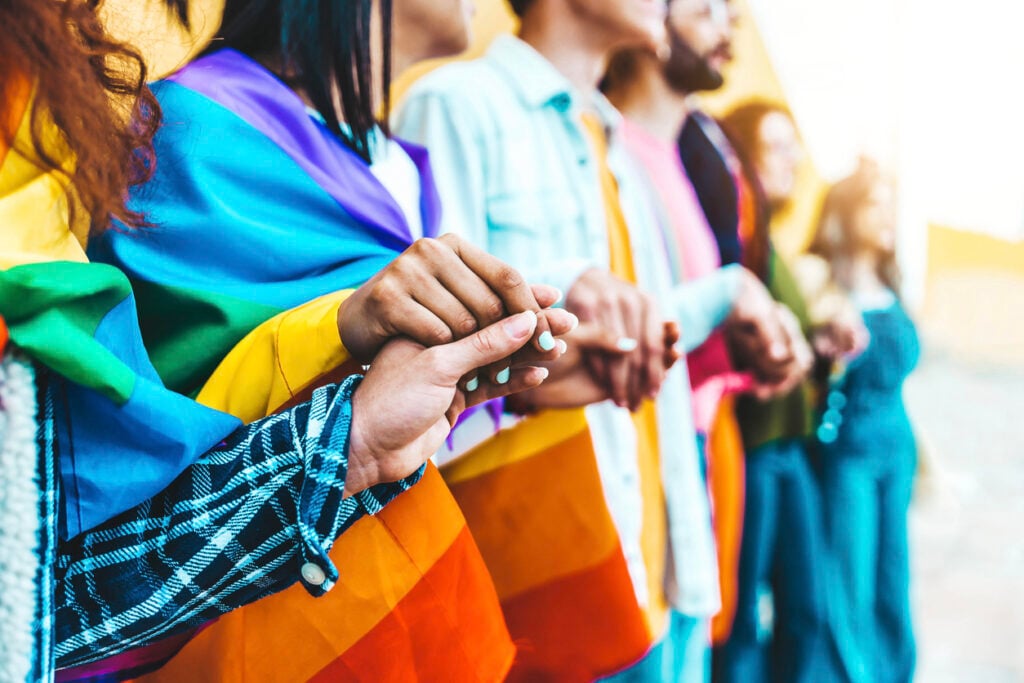
- Fly the rainbow flag — Schools, universities, businesses and public buildings can display rainbow flags or IDAHOBIT banners to signal their support for LGBTQIA+ inclusion and send a visible message of solidarity.
- Educate yourself and others — Read up on the current state of LGBTQIA+ rights in your country and worldwide. Share what you learn with colleagues, friends and family. Knowledge is a powerful antidote to prejudice.
- Support LGBTQIA+ organisations — Donate to or volunteer with groups that provide legal aid, mental health support, advocacy and community services for LGBTQIA+ people, particularly in countries where these communities face criminalisation.
- Use your platform — Share IDAHOBIT content on social media using #IDAHOBIT2026 and #May17. Amplify the voices of LGBTQIA+ people and organisations doing critical work.
- Advocate in your workplace — Push for inclusive policies, diversity training and visible allyship in your professional environment. Many companies mark IDAHOBIT with internal events, policy reviews or public statements of support.
- Attend a vigil or march — Many cities hold vigils, marches or rallies on or around 17 May. These events honour those who have experienced discrimination or violence and demonstrate collective solidarity.
- Engage with the 2026 theme — Explore what “At the Heart of Democracy” means in your context. How are LGBTQIA+ rights connected to democratic participation where you live? Host a discussion or write about it.
Noteworthy Facts About IDAHOBIT
- The date — 17 May — specifically commemorates the WHO’s removal of homosexuality from its list of mental disorders on 17 May 1990, a landmark moment in global health policy.
- IDAHOBIT is now observed in 155 countries and territories, including 35 where consensual same-sex acts are still illegal, making it one of the most widely marked human rights days in the world.
- The day was founded by French activist Louis-Georges Tin, who chaired its international committee from 2004 until 2013.
- “Transphobia” was added to the day’s name in 2009 and “Biphobia” in 2015, evolving the acronym from IDAHO to IDAHOBIT.
- The European Parliament passed a resolution supporting the day in 2006, and multiple UN agencies have officially recognised it since.
- Since 2023, global coordination of IDAHOBIT has been managed by ILGA World, which provides resources and documents events worldwide.
Frequently Asked Questions
What does IDAHOBIT stand for?
IDAHOBIT stands for the International Day Against Homophobia, Biphobia and Transphobia. It is observed on 17 May each year to raise awareness of discrimination and violence faced by LGBTQIA+ people worldwide.
When is IDAHOBIT 2026?
IDAHOBIT 2026 falls on Sunday, 17 May 2026. The date is the same every year — 17 May — chosen to mark the anniversary of the WHO’s 1990 declassification of homosexuality.
What is the IDAHOBIT 2026 theme?
The 2026 theme is “At the Heart of Democracy,” announced by the IDAHOBIT Advisory Committee on 18 November 2025. It highlights the connection between LGBTQIA+ equality and the health of democratic societies.
Who organises IDAHOBIT?
IDAHOBIT is guided by an international Advisory Group and coordinated globally by ILGA World since January 2023. However, the day is intentionally decentralised — anyone can organise an event or campaign without central approval.
Why was 17 May chosen?
On 17 May 1990, the World Health Organization removed homosexuality from the International Classification of Diseases, where it had been listed as a mental disorder. The date was selected to honour this milestone in LGBTQIA+ history.
Spread the Word
Help raise awareness by sharing IDAHOBIT with your friends, family and followers. Use the hashtags #IDAHOBIT, #IDAHOBIT2026 and #May17 on social media. Whether you organise an event, share a post or simply start a conversation, every action contributes to a world where LGBTQIA+ people can live free from discrimination and fear.
Related Awareness Days
- Pride Month — Celebrated throughout June, Pride Month honours LGBTQIA+ identity, history and the ongoing fight for equality, with parades and events held worldwide.
- National Coming Out Day — Observed on 11 October, this day supports LGBTQIA+ people in sharing their identity and encourages open, affirming conversations about sexual orientation and gender identity.
- Wear It Purple Day — Held on the last Friday of August, this Australian-founded day encourages young LGBTQIA+ people to be proud of who they are and fosters supportive environments in schools and workplaces.
Links
- Visit the official IDAHOBIT website
- ILGA World — International Lesbian, Gay, Bisexual, Trans and Intersex Association
- Explore more awareness days at AwarenessDays.com
Plan your next campaign
Use Awareness Planner to discover events, build content calendars, and stay ahead of key dates.







2026 Awareness Days Wall Planner
Every key awareness day at a glance. Perfect for offices, staff rooms, and team planning.
View Calendar →