Mental Health Awareness Month 2026
May 1 - May 31
About Mental Health Awareness Month 2026
Mental Health Awareness Month takes place every May and is the longest-running awareness campaign dedicated to mental health in the United States. Founded by Mental Health America (MHA) in 1949, the month-long observance encourages open conversation about mental illness, promotes access to treatment and support services, and works to dismantle the stigma that still prevents millions of people from seeking help. The 2026 theme is “More Good Days, Together.”
What Is Mental Health Awareness Month?
Mental Health Awareness Month is a nationally recognised observance held throughout May each year. It was established by Mental Health America — then known as the National Association for Mental Health — to educate the public about conditions such as depression, anxiety, bipolar disorder, and schizophrenia. Throughout the month, MHA and its network of more than 200 affiliates across the United States coordinate campaigns, screenings, community events, and educational programmes designed to reach people wherever they are. While the observance originated in the US, its influence has spread globally, with organisations in the United Kingdom, Australia, Canada, and beyond using May as an opportunity to amplify mental health messaging.
When Is Mental Health Awareness Month?
Mental Health Awareness Month runs from Friday, 1 May to Sunday, 31 May 2026. It is observed every year throughout the entire month of May, and the dates are fixed — they do not change from year to year.
In the United Kingdom, the related Mental Health Awareness Week takes place from 11 to 17 May 2026, organised by the Mental Health Foundation. While they share a common cause, these are distinct observances run by different organisations in different countries.
The 2026 Theme: More Good Days, Together
Each year, Mental Health America selects a theme to guide its May campaign. For 2026, the theme is “More Good Days, Together” — a message that reflects MHA’s core mission of helping people experience more good days by meeting them where they are, supporting them as whole people, and recognising that “good” looks different for everyone. The theme encourages individuals and communities to think about what a good day means to them and to use those personal insights to shape advocacy, education, and mutual support.
MHA has released a comprehensive Action Guide for 2026, offering online activities, printable resources, and practical tools for organisations, workplaces, educators, and advocacy groups. Resources are available in both English and Spanish, and a virtual kickoff event took place on 2 April 2026 to help communities prepare for the month ahead.
Why Mental Health Awareness Month Matters
The numbers paint a stark picture. According to the World Health Organisation, more than one billion people worldwide live with a mental disorder — roughly one in every seven people on the planet. Anxiety and depressive disorders account for more than two-thirds of all cases, and depression alone is the leading cause of disability among people aged 15 to 29. The economic toll is equally significant: the WHO estimates that depression and anxiety cost the global economy US$1 trillion annually in lost productivity.
Access to care remains deeply unequal. In low-income countries, fewer than 10% of people who need mental health treatment actually receive it, compared with over 50% in wealthier nations. Governments spend a median of just 2.1% of their health budgets on mental health, and there are as few as one to two specialist mental health workers per 100,000 people in the world’s poorest countries. Nearly half of all mental health conditions begin before the age of 18, yet early intervention services remain underfunded and difficult to access in most regions.
Mental Health Awareness Month exists to confront these gaps. By bringing mental health into mainstream conversation every May, the campaign helps normalise help-seeking behaviour, challenges harmful stereotypes, and pushes for policy changes that expand access to affordable, quality mental health care. If you are also interested in how stress affects overall wellbeing, Stress Awareness Month in April covers closely related ground.
How to Get Involved in Mental Health Awareness Month
There are many meaningful ways to participate, whether you are an individual, an employer, an educator, or a community organiser:
- Take a free mental health screening — MHA offers confidential, clinically validated screening tools at screening.mhanational.org. These quick assessments can help you understand your current mental health and identify whether professional support might be beneficial.
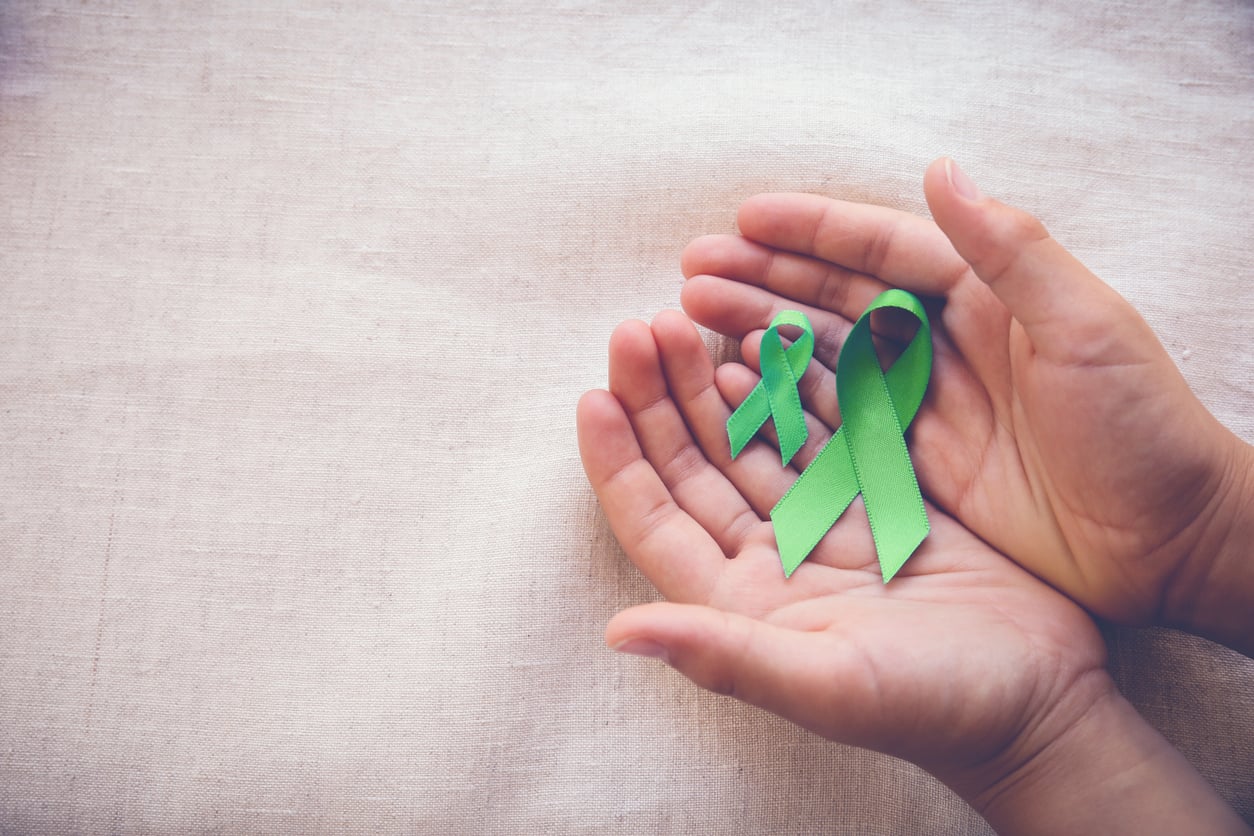
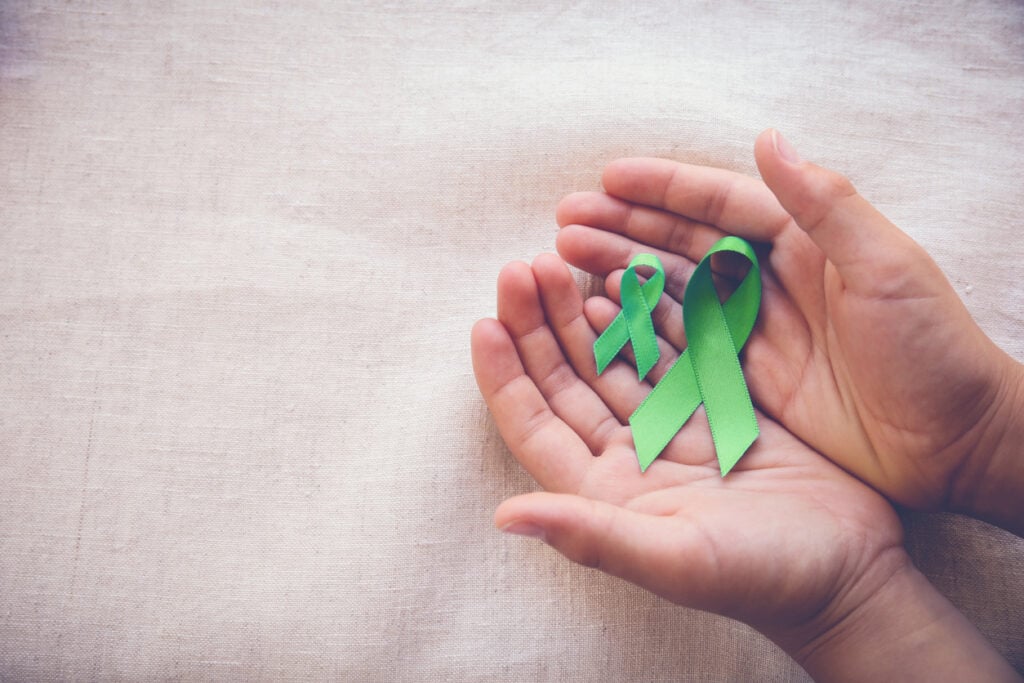
- Wear green and “Be Seen in Green” — The green ribbon is the international symbol of mental health awareness, inspired by the red ribbon of HIV/AIDS awareness. MHA’s annual “Be Seen in Green” campaign encourages people to wear green clothing, ribbons, or accessories throughout May to show solidarity and spark conversation.
- Share your story on social media — Personal stories reduce stigma more effectively than almost any other intervention. Use the hashtags #MentalHealthMonth and #MoreGoodDays to share your experiences, coping strategies, or words of encouragement.
- Organise a workplace mental health event — Host a lunch-and-learn session, invite a mental health professional to speak, distribute green ribbons, or set up a wellness corner with MHA’s printable resources. The Lord Mayor’s Appeal in London runs a dedicated Green Ribbon Campaign each year, encouraging businesses to create visible cultures of support.
- Light up a building or landmark in green — Landmarks around the world go green during May to raise visibility. If you manage a public building, business premises, or community space, consider joining the effort.
- Volunteer with or donate to a mental health charity — Organisations such as MHA, NAMI (National Alliance on Mental Illness), Mind, Beyond Blue, and the Mental Health Foundation all run campaigns during May and welcome volunteers and donations year-round.
- Learn Mental Health First Aid — Mental Health First Aid courses teach participants how to recognise the signs of mental health difficulties and offer initial support. Many providers run additional courses during May to coincide with the awareness month.
- Check in on someone you care about — Sometimes the simplest action is the most powerful. A genuine conversation — asking someone how they are really doing, and listening without judgement — can make a real difference.
History of Mental Health Awareness Month
The story of Mental Health Awareness Month begins with one man’s determination to transform how society treats people with mental illness. In 1908, Clifford Whittingham Beers published A Mind That Found Itself, an autobiography describing the appalling conditions he endured during three years in psychiatric institutions in Connecticut. The book shocked the American public and ignited a reform movement. The following year, on 19 February 1909, Beers co-founded the National Committee for Mental Hygiene alongside philosopher William James and psychiatrist Adolf Meyer. This organisation would eventually become Mental Health America.
In 1949 — forty years after its founding — the organisation (by then called the National Association for Mental Health) launched the first Mental Health Awareness campaign. It originally ran for just one week, but its success led to expansion. Over subsequent decades, the campaign grew into a full month-long observance, cemented in May to coincide with the anniversary of the organisation’s founding efforts. Congress has repeatedly recognised May as Mental Health Awareness Month, and every sitting US president since the 1990s has issued a formal proclamation for the occasion.
On 16 November 2006, the National Mental Health Association officially rebranded as Mental Health America, reflecting its broadened mission and national reach. Today, MHA operates through more than 200 affiliates in 41 states, serving millions of Americans through advocacy, education, and direct services. The organisation’s annual May campaign now reaches tens of millions of people through social media, traditional media coverage, community events, and its free online screening programme, which has delivered over 16 million mental health screenings since its launch.
The Green Ribbon: Symbol of Mental Health
The green ribbon emerged as the international symbol of mental health awareness during the 1990s, modelled on the red ribbon adopted by the HIV/AIDS movement. Green was chosen for its associations with growth, renewal, and hope — qualities central to the recovery journey. During Mental Health Awareness Month, green ribbons are worn by individuals, distributed in workplaces and schools, and displayed on social media profiles worldwide.
In the United Kingdom, the Lord Mayor’s Appeal runs an annual Green Ribbon Campaign, calling on businesses to wear green ribbons as a sign of solidarity. The campaign aims to create a visible culture of support within workplaces, demonstrate the level of commitment to employee wellbeing, and encourage open conversations about mental health. Some organisations film employees passing origami green ribbons around their offices, stitching the clips together into a single video to share online.
Mental Health in the Workplace
Workplace mental health has become one of the most prominent dimensions of Mental Health Awareness Month. The WHO estimates that 12 billion working days are lost annually to depression and anxiety, costing the global economy US$1 trillion in lost productivity. Employers increasingly recognise that supporting staff mental health is both a moral responsibility and a business imperative.
During May, many organisations run dedicated workplace programmes: employee assistance programme (EAP) awareness campaigns, manager training on recognising signs of distress, flexible working arrangements, and “wellbeing days” that give staff time off for self-care. Mental Health America’s Planning Guide provides detailed toolkits for employers looking to build or strengthen their May activities.
Noteworthy Facts About Mental Health Awareness Month
- Mental Health Awareness Month is the oldest mental health awareness campaign in the United States, running continuously since 1949 — over 75 years.
- Clifford Beers’ 1908 book A Mind That Found Itself is widely regarded as the catalyst for the modern mental health reform movement in the US.
- MHA’s free online screening programme has delivered more than 16 million mental health screenings, making it one of the largest mental health screening initiatives in the world.
- The 988 Suicide and Crisis Lifeline (call or text 988) launched in July 2022 in the United States, providing round-the-clock crisis support. In the UK, Samaritans can be reached on 116 123.
- Nearly one in five US adults — approximately 57.8 million people — lives with a mental health condition, according to the National Institute of Mental Health (NIMH).
- The global mental health workforce gap means that in low-income countries, there are fewer than two mental health professionals per 100,000 people, compared with over 67 in high-income countries.
Frequently Asked Questions
What is Mental Health Awareness Month?
Mental Health Awareness Month is a US-originated, internationally observed campaign held every May. Founded by Mental Health America in 1949, it aims to raise awareness of mental health conditions, reduce stigma, and promote access to treatment and support services.
When is Mental Health Awareness Month in 2026?
Mental Health Awareness Month 2026 runs from Friday, 1 May to Sunday, 31 May. It takes place throughout the entire month of May every year.
What is the 2026 Mental Health Awareness Month theme?
The 2026 theme, chosen by Mental Health America, is “More Good Days, Together.” It encourages people to reflect on what makes a good day and to support one another in achieving more of them.
Is Mental Health Awareness Month the same as Mental Health Awareness Week?
No. Mental Health Awareness Month (May, US-originated, run by Mental Health America) and Mental Health Awareness Week (11-17 May in the UK, run by the Mental Health Foundation) are separate observances. They share a common goal but are organised by different bodies in different countries.
What is the green ribbon for mental health?
The green ribbon is the international symbol of mental health awareness. Wearing one during May signals support for people affected by mental health conditions and a commitment to ending stigma.
Spread the Word
Help raise awareness by sharing Mental Health Awareness Month with your friends, family, and followers. Use the hashtags #MentalHealthMonth, #MoreGoodDays, and #MentalHealthAwareness on social media. Wear green, share your story, and encourage others to check in on their mental health. The more people who engage, the closer we get to a world where seeking help is treated the same as seeking any other kind of medical care.
Related Awareness Days
- Mental Health Awareness Week — The UK’s dedicated week for mental health, held in May and organised by the Mental Health Foundation, with a different theme each year.
- World Mental Health Day — Observed on 10 October each year, this global day is coordinated by the World Federation for Mental Health and supported by the WHO.
- Stress Awareness Month — Held throughout April, this observance highlights the causes and effects of stress and provides tools for better stress management.
- World Suicide Prevention Day — Marked on 10 September, this day raises awareness of suicide as a preventable public health issue and promotes evidence-based interventions.
- Maternal Mental Health Month — Also observed in May, this campaign focuses specifically on the mental health of mothers during pregnancy and the postnatal period.
Links
- Visit the official Mental Health America website
- Take a free mental health screening at MHA
- NAMI Mental Health Awareness Month resources
- Explore more awareness days at AwarenessDays.com
Plan your next campaign
Use Awareness Planner to discover events, build content calendars, and stay ahead of key dates.






2026 Health Awareness Calendar
Health and wellbeing awareness days throughout the year. Perfect for clinics, HR teams, and schools.
View Calendar →