Autism Awareness Month 2026
April 1 - April 30
About Autism Awareness Month 2026
Autism Awareness Month, increasingly recognised as Autism Acceptance Month, takes place every April. Organised primarily by the Autism Society of America, the month-long observance encourages communities worldwide to move beyond simple awareness of autism and toward genuine acceptance, inclusion, and support for autistic individuals and their families. The 2026 campaign theme is #CelebrateDifferences.
What is Autism Awareness Month?
Autism Awareness Month is an annual observance held throughout April, dedicated to increasing understanding, acceptance, and support for autistic people. Originally established as a period to raise public awareness of autism spectrum disorder (ASD), the month has evolved significantly over the past decade. The Autism Society of America, which coordinates the largest national campaign in the United States, officially rebranded the observance as Autism Acceptance Month in 2021. The shift reflects a broader movement within the autistic community that emphasises acceptance and belonging rather than awareness alone.
While the Autism Society leads efforts in the US, organisations around the world participate. The United Nations observes World Autism Awareness Day on 2 April, and the UK’s National Autistic Society runs World Autism Acceptance Week during the first week of April. Together, these observances create a full month of activity, advocacy, and education.
When is Autism Awareness Month?
Autism Awareness Month runs from 1 April to 30 April every year. In 2026, the month begins on a Wednesday and ends on a Thursday. The date is fixed and does not change from year to year.
| Year | Date |
|---|---|
| 2025 | Tuesday 1 April – Wednesday 30 April |
| 2026 | Wednesday 1 April – Thursday 30 April |
| 2027 | Thursday 1 April – Friday 30 April |
| 2028 | Saturday 1 April – Sunday 30 April |
| 2029 | Sunday 1 April – Monday 30 April |
The History of Autism Awareness Month
The roots of Autism Awareness Month trace back to 1970, when psychologist Bernard Rimland, PhD — himself the father of an autistic son — began organising efforts to improve public understanding of autism. The Autism Society, which Rimland co-founded, hosted one of its first nationwide campaigns in 1972 under the name National Autistic Children’s Week. This modest week-long effort gradually expanded, and by 1988, the US Congress had designated the full month of April as National Autism Awareness Month.
For decades, the month centred on “awareness” — informing the general public that autism existed and encouraging early diagnosis. Campaigns like Autism Speaks’ “Light It Up Blue,” launched in 2010, became highly visible, with landmarks worldwide bathed in blue light on 2 April. However, many autistic self-advocates grew critical of awareness-focused messaging, arguing that it often framed autism as a tragedy or a problem to be solved rather than a natural neurological variation.
In 2011, the Autistic Self Advocacy Network (ASAN) began promoting April as Autism Acceptance Month instead, a grassroots shift driven by autistic people themselves. The movement gained significant momentum, and in 2021, the Autism Society of America — the oldest and largest autism organisation in the US — officially adopted the name Autism Acceptance Month. This represented a landmark moment: the organisation that had helped create the original awareness campaign was now formally embracing acceptance-first language.
From Awareness to Acceptance: Why the Language Matters
The distinction between “awareness” and “acceptance” is more than semantic. Awareness campaigns historically focused on informing people that autism exists, often emphasising deficits, challenges, and the need for a cure. Acceptance, by contrast, starts from the position that autistic people are complete human beings whose neurological differences should be respected, valued, and accommodated — not fixed.
This shift aligns with the broader neurodiversity movement, which emerged in the late 1990s. Australian sociologist Judy Singer coined the term “neurodiversity” in 1998 to describe the natural range of variation in human brain function. The movement holds that conditions like autism, ADHD, and dyslexia are not disorders to be eliminated but differences to be understood and supported.
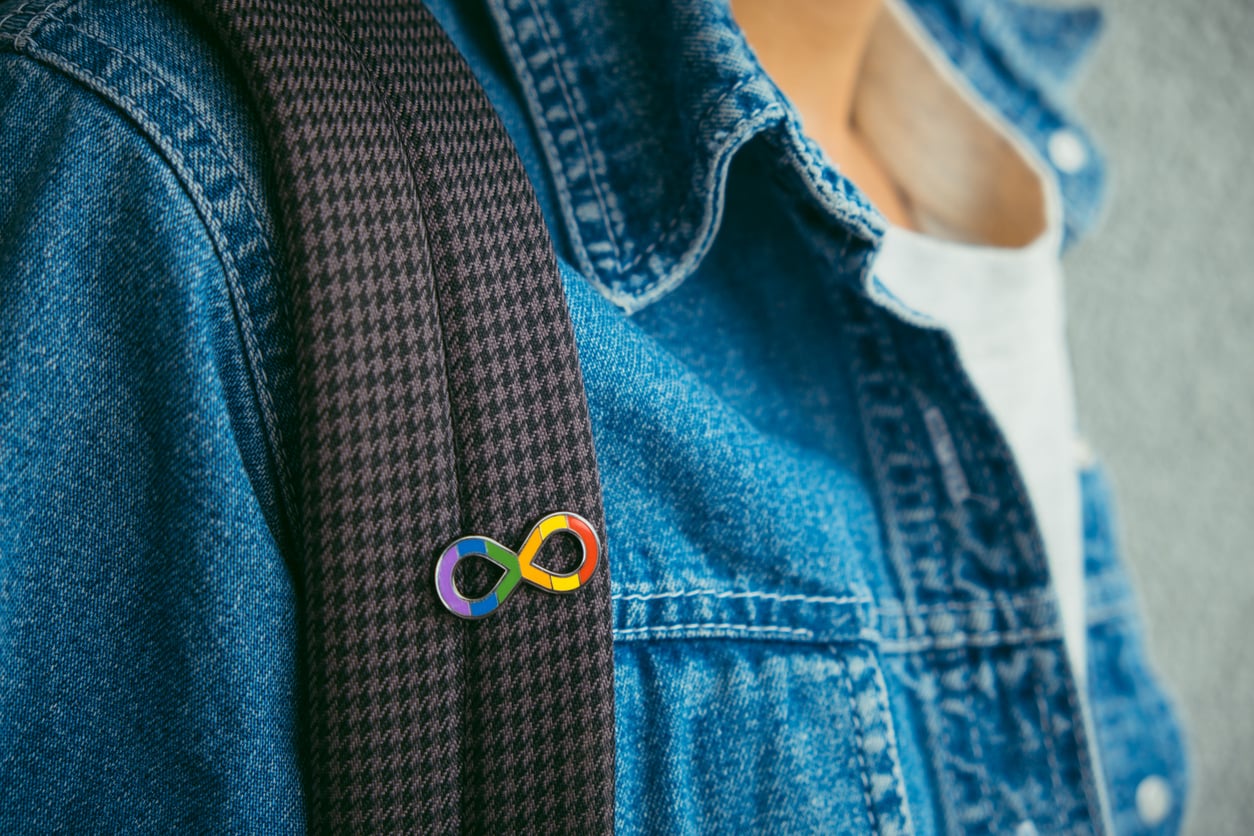
The change in symbolism reflects this evolution too. The puzzle piece, long associated with autism organisations, has been criticised by many autistic people for implying that they are incomplete or puzzling. The rainbow infinity symbol, introduced around 2005 as part of the neurodiversity movement, has become the preferred emblem — representing the infinite spectrum of human neurological experience. Similarly, the #RedInstead campaign encourages people to wear red rather than blue during April, signalling a move away from deficit-based narratives.
Key Dates During Autism Awareness Month
April is packed with specific observances related to autism:
- World Autism Awareness Day (2 April) — Established by the United Nations General Assembly in 2007, this is the single most recognised date in the autism calendar. Buildings and landmarks worldwide are illuminated, and the UN hosts events focused on the rights of autistic people. The 2026 theme is “Autism and Humanity — Every Life Has Value.”
- World Autism Acceptance Week (2–8 April) — Run by the UK’s National Autistic Society, this week-long campaign raises funds and awareness across schools, workplaces, and communities in Britain and beyond.
- Autism Society’s #CelebrateDifferences campaign — Running throughout April, the Autism Society’s 2026 initiative includes their “Road to Acceptance” mobile video studios, community events, and corporate partnerships with organisations including Netflix and iHeartMedia.
Autism by the Numbers
Understanding the scale of autism helps explain why a full month of focus is warranted:
- The CDC’s 2025 Community Report found that approximately 1 in 31 children (3.2%) aged 8 in the United States have been identified with autism spectrum disorder — up from 1 in 36 reported in 2023 and 1 in 150 in 2000.
- Boys are diagnosed 3.4 times more often than girls, though growing research suggests autism in girls and women has been historically underdiagnosed.
- The World Health Organisation estimates that 1 in 100 children globally is autistic.
- A 2025 meta-analysis published in PubMed estimated that 0.77% of children worldwide are diagnosed with ASD, with an estimated 61.8 million people affected globally.
- Autism diagnoses have increased by over 300% since 2000, driven primarily by improved diagnostic criteria and greater awareness — not a rise in actual prevalence.
How to Get Involved in Autism Awareness Month 2026
Whether you are autistic, have an autistic family member, or simply want to be a better ally, there are meaningful ways to participate throughout April:
- Listen to autistic voices — Seek out books, blogs, podcasts, and social media accounts run by autistic people. First-person perspectives are the most valuable resource for understanding the autistic experience. Authors like Devon Price, Chloe Hayden, and Pete Wharmby offer accessible starting points.
- Learn about neurodiversity in the workplace — If you are an employer or manager, use April as a catalyst to review your organisation’s hiring practices, workplace adjustments, and inclusion policies. Autistic employees often thrive with clear communication, flexible environments, and structured expectations.
- Support autistic-led organisations — Donate to or volunteer with organisations led by autistic people, such as the Autistic Self Advocacy Network (ASAN), the Autism Society, or your country’s national autism charity.
- Wear red on 2 April — Join the #RedInstead campaign on World Autism Awareness Day to show solidarity with the acceptance movement.
- Host or attend a community event — The Autism Society’s network of roughly 70 local affiliates organises events throughout April, including sponsored walks, fundraisers, and educational workshops.
- Share accurate information on social media — Use the hashtags #AutismAcceptanceMonth, #CelebrateDifferences, and #AutismAcceptance2026 to amplify respectful, acceptance-focused content.
- Educate children early — Talk to children about neurodiversity in age-appropriate ways. Books like All My Stripes by Shaina Rudolph and The Girl Who Thought in Pictures by Julia Finley Mosca help introduce the topic with sensitivity and positivity.
- Advocate for policy change — Contact your elected representatives to support legislation that funds autism research, improves access to services, and protects the rights of disabled people.
Frequently Asked Questions
What is Autism Awareness Month?
Autism Awareness Month (now widely called Autism Acceptance Month) is an annual April observance dedicated to increasing understanding, acceptance, and support for autistic people. It is coordinated primarily by the Autism Society of America and supported by organisations worldwide.
When is Autism Awareness Month 2026?
Autism Awareness Month 2026 runs from Wednesday 1 April to Thursday 30 April 2026.
What is the difference between Autism Awareness Month and Autism Acceptance Month?
They refer to the same April observance. The name shifted from “Awareness” to “Acceptance” to reflect a move away from deficit-based messaging toward genuine inclusion and respect for autistic people. The Autism Society of America officially adopted the Acceptance name in 2021, following a grassroots campaign led by autistic self-advocates since 2011.
Is Autism Awareness Month only in the United States?
No. While the Autism Society of America leads the largest national campaign, organisations in the United Kingdom, Australia, Canada, and many other countries run their own April initiatives. The United Nations also observes World Autism Awareness Day on 2 April, making it a truly global occasion.
Spread the Word
Help build a more accepting world by sharing Autism Awareness Month with your friends, family, and followers. Use the hashtags #AutismAcceptanceMonth, #CelebrateDifferences, and #AutismAcceptance2026 on social media. The more people who understand and embrace neurodiversity, the stronger and more inclusive our communities become.
Related Awareness Days
- World Autism Awareness Day — Observed on 2 April each year, this UN-designated day is the focal point of global autism advocacy and falls within Autism Awareness Month.
- World Autism Acceptance Week — Run by the UK’s National Autistic Society during the first week of April, this campaign raises funds and promotes understanding across British schools and workplaces.
- ADHD Awareness Month — Held every October, this month highlights another common neurodevelopmental condition and shares the neurodiversity movement’s goals of acceptance and accommodation.
- Disability Pride Month — Celebrated in July, this month honours the disability rights movement and champions the pride, identity, and culture of disabled people worldwide.
Links
- Visit the official Autism Acceptance Month page at the Autism Society
- Autistic Self Advocacy Network (ASAN)
- National Autistic Society (UK)
- Explore more awareness days at AwarenessDays.com
Plan your next campaign
Use Awareness Planner to discover events, build content calendars, and stay ahead of key dates.






2026 Awareness Days Wall Planner
Every key awareness day at a glance. Perfect for offices, staff rooms, and team planning.
View Calendar →