International Day of Argania 2027
Monday 10 May 2027
Dates can vary from year to year, so check the organiser’s website for the latest details.
International Day of Argania on 10 May highlights the argan tree, the ecosystem in which it grows and the knowledge and livelihoods of communities connected with it.
Add this date to my calendarA full year of awareness dates, ready to edit, print or sync.
Get the full 2027 awareness days calendar£49.99 a year. Renews annually.
On this page
Dates and event details
International Day of Argania 2027 takes place on 10 May 2027. International Day of Argania on 10 May highlights the argan tree, the ecosystem in which it grows and the knowledge and livelihoods of communities connected with it.
| Date status | Date calculated from a fixed annual pattern |
|---|---|
| Date-check source | United Nations or designated agency |
| Where | International |
What is International Day of Argania?
The United Nations proclaimed 10 May as the International Day of Argania. Its background describes the argan tree, Argania spinosa, as a defining species of the argan woodland ecosystem in south-western Morocco, associated with arid and semi-arid conditions.
The observance considers more than argan oil as a finished product. It connects conservation with rural livelihoods, local knowledge and the work involved in production. A useful activity keeps those people and landscapes in view rather than treating the day as a beauty-product promotion.
Date and common questions
International Day of Argania is annually on 10 May. The 2027 occurrence is calculated from the fixed UN date. No 2027 theme, commercial offer or particular event programme is implied.
Is the day only about argan oil?
No. The UN observance concerns the tree, its ecosystem and the communities connected with it. Oil is one part of a wider story involving conservation, knowledge and livelihoods.
Does the UN day certify a product?
No. The existence of an observance does not establish a product’s quality, health effects or sustainability credentials. Those claims need relevant, specific evidence and should not be inferred from the campaign’s name.
Why it matters
Argania provides a specific example of the relationship between an ecosystem and economic activity. Schools and community groups can investigate where a product comes from, whose work creates it and what evidence supports environmental or social claims. Learning about a place should acknowledge its community’s knowledge without turning that knowledge into an unsourced commercial endorsement.
Practical ways to take part
- Locate the ecosystem. Use a reliable map and the UN background to identify the Moroccan region discussed. Explore the difference between a species’ natural setting and the places where its products are sold. Keep illustrations and captions specific to the subject.
- Trace a product’s story. Map the stages described by a trustworthy source from tree and harvest to a finished product. Identify the people and skills involved at each stage. Mark unanswered questions instead of filling gaps with assumptions about working conditions or certification.
- Read a sustainability claim. Choose a clearly identified claim about an argan product and ask what evidence supports it. Look for who issued the claim, what it covers and when it was checked. Avoid treating a vague natural or traditional label as independent proof.
- Discuss local knowledge respectfully. Explore how knowledge about a plant and its uses is passed on and applied. Use attributed accounts from relevant communities or reliable institutions. Do not present a single story as an explanation of every producer or suggest that outside observers know the community’s priorities.
- Connect conservation with livelihoods. A class could map the different interests in caring for a woodland while supporting local work. Discuss the questions that would need to be answered before proposing a change. A realistic exercise recognises trade-offs rather than assuming a universal solution.
Plan a useful activity
Create a small educational display following one well-sourced argan story. Include a map, an explanation of the tree and a clear account of which community or organisation a source describes. Separate verified facts from questions for further research. Ask a knowledgeable reviewer to check that the display does not make medicinal claims or imply that all products share identical environmental and social credentials. Invite viewers to practise asking better sourcing questions.
Official information
Use the official International Day of Argania information for background and organiser resources. The annual date does not confirm a particular local event, booking arrangement or future campaign theme. Check those details with the relevant organiser.
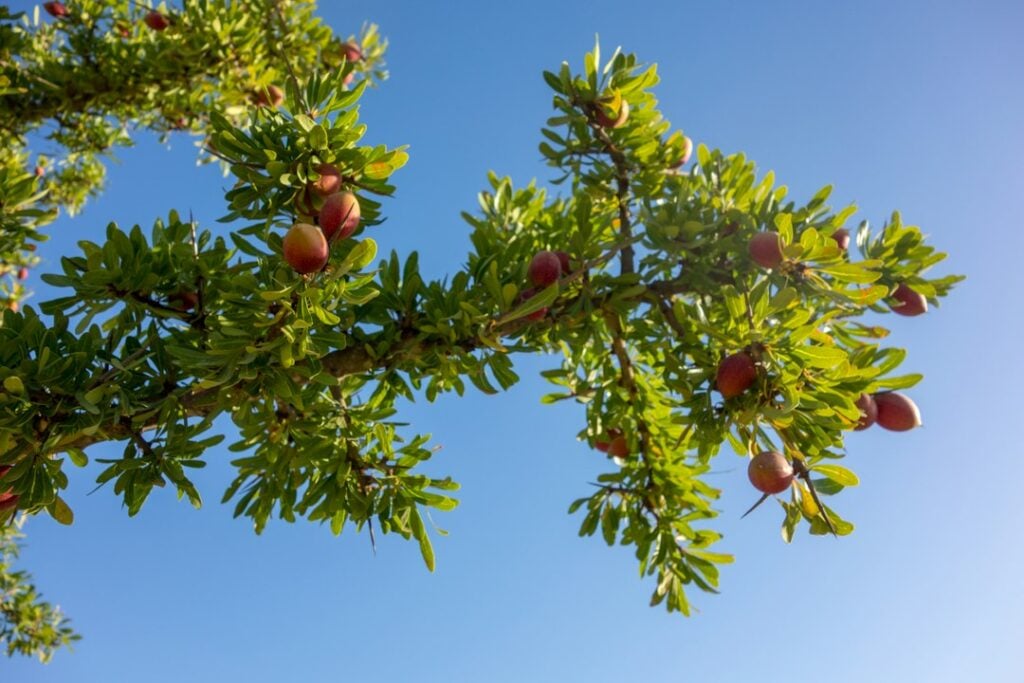
Featured image: Photo by Camping Aourir on Unsplash.
Frequently asked questions
When is International Day of Argania 2027?
What is International Day of Argania 2027?
More awareness days in May
See all → 10–16 MayWeek10 May to 16 MayWeekHealth & WellbeingUKMental Health Awareness Week 2027
 12 May12 MayWednesdayCommunityInternationalInternational Nurses Day 2027
 15 May15 MaySaturdayArts & Culture AwarenessInternationalEurovision Song Contest 2027
 15 May15 MaySaturdayCommunityInternationalInternational Day of Families 2027