National Grief Awareness Week 2026
Wednesday 2 December to Tuesday 8 December 2026
National Grief Awareness Week is a Good Grief Trust campaign encouraging understanding of bereavement and access to support. Individuals and organisations can participate through information, connection and practical changes.
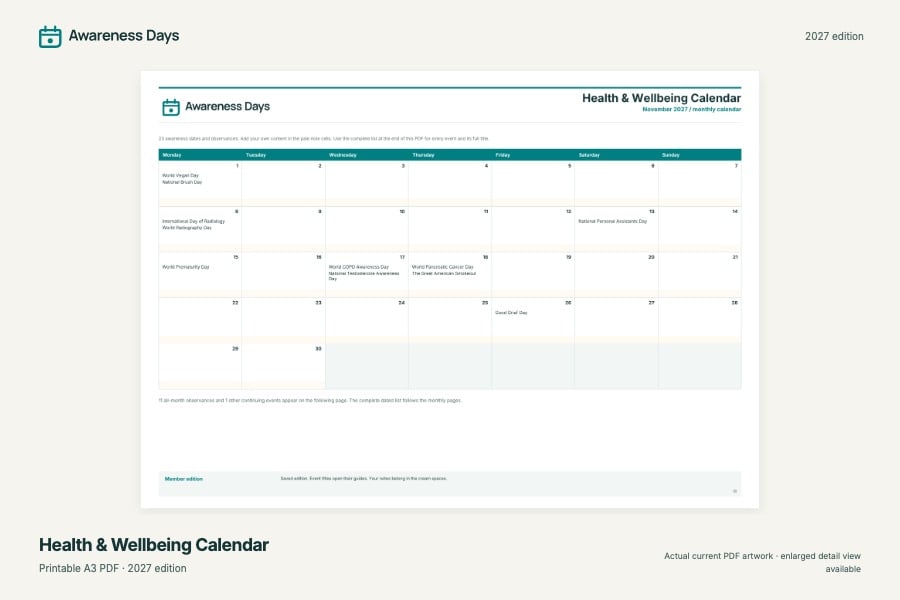
Add this date to my calendarA full year of awareness dates, ready to edit, print or sync.
Get the full 2027 health calendar£49.99 a year. Renews annually.
On this page
Dates and event details
National Grief Awareness Week 2026 runs from Wednesday 2 to Tuesday 8 December.
| Where | International |
|---|
What is National Grief Awareness Week?
National Grief Awareness Week is a UK campaign led by The Good Grief Trust. It encourages greater understanding of bereavement and helps people find support, while recognising that experiences of grief differ.
Taking part can mean making support information easier to find, checking how an organisation responds to bereavement or offering a considerate opportunity to connect. Sharing a personal story is a choice, not a requirement.
What is the 2026 theme?
The Good Grief Trust’s 2026 campaign blueprint gives “After Goodbye” as its overarching theme, connected by the message “A Thread of Hope”. It places particular attention on young people experiencing bereavement and on connections between families, schools and communities.
The pack includes information about the Little Card of Hope and creative community participation. Use the current blueprint for those materials; older campaign posters on the same website should not be treated as a newly announced 2026 theme.
When is National Grief Awareness Week 2026?
The dates are 2–8 December 2026. Macmillan’s current awareness information confirms the 2026 period, while The Good Grief Trust’s campaign hub provides its 2026 blueprint and resources.
An individual gathering or remembrance activity may have its own date. Check the organiser’s listing and the year on any material before sharing an invitation.
How to get involved
- Share a reliable support link. Explain who a service is for and check that the information is current.
- Review how your organisation responds. Make sure people know whom to contact after a bereavement and how to ask about available support.
- Offer an optional gathering. Give clear information about the format so people can decide whether it suits them.
- Use a creative activity thoughtfully. A shared drawing or craft project can provide a way to contribute without speaking publicly.
- Keep support available afterwards. Maintain the resource page and contact route beyond the campaign week.
Planning a considerate workplace activity
Start with the practical information staff may need. Check how bereavement arrangements are explained, whether managers know the process and where confidential support information is stored.
If arranging a discussion, give notice of the subject and make attendance optional. Explain whether a trained facilitator will be present and how personal questions will be handled. A short information session can be useful without inviting staff to recount a death or take part in a public tribute.
For a memorial display, obtain clear permission for names, photographs and stories. Explain who will see the display, how long it will remain and whether any part will be published online. Offer a way to withdraw a contribution.
Ideas for schools and community groups
Use the organiser’s current resources alongside the setting’s safeguarding arrangements. Prepare staff for questions and identify an appropriate private route for children or adults who need support.
A group might make a shared paper chain or drawing that represents connection, without naming a person who has died. Offer an alternative activity and let participants choose how much they contribute. Do not assume that everyone wants to describe a loss or commemorate it in the same way.
The 8 December light-up
The 2026 blueprint invites a national light-up on 8 December at 6pm. Check the campaign’s current information and local venue arrangements before planning an activity. For a school or indoor group, a battery-powered light can provide a practical alternative to a flame.
Participation in a remembrance moment is optional. An organisation can support the week through information and practical changes without holding a ceremony.
Finding bereavement support
The Good Grief Trust helps people find bereavement support. The NHS grief and bereavement page explains experiences of loss and routes to help if feelings are affecting everyday life.
AtaLoss’s campaign information also explains how to direct people to UK bereavement services suited to their circumstances. When sharing a resource, help someone understand who it is for and how to use it.
Support can be sought when it is needed, including long after a death. A campaign activity should make suitable help easier to find, without prescribing a timetable for someone’s grief.
Reviewed 23 October 2026. Checked the organiser’s current campaign blueprint, 2026 themes and light-up invitation; added considerate participation and NHS support resources.
Frequently asked questions
When is National Grief Awareness Week 2026?
It runs from 2 to 8 December 2026.
Who leads the campaign?
The Good Grief Trust leads the UK campaign.
What is the 2026 theme?
The organiser’s blueprint uses “After Goodbye” as the overarching theme, connected by “A Thread of Hope”.
Do I need to share my experience to take part?
No. Personal storytelling and remembrance activities should be optional. Sharing reliable resources or improving support arrangements are other contributions.
More awareness days in December
See all → 3 Dec3 DecThursdayHealth & WellbeingUK, US, Australia and worldwideInternational Day of Persons with Disabilities 2026
 4–12 DecWeek4 Dec to 12 DecWeekCommunityInternationalHanukkah 2026
 10 Dec10 DecThursdayCommunityUKChristmas Jumper Day 2026
 10 Dec10 DecThursdayCommunityInternationalHuman Rights Day 2026