

World Day for the Prevention of and Healing from Child Sexual Exploitation, Abuse and Violence 2026
Wednesday 18 November 2026
Dates can vary from year to year, so check the organiser’s website for the latest details.
The UN day on 18 November focuses on prevention, dignity, rights and appropriate support for victims and survivors of child sexual exploitation and abuse.
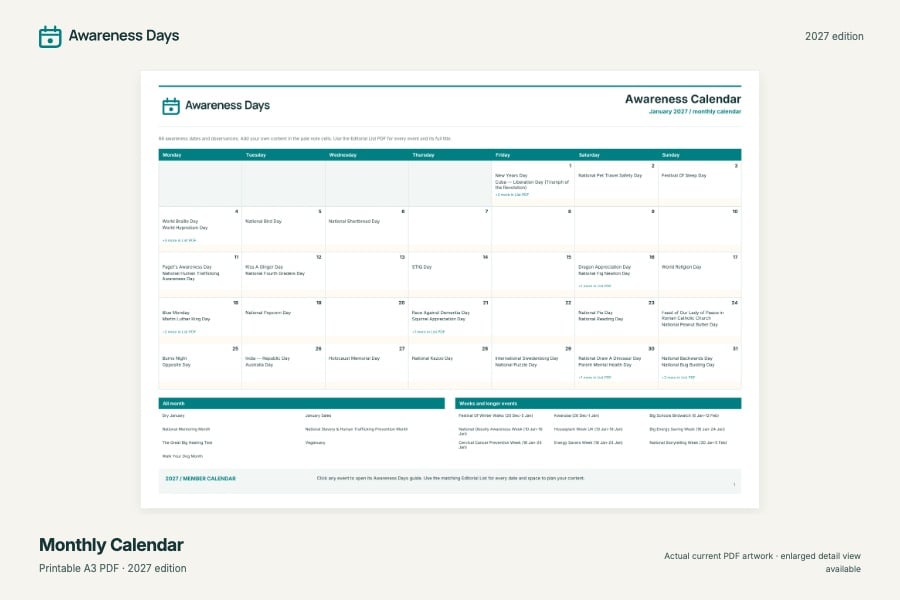
Add this date to my calendarA full year of awareness dates, ready to edit, print or sync.
Get the full 2027 awareness days calendar£49.99 a year. Renews annually.
On this page
Dates and event details
Wednesday 18 November 2026. Held every year on 18 November.
| Date status | Date calculated from a fixed annual pattern |
|---|---|
| Date-check source | Official observance organiser |
| Where | International |
About World Day for the Prevention of and Healing from Child Sexual Exploitation, Abuse and Violence
The World Day for the Prevention of and Healing from Child Sexual Exploitation, Abuse and Violence is observed on 18 November each year. In 2026, it falls on Wednesday. The UN day focuses on prevention, the dignity and rights of victims and survivors, and access to appropriate support, justice and healing.
Ideas for schools and youth organisations
- Review staff information. Ask the designated safeguarding lead to check that staff and volunteers can find the current policy, contacts and reporting arrangements.
- Plan appropriate learning. Use approved, age-appropriate material and the setting’s existing approach to safeguarding and relationships education. Agree the purpose with responsible staff before arranging an activity.
- Check accessibility. Consider whether information is available in formats children, families and staff can understand, including those who need communication or language support.
- Make professional learning specific. A short session can focus on one process, such as how a volunteer obtains guidance or how staff keep their training information current.
Ideas for workplaces and community settings
Organisations working with children can use the date to review how safeguarding responsibilities are communicated to new starters, temporary staff and contractors. Map the process from induction to continuing support, then identify a practical improvement with the responsible professional.
A community venue, sports club or faith organisation could ask its safeguarding lead to explain the current arrangements to volunteers. Keep the session grounded in the organisation’s procedures and relevant specialist guidance. General discussion should not become an informal investigation of an individual concern.
For a public awareness event, work with an established specialist organisation. Agree the audience, wording, recording arrangements and support information in advance. Give participants clear information about the subject and a way to leave or choose another form of engagement.
Why was the day established?
The General Assembly proclaimed the observance through resolution A/RES/77/8, adopted on 7 November 2022. Its purpose includes raising awareness, preventing abuse and exploitation online and offline, and addressing the stigma that can affect people who have experienced it.
The observance invites participation from governments, schools, civil society, faith organisations, academic institutions and businesses. An organisation can take part by improving a relevant process or arranging suitable professional learning. Publicity should support the rights and privacy of those affected.
A focus on prevention and dignity
A useful activity begins with the responsibilities adults and institutions already hold. Consider how people obtain information, where concerns can be raised, and whether staff understand their own role. Awareness is more useful when it connects with a clear, established process.
The day also recognises that victims and survivors should be able to seek support without being defined by their experiences. Organisers should not expect personal testimony or public disclosure as part of participation. People can contribute through professional knowledge, practical work or quiet reflection.
Communicate with care
Use language that respects people and avoids blame. Obtain explicit permission before sharing personal stories or images, and be clear about where material will appear. A person’s decision to contribute to one event should not be treated as permission for unlimited future use.
Focus a campaign on what the organisation can actually improve. That might be updating a volunteer induction, making a policy easier to find or arranging appropriate training. Assign a named owner and a review date. Avoid presenting one awareness session as evidence that an organisation has completed all its safeguarding responsibilities.
If a concern arises during an activity, use the setting’s established safeguarding procedures and appropriate professional services. This calendar listing explains the observance; it cannot assess an individual situation or replace specialist support.