

World Tsunami Awareness Day 2026
Thursday 5 November 2026
Dates can vary from year to year, so check the organiser’s website for the latest details.
World Tsunami Awareness Day on 5 November encourages education, accessible warnings and community preparedness.
Add this date to my calendarA full year of awareness dates, ready to edit, print or sync.
Get the full 2027 awareness days calendar£49.99 a year. Renews annually.
On this page
Dates and event details
Thursday 5 November 2026. Held every year on 5 November.
| Date status | Date calculated from a fixed annual pattern |
|---|---|
| Date-check source | Official observance organiser |
| Where | International |
What is World Tsunami Awareness Day?
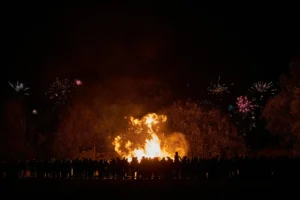
The UN General Assembly designated the day in December 2015 through resolution A/RES/70/203. Japan proposed the observance, drawing on its experience of tsunamis and preparedness. The UN’s background explains the connection between the date and the Japanese story known as Inamura-no-hi, in which burning rice sheaves helped warn a village in 1854.
The United Nations Office for Disaster Risk Reduction supports the observance. Its purpose is to turn awareness into a better understanding of risk, communication and readiness. A warning is useful when people can receive it, understand it and know which local instructions to follow.
World Tsunami Awareness Day is on 5 November every year. The next observance is Thursday 5 November 2026. This United Nations day encourages people to understand tsunami risk and the importance of early warning, education and community preparedness.
Practical ideas for schools
- Investigate an official warning system. Find the relevant public agency for a chosen coastal location and identify where its public information is published. Discuss how a resident and a visitor might find it.
- Explore a map. Use an official educational map to discuss coastlines, settlements and infrastructure. Keep any evacuation routes or actions tied to the authority’s own published guidance.
- Compare communication formats. Look at a sign, a written alert and an accessible information sheet. Ask what makes each understandable and which audiences might need another format.
- Invite an appropriate specialist. A local emergency-planning or geography professional could explain their work and answer prepared questions. Agree age-appropriate content before the session.
Ideas for organisations and communities
A coastal venue, accommodation provider or tourism business can use the date to check where it obtains current emergency information. Identify who updates guest material and how staff learn about local arrangements. Where an authority organises an exercise or awareness event, share its invitation accurately rather than creating an unofficial version of the instructions.
A community group could hold an information session with the relevant public service, support an authorised awareness walk or help publicise official resources in useful local languages. Ask prospective participants what would make the session easier to attend, including transport, interpretation, timing and accessible materials.
Workplaces with colleagues or operations in different countries can compare how staff find trusted local alerts when travelling. Keep contact information current and direct questions about emergency procedures to the organisation responsible. The day can prompt a review of existing arrangements without making assumptions about another country’s system.
Why education and access matter
Coastal communities include residents, workers and visitors with different languages, mobility needs and levels of local knowledge. An activity for this day can explore whether information reaches those different audiences. It can also introduce the work of the people who monitor hazards, maintain warning arrangements and plan public responses.
For readers in places where tsunami risk is low, the observance is still relevant to geography, travel preparation and international disaster awareness. Use official information for the location being discussed. A general classroom exercise should not be presented as a substitute for the instructions of local emergency services.
Plan around a clear outcome
Choose one result that participants can take away: knowing the relevant authority, understanding where official information is located, or recognising the importance of inclusive warnings. After the activity, check which questions remain and send them to a suitable specialist. A concise, accurate resource list is more useful than a long collection of alarming images.