Financial Literacy Month
April 1 - April 30
About Financial Literacy Month
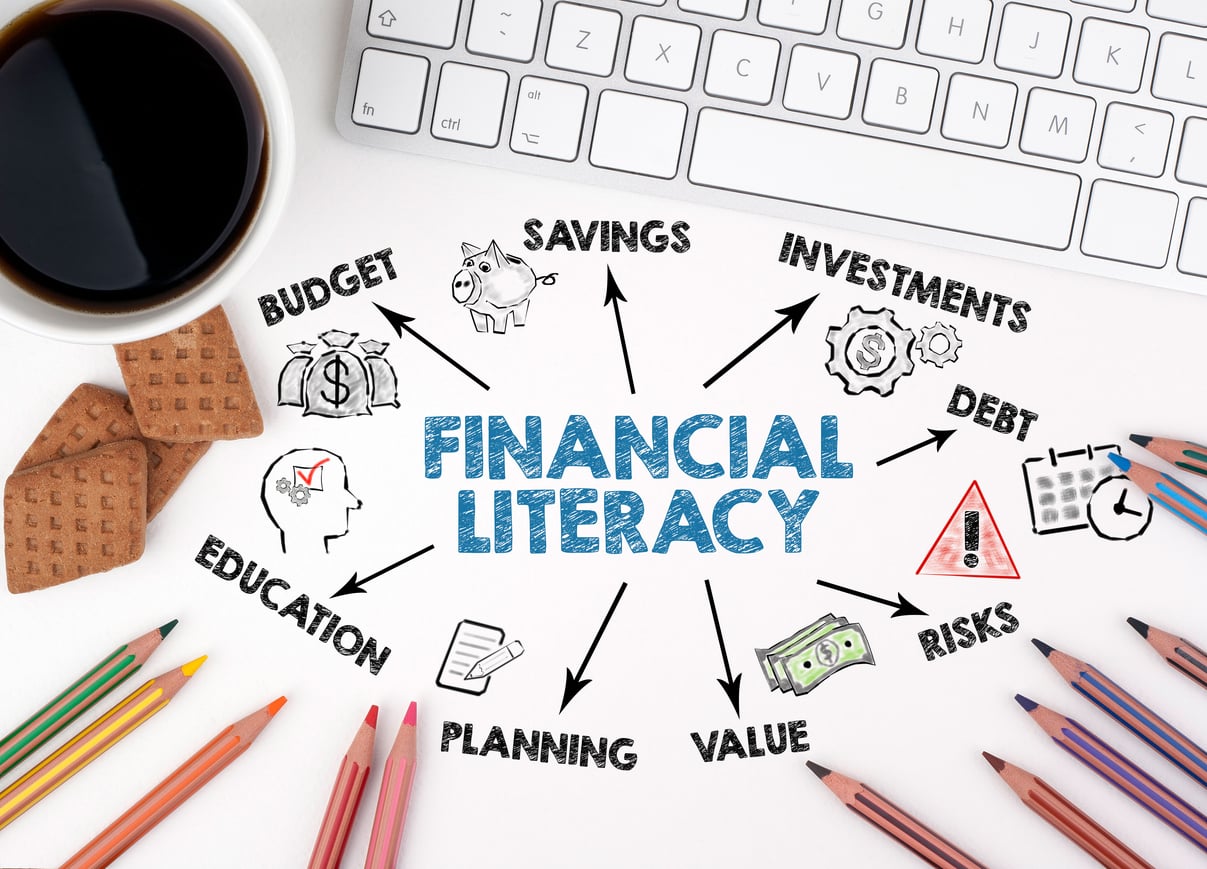
Financial Literacy Month is observed every April across the United States, promoting financial education and encouraging individuals, families, and communities to build stronger money management habits. Recognised by federal and state agencies, financial institutions, nonprofits, and schools, the month-long campaign aims to improve financial knowledge around spending, saving, borrowing, and long-term planning.
What is Financial Literacy Month?
Financial Literacy Month is a nationwide initiative dedicated to raising awareness about the importance of personal finance education. Throughout April, organisations including the Jump$tart Coalition for Personal Financial Literacy, the Council for Economic Education, the American Bankers Association, and the Securities and Exchange Commission coordinate campaigns, workshops, and resources designed to help people make better-informed financial decisions. The observance addresses everything from budgeting basics to investment strategies, with particular emphasis on reaching young people before they face major financial decisions.
When is Financial Literacy Month?
Financial Literacy Month runs from 1 April to 30 April every year. In 2026, it begins on Wednesday, 1 April and concludes on Thursday, 30 April. The month is fixed and has been observed in April since its inception. A key event within the month is Teach Children to Save Day, held on 24 April 2026.
Why Financial Literacy Month Matters
The numbers paint a stark picture. American adults correctly answer only 49% of financial literacy questions on average, according to the TIAA Institute-GFLEC Personal Finance Index. Nearly half of US adults grade their personal finance knowledge at C or worse. The consequences are tangible: a lack of financial literacy cost Americans an estimated $388 billion in 2023 through poor financial decisions, excessive fees, and missed opportunities. Financial Literacy Month matters because it creates a concentrated period of attention and resources aimed at closing this knowledge gap, which disproportionately affects younger generations — Gen Z adults correctly answer just 38% of financial literacy questions.
How to Get Involved in Financial Literacy Month
Financial Literacy Month is an opportunity to take practical steps toward stronger financial health. Here are ways to participate:
- Review your budget — Use April as a prompt to audit your monthly spending. Identify areas where you can reduce unnecessary expenses and redirect funds toward savings or debt repayment. Even a simple spreadsheet or free budgeting app can make a meaningful difference.
- Check your credit report — You are entitled to a free annual credit report from each of the three major bureaux. Review it for errors, outdated accounts, or signs of identity theft, and dispute any inaccuracies promptly.
- Start or top up an emergency fund — Financial advisers generally recommend having three to six months of essential expenses saved. If you do not have an emergency fund yet, April is a good month to open a dedicated savings account and set up an automatic transfer.
- Teach a young person about money — Use Teach Children to Save Day (24 April) as a springboard to talk to children or teenagers about earning, saving, and the basics of compound interest. Practical demonstrations, such as comparing savings growth with and without interest, make abstract concepts concrete.
- Attend a free financial workshop — Many banks, credit unions, libraries, and community organisations offer free financial education events during April. Topics often include debt management, retirement planning, and understanding credit scores.
- Explore SEC resources on Investor.gov — The Securities and Exchange Commission offers free tools and calculators on its Investor.gov website, covering topics from compound interest to investment risk assessment. These resources are available year-round but are especially promoted during April.
- Advocate for financial education in schools — As of 2024, 35 states require at least one personal finance course for high school graduation, up from 23 in 2022. If your state is not yet among them, contact your local representatives to express support for mandatory financial education.
History of Financial Literacy Month
The origins of Financial Literacy Month trace back to the Jump$tart Coalition for Personal Financial Literacy, a nonprofit founded in 1995 on an idea credited to William E. Odom, then Chairman and CEO of Ford Motor Credit Corporation. The coalition was established to evaluate the financial literacy of young adults and improve financial education for students from pre-kindergarten through university.
In 2000, Jump$tart began promoting April as “Financial Literacy for Youth Month,” creating a dedicated period for schools and youth organisations to focus on money education. The effort gained legislative backing in 2003, when the United States Senate designated April as Financial Literacy for Youth Month. A year later, in March 2004, the Senate passed Resolution 316, officially recognising April as National Financial Literacy Month. Both houses of Congress have passed similar resolutions each year since.
The observance expanded significantly after the 2008 financial crisis, which exposed the consequences of widespread financial illiteracy among both consumers and professionals. Since then, Financial Literacy Month has grown into a multi-sector effort involving government agencies, financial institutions, educational organisations, and community groups. The Mathematics and Statistics Awareness Month, also held in April, complements these efforts by promoting the quantitative skills that underpin sound financial decision-making.
Noteworthy Facts About Financial Literacy Month
- US adults correctly answer only 49% of questions across eight key personal finance areas including saving, borrowing, investing, and risk comprehension.
- The lack of financial literacy cost Americans an estimated $388 billion in 2023 through poor decisions, excessive fees, and missed opportunities.
- Financial literacy rates vary significantly by demographic: 53% correct answers among white Americans, 55% among Asian Americans, 39% among Hispanic Americans, and 38% among Black Americans.
- As of 2024, 35 US states require at least one personal finance course for high school graduation, a rapid increase from 23 states in 2022.
- The Jump$tart Coalition’s network includes 150+ national organisations and more than 50 affiliated state coalitions working to improve financial education.
Frequently Asked Questions
What is Financial Literacy Month?
Financial Literacy Month is an annual April observance promoting financial education across the United States. It encourages people to improve their knowledge of budgeting, saving, investing, and managing debt through workshops, online resources, and community events.
When is Financial Literacy Month in 2026?
Financial Literacy Month runs from Wednesday, 1 April to Thursday, 30 April 2026.
Who organises Financial Literacy Month?
Financial Literacy Month is a collaborative effort involving the Jump$tart Coalition, the Council for Economic Education, the American Bankers Association, the SEC, the National Endowment for Financial Education (NEFE), and numerous state-level organisations. The US Senate first officially recognised April as National Financial Literacy Month in 2004.
Spread the Word
Help raise awareness by sharing Financial Literacy Month with your friends, family, and followers. Use the hashtags #FinancialLiteracyMonth and #FinancialLiteracyMonth2026 on social media. The more people who understand how to manage their money, the stronger our communities become.
Related Awareness Days
- Mathematics and Statistics Awareness Month — Also held in April, this month promotes the mathematical skills that are essential for sound financial decision-making.
- National Home Ownership Month — Celebrated in June, this observance promotes the benefits of homeownership and the financial planning it requires.
- Stress Awareness Month — Financial stress is one of the leading causes of anxiety, making April’s dual focus on financial literacy and stress awareness a natural pairing.
Links
- Visit the Jump$tart Coalition Financial Literacy Month page
- Council for Economic Education — Financial Literacy Month
- Explore more awareness days at AwarenessDays.com
Plan your next campaign
Use Awareness Planner to discover events, build content calendars, and stay ahead of key dates.






2026 Awareness Days Wall Planner
Every key awareness day at a glance. Perfect for offices, staff rooms, and team planning.
View Calendar →