Bonfire Night (Guy Fawkes Night) 2026
Thursday 5 November 2026
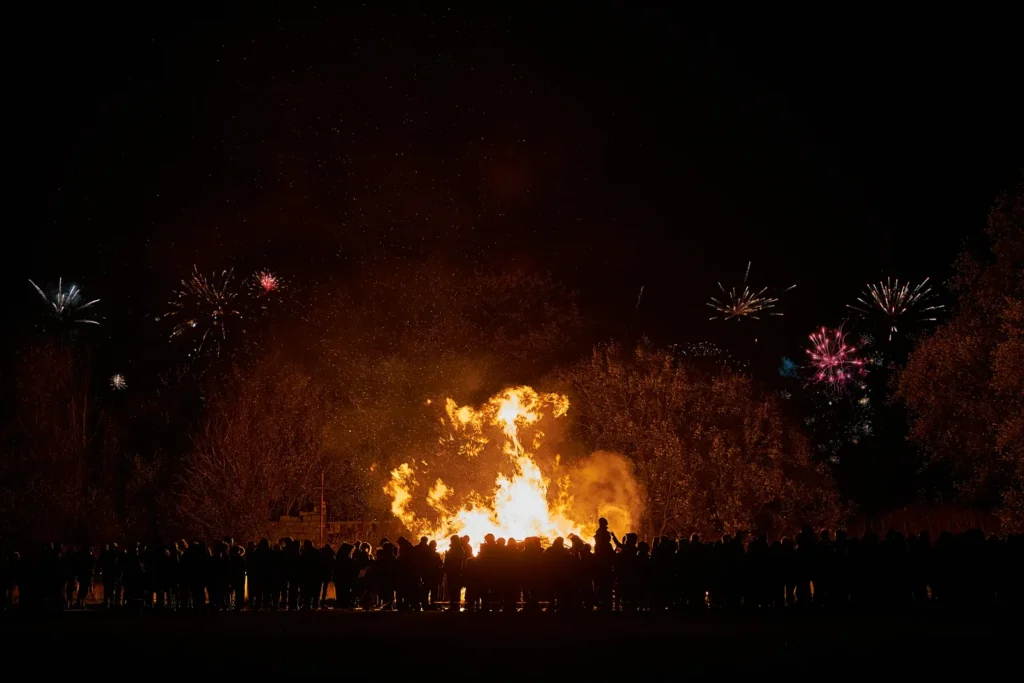
Bonfire Night, also called Guy Fawkes Night, remembers the failure of the Gunpowder Plot. Fireworks and community gatherings mark the occasion, while individual displays follow their own schedules.
Add this date to my calendarA full year of awareness dates, ready to edit, print or sync.
Get the full 2027 awareness days calendar£39 a year. Renews annually.
On this page
Dates and event details
Bonfire Night 2026 is on Thursday 5 November.
| Year | Date | Day |
|---|---|---|
| 2026 | 5 November | Thursday |
| 2027 | 5 November | Friday |
| 2028 | 5 November | Sunday |
| Where | UK |
|---|
What is Bonfire Night?
Bonfire Night, also called Guy Fawkes Night, marks the failure of the Gunpowder Plot of 1605. Its familiar traditions include fireworks, bonfires and community gatherings. It is a historical observance rather than a campaign with a single organiser or annual theme.
The date is fixed, but an individual firework display may take place on a different evening. Check the organiser’s confirmed 2026 event information before arranging travel or inviting a group.
What are the rules on fireworks?
GOV.UK’s fireworks guidance explains purchase restrictions and the usual overnight curfew, including a midnight cut-off on Bonfire Night. That exception should not be assumed to cover a display held on another evening.
Check the rules for your nation and locality as well as the venue’s instructions: licensing, permitted use and local restrictions can differ. A ticketed event’s published finishing time is also separate from the latest time the law may allow. Do not treat this calendar entry as permission to hold a private display.
When is Bonfire Night 2026?
Guy Fawkes Night falls on Thursday 5 November 2026. It stays on 5 November every year, regardless of the day of the week. A nearby weekend display does not move the observance itself.
Bonfire Night is not a UK bank holiday. The GOV.UK bank holiday calendar lists public holidays by nation; a local display or school activity has its own arrangements.
Ideas for schools and community groups
Build a lesson around the distinction between evidence and a later tradition. Show the Monteagle letter, explain who wrote and received a historical source where known, and ask what questions it leaves unanswered. Keep discussion of religious conflict factual and avoid asking children to identify with either side.
For an art activity, create a shared night-sky picture using paper or paint. For a community calendar, publish the actual event date beside the fixed 5 November observance so families can see the difference at a glance.
Why do we remember Guy Fawkes?
The plotters planned to destroy the House of Lords during the State Opening of Parliament on 5 November 1605, killing King James I and those attending. UK Parliament’s historical account identifies Robert Catesby as central to the conspiracy and describes Guy Fawkes guarding the gunpowder beneath the building.
A warning sent to Lord Monteagle helped lead to its discovery. The National Archives presents the original Monteagle letter and explains its significance. Fawkes was discovered on the night of 4–5 November, before the planned explosion. Remembering only his name can obscure the wider group and the religious and political conflict behind the plot.
Finding a Bonfire Night display
Use the council, venue or event organiser’s own listing. An old photograph or a previous year’s ticket page is not confirmation that a 2026 event is happening.
- Date and times: check the year, gate opening, display start and finish.
- Tickets: confirm whether advance booking is required and whether the ticket includes parking or other activities.
- Access: look for step-free routes, toilets, seating, crowd arrangements and any quieter viewing area.
- Travel: check road closures, public transport and the route home after the display.
- Changes: read the organiser’s weather, cancellation and refund information before setting off.
For a family or group visit, agree a meeting point and make sure everyone has the organiser’s current information. Ask the venue directly about access needs that its listing does not cover.
Firework and sparkler safety
London Fire Brigade recommends attending a public display and provides advice for anyone considering fireworks or sparklers at home. Its guidance says not to give sparklers to children under five, to wear gloves, and to put spent sparklers into cold water.
Read the full fire-service guidance before an activity. Sparklers are not harmless toys, and a school craft session does not need live flames or fireworks. Paper designs, projected light or a historical source activity offer alternatives for groups that do not want a display.
Reviewed 23 October 2026. Checked calendar dates, Parliament and National Archives history, government rules and fire-service guidance; replaced unconfirmed local scheduling claims.
Frequently asked questions
What day is Bonfire Night 2026?
Bonfire Night is Thursday 5 November 2026.
Is Guy Fawkes Night the same as Bonfire Night?
Yes. Both names refer to the 5 November observance associated with the failed Gunpowder Plot.
Are all firework displays held on 5 November?
No. Organisers choose their own dates. Check the confirmed event listing rather than assuming that a nearby weekend is the display date.
Is Bonfire Night a bank holiday?
No. It is not a UK bank holiday.
How late can fireworks be used on Bonfire Night?
GOV.UK gives a midnight cut-off for Bonfire Night. Check national and local restrictions, and do not assume the exception applies to a different evening.