- This event has passed.
Hungry Ghost Festival
August 27
About Hungry Ghost Festival
The Hungry Ghost Festival is a traditional East and Southeast Asian observance that honours the dead and tends to wandering spirits believed to roam the world of the living during the seventh lunar month. In 2026 it falls on Thursday, 27 August, marking the climax of what is known as Ghost Month. Rooted in both Taoist and Buddhist belief, it is a time for families to make offerings of food, burn joss paper, and remember their ancestors.
The Story Behind the Hungry Ghost Festival
The festival grows from two intertwined religious traditions and a much older strand of Chinese folk belief. In Taoism it is called the Zhongyuan Festival, named after the middle of the “Three Yuan” that divide the ritual year. According to Taoist thinking, the gates of the underworld swing open at the start of the seventh lunar month, releasing spirits to wander among the living for the whole of Ghost Month. The fifteenth day, when the moon is full, is the point at which the spirits are thought to be closest and most active, and so it became the focus of offerings and remembrance.
In Buddhism the same occasion is known as the Yulanpen Festival, and its story is one of the most enduring in the tradition. The Yulanpen Sutra tells of Maudgalyayana, known in Chinese as Mulian, a devoted disciple of the Buddha. Using his spiritual powers he searched the realms of the afterlife for his late mother and found her reborn among the hungry ghosts, gaunt creatures with swollen bellies and needle-thin throats, unable to eat. When he tried to feed her, the rice burst into flames before it could reach her mouth. The Buddha advised him that no single person could lift her suffering, but that offerings made to the wider monastic community on the fifteenth day of the seventh month could transfer enough merit to free her. Mulian became a model of filial piety, and the festival carried his lesson forward.
Over the centuries these religious roots fused with folk customs across China, Taiwan, Hong Kong, Singapore, Malaysia, Indonesia, the Philippines, and Vietnam. The result is a living tradition that blends solemn ancestor worship with vivid public spectacle. In Singapore and Malaysia in particular, the festival has become a defining feature of the cultural calendar, observed by Taoist and Buddhist communities alike. If you are drawn to celebrations with deep historical roots, you may also enjoy reading about Halloween, another tradition shaped by ancient beliefs about the boundary between the living and the dead.
When and Where is the Hungry Ghost Festival Celebrated?
The Hungry Ghost Festival falls on the fifteenth day of the seventh month in the Chinese lunisolar calendar, which means its date in the Gregorian calendar shifts from year to year. In 2026 it is observed on Thursday, 27 August. The broader Ghost Month runs roughly from 13 August to 11 September 2026, with the festival itself marking its high point. Because the lunar date never lines up neatly with the Western calendar, the table below shows when the festival falls over the next five years.
| Year | Date |
|---|---|
| 2026 | Thursday, 27 August |
| 2027 | Monday, 16 August |
| 2028 | Sunday, 3 September |
| 2029 | Friday, 24 August |
| 2030 | Tuesday, 13 August |
The festival is marked most visibly in southern China, Taiwan, Hong Kong, and across Chinese communities in Singapore, Malaysia, and beyond. Customs vary by region: a quiet family rite in one place may be a street-filling carnival in another, but the underlying purpose of caring for the dead remains the same.
Traditions and Customs
The Hungry Ghost Festival is rich with rituals that have been passed down for generations. Each carries its own meaning, balancing respect for ancestors with care for the restless spirits who have no descendants to remember them.
- Burning joss paper – Families burn hell bank notes and paper replicas of clothing, houses, cars, and other goods, believing these are transformed into usable items for relatives in the afterlife. The practice both honours ancestors and appeases wandering ghosts who might otherwise cause mischief.
- Offering food – Tables of cooked dishes, fruit, and rice are laid out for the spirits, sometimes in homes and sometimes along roadsides. The food is offered first to the dead and later shared among the living.
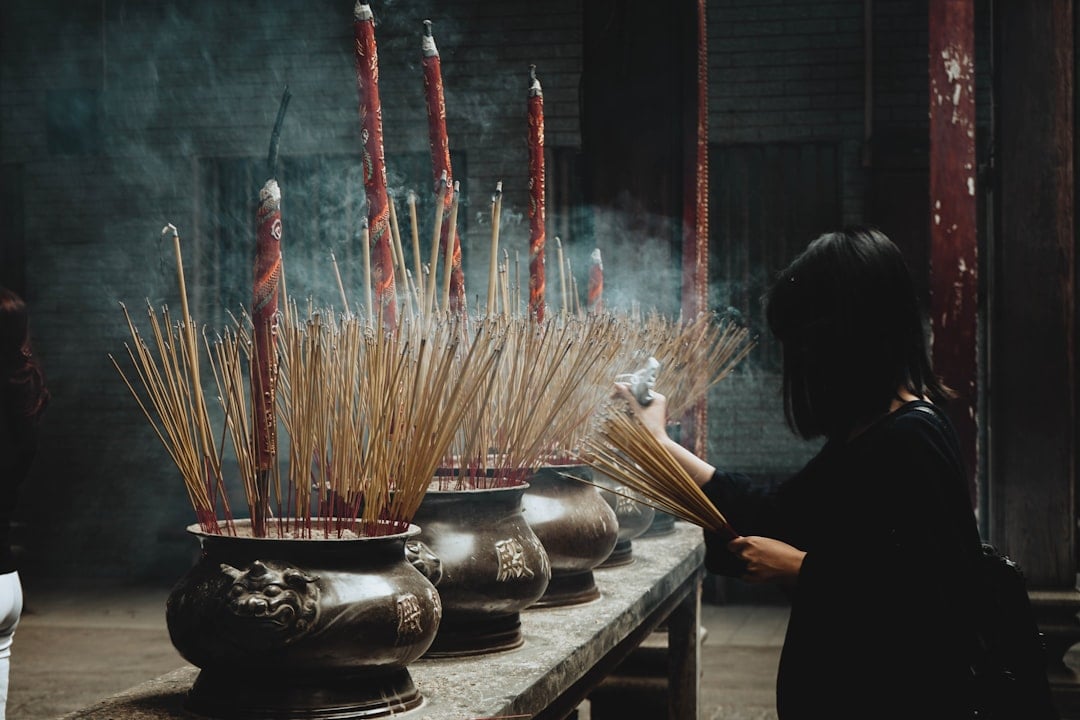
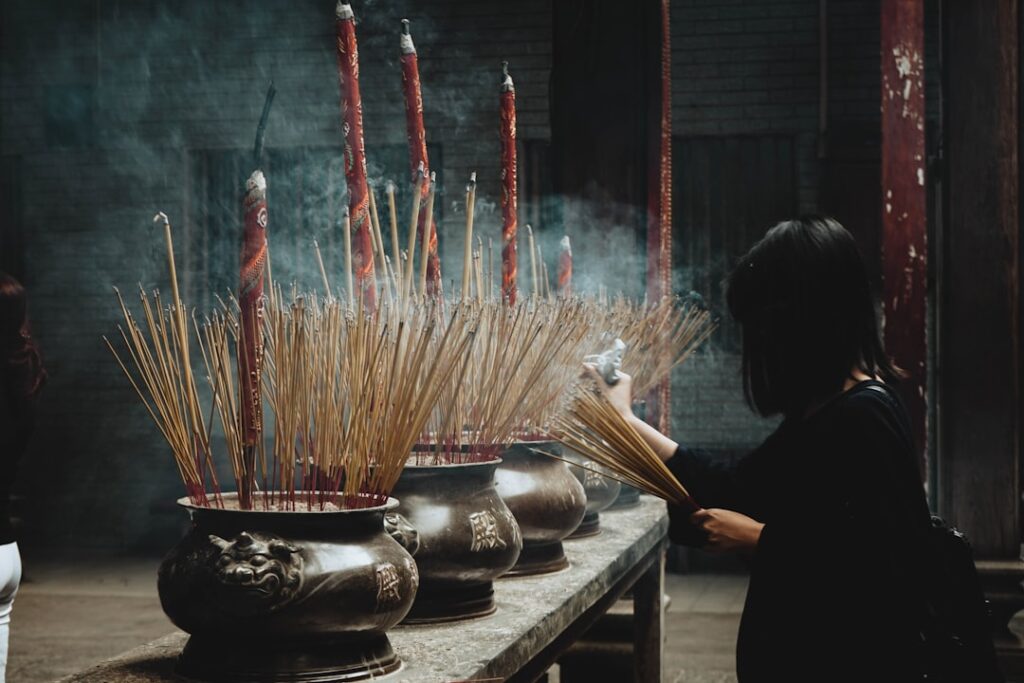
- Burning incense – Sticks of incense are lit at altars, temples, and doorways to guide spirits and carry prayers upward. The rising smoke is seen as a bridge between the two worlds.
- Getai street performances – In Singapore and Malaysia especially, temporary stages host boisterous live shows of singing, dancing, comedy, and opera. The front row of seats is always left empty, reserved for the spectral audience.
- Releasing water lanterns – Lotus-shaped lanterns are lit and set adrift on rivers and lakes to guide lost and drowned souls towards peace, a quietly beautiful counterpoint to the louder rituals.
Ways to Mark the Hungry Ghost Festival
Whether you observe the festival as part of your own heritage or simply wish to engage with it respectfully, there are many ways to take part.
- Honour your ancestors – Set aside time to remember relatives who have passed, perhaps by preparing a dish they loved or sharing their story with younger family members.
- Visit a temple – Many Taoist and Buddhist temples hold special ceremonies during Ghost Month, offering a window into the rituals and a chance to light incense or make an offering.
- Attend a getai show – If you live in or are visiting Singapore or Malaysia, catch one of the open-air performances and experience the festival’s lively communal side.
- Learn the Mulian story – Reading the tale of Mulian and his mother is a meaningful way to understand the festival’s emphasis on filial piety and compassion.
- Prepare a vegetarian meal – Many observers eat vegetarian food during Ghost Month as an act of merit and reflection, a simple way to mark the occasion at home.
- Respect local customs – If you are travelling during the festival, observe the taboos quietly, avoid kicking offerings left on the pavement, and take an interest in the traditions you encounter.
Facts and Figures
- The festival is held on the fifteenth day of the seventh lunar month, but the wider Ghost Month spans the entire seventh month, lasting roughly 30 days.
- It is known by at least three names: the Hungry Ghost Festival in everyday speech, the Zhongyuan Festival in Taoism, and the Yulanpen Festival in Buddhism.
- The Buddhist version traces back to the Yulanpen Sutra and the story of Mulian rescuing his mother from the realm of hungry ghosts.
- Hungry ghosts are traditionally depicted with swollen bellies and tiny, needle-thin throats, a vivid image of unending hunger that can never be satisfied.
- During getai performances, the front row of seats is deliberately left empty so that visiting spirits have somewhere to sit.
Frequently Asked Questions
What is the Hungry Ghost Festival?
The Hungry Ghost Festival is a traditional Chinese observance during the seventh lunar month, when the dead are believed to return to the world of the living. Families make offerings of food, burn joss paper, and hold ceremonies to honour ancestors and comfort wandering spirits.
When is the Hungry Ghost Festival in 2026?
In 2026 the Hungry Ghost Festival falls on Thursday, 27 August. The surrounding Ghost Month runs from around 13 August to 11 September 2026.
Why is it called the Hungry Ghost Festival?
The name comes from the belief that spirits without descendants to feed them become hungry ghosts, depicted with swollen bellies and needle-thin throats. Offerings of food and burnt goods are made to satisfy their hunger and keep them content.
Spread the Word
Share the Hungry Ghost Festival with your community using #HungryGhostFestival and #HungryGhostFestival2026. Whether you mark the occasion with an offering, a temple visit, or simply by learning the story of Mulian, every bit of awareness helps keep this tradition alive.
Related Awareness Days
- Halloween – Another autumn tradition built around the thinning boundary between the living and the dead, marked with costumes and remembrance.
- Day of the Dead – The Mexican Dia de los Muertos similarly honours departed loved ones with food, altars, and offerings.
- Chinese New Year – The most important festival in the Chinese calendar, rich with its own customs, food, and family gatherings.
Links
- Read about the Hungry Ghost Festival on Visit Singapore
- Explore more awareness days at AwarenessDays.com
Featured image: Photo by Chinh Le Duc on Unsplash.





2026 Awareness Days Wall Planner
Every key awareness day at a glance. Perfect for offices, staff rooms, and team planning.
View Calendar →