International Day of the Mediterranean Diet 2026
Monday 16 November 2026
Dates can vary from year to year, so check the organiser’s website for the latest details.
The UN observance on 16 November explores Mediterranean food culture, shared knowledge and sustainable food systems.
Add this date to my calendarA full year of awareness dates, ready to edit, print or sync.
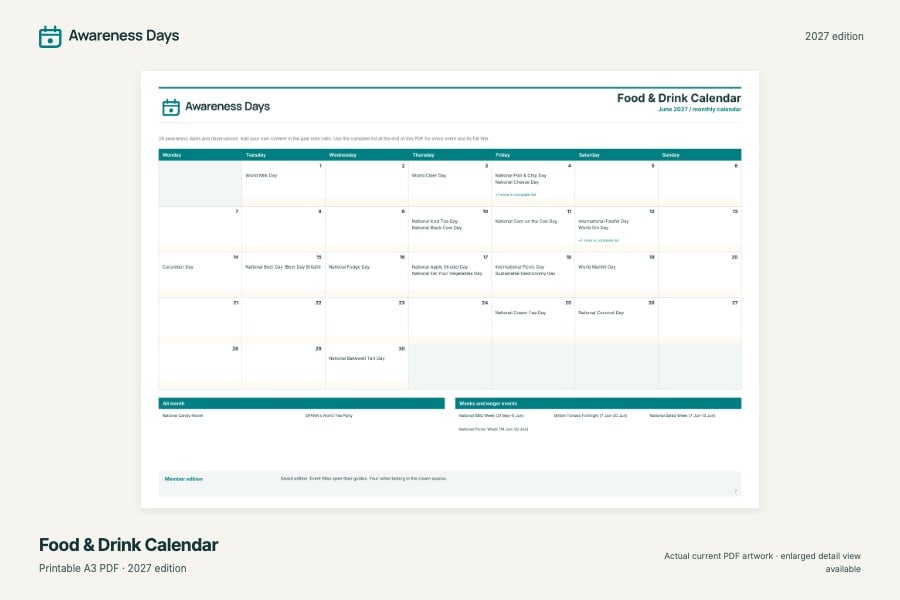
Get the full 2027 food and drink calendar£49.99 a year. Renews annually.
On this page
Dates and event details
Monday 16 November 2026. Held every year on 16 November.
| Date status | Date calculated from a fixed annual pattern |
|---|---|
| Date-check source | Official observance organiser |
| Where | International |
What is the official observance?
The General Assembly designated the day through resolution A/RES/80/174, published in 2025. The resolution invites schools, communities, civil society, businesses and other organisations to raise awareness and share good practice. It asks the Food and Agriculture Organization of the United Nations to facilitate the observance.
The resolution connects the Mediterranean diet with cultural values including hospitality, neighbourliness and intercultural dialogue. It also discusses a variety of foods, such as fruit, vegetables, whole grains, legumes, nuts and olive oil, within its wider account of nutrition and sustainable food systems.
The International Day of the Mediterranean Diet is observed on 16 November. In 2026, it falls on Monday. This United Nations observance provides an opportunity to explore a food culture, the knowledge shared around it, and its connections with communities, biodiversity and sustainable food systems.
Ideas for schools and colleges
- Explore a recipe’s journey. Choose a recipe and investigate its ingredients, the place it is associated with and the people who have shared it. Distinguish a family’s version from a claim about a whole country.
- Connect food and geography. Use a map to explore the Mediterranean region and the different conditions in which ingredients are grown. Ask what information is needed to understand where a food comes from.
- Collect food stories. Invite voluntary contributions about a shared meal or cooking skill. A written or illustrated story can work without anyone bringing food into the setting.
- Consider food systems. Follow an ingredient from production to preparation and discuss the people, transport, packaging and resources involved. Keep conclusions tied to the evidence available.
Ideas for workplaces and community groups
A community centre could host a recipe exchange, a talk about food heritage or a demonstration led by someone with relevant cooking knowledge. Agree the contributor’s role and payment, and allow them to explain the personal or regional background of the dish.
A workplace lunch group could share a small set of recipes and discuss how they are adapted to available ingredients, budgets and time. Make participation optional and include ways to contribute without cooking or buying anything. An online collection of food memories may be as useful as a tasting event.
If food is served, use the venue’s normal procedures for ingredients, allergies, preparation and storage. Keep labels available and tell participants what is being offered. A display or discussion can provide an alternative where serving food would be impractical.
More than a list of ingredients
The day can be approached through the way people grow, prepare and share food, and how knowledge passes between generations. Different communities around the Mediterranean have their own dishes, ingredients and traditions. A useful activity can recognise that variety instead of presenting the region as a single cuisine.
This is a cultural and educational calendar entry. It does not prescribe an individual eating plan or suggest that one meal can deliver a particular health outcome. People with personal dietary questions can seek advice appropriate to their circumstances from a qualified professional.
Plan a focused activity
Choose a clear subject, such as the role of a shared meal, a particular cooking skill or the story of one ingredient. Ask contributors how they would like their knowledge to be represented. Avoid making one participant responsible for explaining an entire culture.
Afterwards, retain the recipe sources, credits and any questions the group would like to explore. A repeat gathering can compare different accounts of the same ingredient or skill, showing how food traditions continue to change as people share them.