

International Day to End Obstetric Fistula 2027
Sunday 23 May 2027
Dates can vary from year to year, so check the organiser’s website for the latest details.
The International Day to End Obstetric Fistula on 23 May supports awareness of a serious childbirth injury and the need for timely, quality maternal care, treatment and respect for those affected.
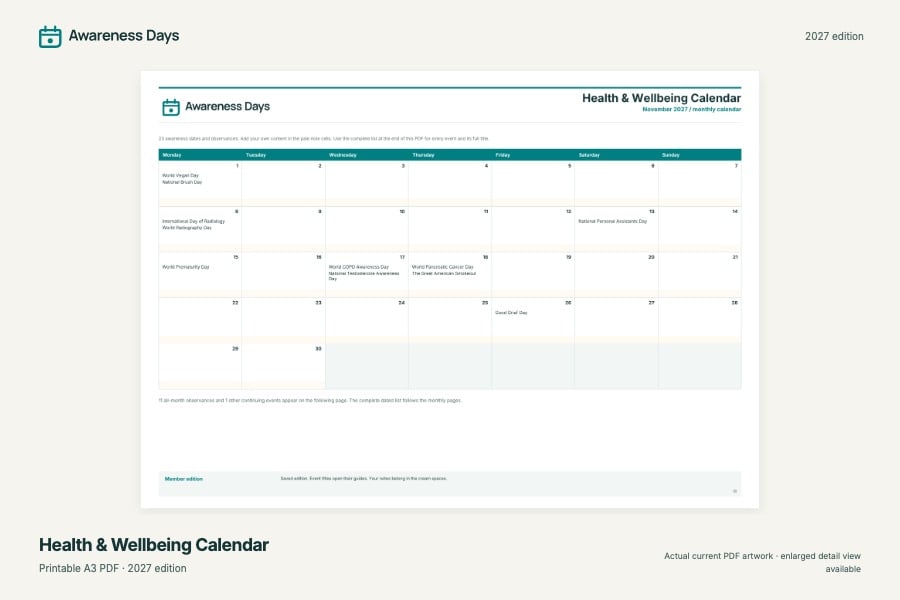
Add this date to my calendarA full year of awareness dates, ready to edit, print or sync.
Get the full 2027 health calendar£49.99 a year. Renews annually.
On this page
Dates and event details
International Day to End Obstetric Fistula 2027 takes place on 23 May 2027. The International Day to End Obstetric Fistula on 23 May supports awareness of a serious childbirth injury and the need for timely, quality maternal care, treatment and respect for those affected.
| Date status | Date calculated from a fixed annual pattern |
|---|---|
| Date-check source | UNFPA Campaign to End Fistula |
| Where | International |
What is International Day to End Obstetric Fistula?
UNFPA’s Campaign to End Fistula confirms that the day is observed every year on 23 May, following its UN designation and first observance in 2013. The campaign seeks action and sustained support rather than a single annual moment of attention.
UNFPA describes obstetric fistula as an injury involving a tear between the birth canal and bladder and/or rectum, associated with prolonged obstructed labour without timely, high-quality intervention. Its work includes prevention, treatment and support for survivors. This listing offers awareness activities, not diagnosis or individual medical guidance.
Date and common questions
The International Day to End Obstetric Fistula is annually on 23 May. The 2027 date is calculated from that fixed rule. No unannounced annual theme or programme is assumed.
Does the observance provide individual treatment advice?
No. It raises awareness and supports access to appropriate care and survivor support. Personal symptoms, diagnosis and treatment need assessment by qualified healthcare professionals; a general event listing cannot determine an individual’s needs.
How can an organisation communicate responsibly?
Use verified information, respectful language and consent for personal stories. Explain what the activity can and cannot provide, and support established expertise rather than making medical promises or asking untrained volunteers to advise participants.
Why it matters
Public discussion should preserve dignity and avoid treating affected women and girls as a shocking image or a fundraising device. A useful activity considers access to care, inequality and support while using trusted information. People with lived experience should decide whether and how their own stories are shared.
Practical ways to take part
- Share an accurate introduction. Use a current UNFPA explanation suited to the audience and avoid graphic imagery. Explain the purpose of the awareness day and where authoritative information can be found. Check that a simplified description remains accurate and does not imply blame.
- Review language and imagery. Look at materials planned for an event and ask whether they respect the people described. Avoid sensational headlines, unsupported claims or identifying details used without meaningful consent. A clear explanation can be compelling without exposing a person’s private experience.
- Learn about access to care. A class or professional group can map the kinds of services and support a maternal-health system needs. Use reliable sources and distinguish a general educational model from the realities of a particular country or individual case.
- Support established expertise. If fundraising or volunteering is planned, check the receiving organisation’s current programme and published arrangements. Explain what the contribution supports without promising a particular medical outcome or presenting one donation as a guaranteed treatment for an individual.
- Plan respectful discussion. Use an appropriate facilitator and give people a choice about participation. Do not ask anyone to disclose a birth experience or health condition. Make the limits of the activity clear and direct personal questions to suitable qualified services.
Plan a useful activity
A health-education or community group could create a short resource list linking to UNFPA’s campaign and relevant established organisations. Check each source’s purpose and date, and separate general background from any local service information. Ask an appropriate professional to review clinical wording before it is distributed. Agree who will maintain the resource, because an awareness event should not leave people with outdated contacts or unsupported information.
Official information
Use the official International Day to End Obstetric Fistula information for background and organiser resources. The annual date does not confirm a particular local event, booking arrangement or future campaign theme. Check those details with the relevant organiser.