CalendarCultural tradition
Kwanzaa
Saturday 26 December 2026 to Friday 1 January 2027
ConfirmedDate confirmed with britannica.com, checked 18 November 2026.
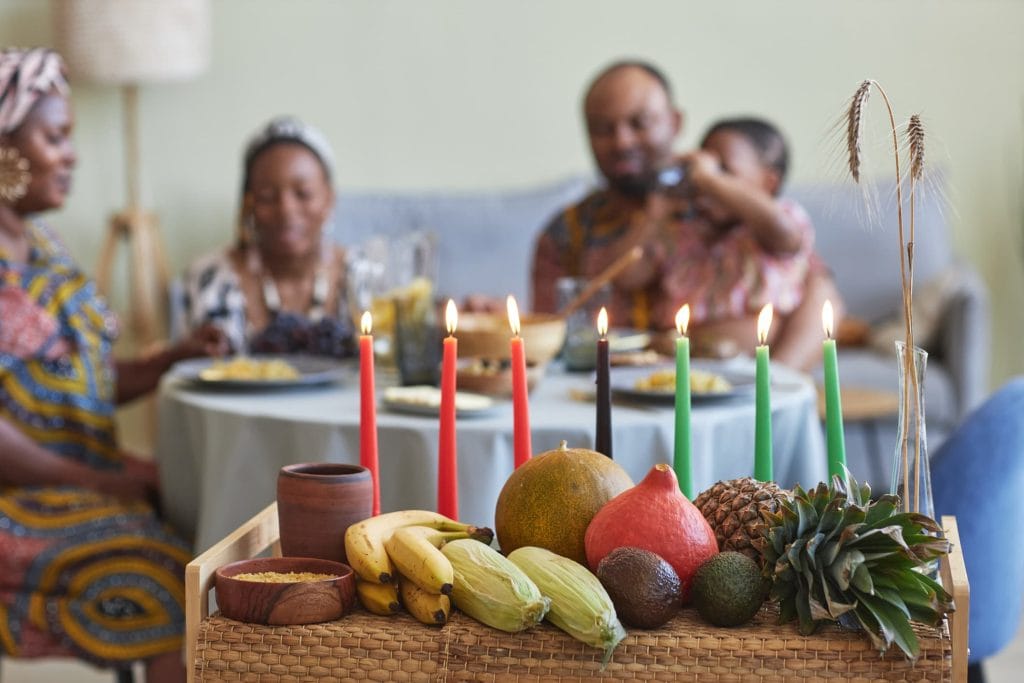
A seven day cultural holiday, from 26 December to 1 January, celebrating African heritage and African American culture.
- Rule
- 26 December every year
- Length
- 7 days
- Type
- Cultural tradition
- About
- Arts and culture
- Standing
- Run by an organiser
- Observed in
- US, Canada
- Started in
- US
- Official website
- officialkwanzaawebsite.org
- Hashtag
- #Kwanzaa
Download the 2027 template Get the data Every date on this site as an editable calendar, or as an API and data feed.
When interest builds
Interest starts around 21 November, 35 days out. Half of it has arrived by 20 December.
How big it is
- US63%
- UK21%
- Canada5%
Dates by year
| 2025 | Friday 26 December 2025 to Thursday 1 January 2026 |
|---|---|
| 2026 | Saturday 26 December 2026 to Friday 1 January 2027 |
| 2027 | Sunday 26 December 2027 to Saturday 1 January 2028 |
| 2028 | Tuesday 26 December 2028 to Monday 1 January 2029 |
About Kwanzaa
Kwanzaa is a seven-day cultural holiday that celebrates African heritage and African-American culture. It was created in 1966 by Dr Maulana Karenga and the organisation Us, and is observed mainly in the United States. It is a cultural holiday, not a religious one, and it is not a US federal holiday.
What is Kwanzaa and where did it come from?
The official Kwanzaa website, maintained by Us as "the founding organization of Kwanzaa", says the holiday "was established in 1966 in the midst of the Black Freedom Movement and thus reflects its concern for cultural groundedness in thought and practice, and the unity and self-determination associated with this". It describes Kwanzaa as created "to reaffirm and restore our rootedness in African culture".
The model is the first-fruits celebrations of the African continent. The name comes from the Swahili phrase "matunda ya kwanza": the site explains that matunda means "fruits" and ya kwanza means "first".
On religion, the site's questions and answers are direct: "Kwanzaa is not a religious holiday, but a cultural one with an inherent spiritual quality", and says Africans of all faiths celebrate it. On scale, Dr Karenga describes it as "celebrated by millions throughout the world African community". The site gives no count or source for that figure.
The 2026 theme
Dr Karenga sets an annual theme. The official site lists the 2026 theme as "Embracing the Principles and Culture of Kwanzaa: Creating, Celebrating and Sharing Good in the World". As of November 2026 the accompanying Founder's Message for 2026 had not been posted.
How is Kwanzaa celebrated?
Each of the seven days is dedicated to one of the seven principles, the Nguzo Saba, and one candle is lit each day. The principles were defined by Dr Karenga and are summarised below; his full wording for each is on the official site.
- Umoja (Unity): To strive for and maintain unity in the family, community, and nation.
- Kujichagulia (Self-Determination): To define and name ourselves, as well as create and speak for ourselves.
- Ujima (Collective Work and Responsibility): To build and maintain our community together, making our brothers' and sisters' problems our problems and solving them together.
- Ujamaa (Cooperative Economics): To build and maintain our stores, shops, and other businesses, and to profit from them together.
- Nia (Purpose): To make our collective vocation the building and developing of our community to restore our people to their traditional greatness.
- Kuumba (Creativity): To do always as much as we can in the way we can to leave our community more beautiful and beneficial than we inherited it.
- Imani (Faith): To believe with all our hearts in our people, our parents, our teachers, our leaders, and the righteousness and victory of our struggle.
The week follows a set pattern, described on the official site's celebration page:
- Light the Kinara: The Kinara (candleholder) holds seven candles, one black, three red and three green. The black candle, for Umoja, is lit on the first day, 26 December, and the others are lit from left to right on the following days, with the day's principle discussed.
- Decorate with Symbols: The symbols are set out on a mat (mkeka) on a table spread with African cloth. They include the Mazao (crops) and the Bendera (flag). The colours of Kwanzaa are black, red and green.
- Gift-Giving: Gifts (zawadi) are one of the symbols of Kwanzaa. The official site describes them as "symbolic of the labor and love of parents and the commitments made and kept by the children".
- The Karamu: The feast, the Karamu Ya Imani (Feast of Faith), is typically held on 31 December, the sixth day, according to Wikipedia; the official site does not fix a day for it.
- Music and Dance: The official site lists music, dance, poetry and narratives as part of the celebration.
- The Day of Meditation: The last day, 1 January, is the Day of Meditation (Siku ya Taamuli), which the official site describes as a time of "sober assessment of things done and things to do".
Related awareness days
- First NightCelebrationTo be confirmed
- Burns NightCultural traditionConfirmed
- Holocaust Memorial DayRemembranceConfirmed
- LGBT History MonthAwareness campaignExpected
- Chinese / Lunar New YearCultural traditionConfirmed
- Chinese New Year (Lunar New Year)Cultural traditionConfirmed
More from the calendar
December awareness daysUnited StatesArts & Culture AwarenessArts, Culture & HeritageSeasonal CelebrationsFull calendar
From the Almanac
Record 61173. Guide last edited 19 November 2026. Spotted a wrong date? Tell us and we will check it with the organiser.
Get this record as data