

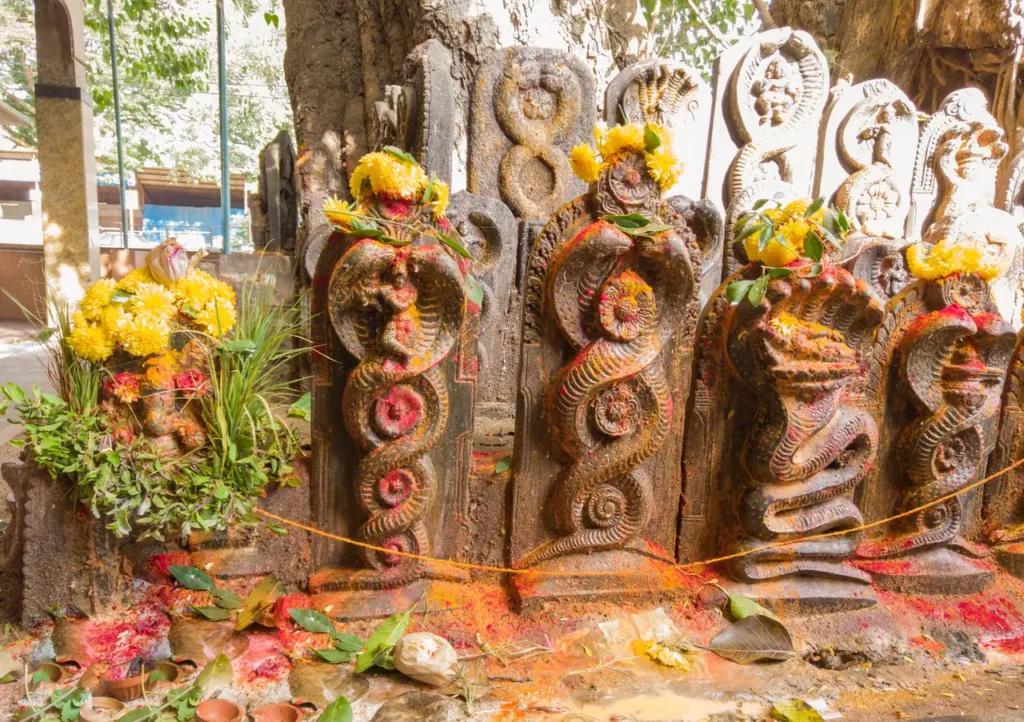
Nag Panchami 2027
Friday 6 August 2027 · dates set by the organiser each year
Nag Panchami is a Hindu festival dedicated to the worship of snakes, revered as sacred and protective beings in Indian tradition.
Also on 6 August: Bolivia Independence Day · Jamaica Independence Day
The Story Behind Nag Panchami
Nag Panchami is a Hindu festival dedicated to the worship of snakes, revered as sacred and protective beings in Indian tradition. Observed on the fifth day of the bright fortnight of the lunar month of Shravana, it is marked across India and Nepal with offerings of milk, prayers, and rituals that honour the divine serpent, or naga. In 2026, Nag Panchami falls on Monday, 17 August.
The roots of Nag Panchami reach deep into Hindu mythology, where serpents occupy a place of profound spiritual significance. Snakes are not feared on this day but honoured, seen as guardians, symbols of fertility, and embodiments of cosmic energy. The festival draws on several ancient legends, each woven into the fabric of the celebration.
One of the most beloved stories tells of Lord Krishna’s triumph over Kaliya, a venomous serpent that had poisoned the waters of the Yamuna River. According to the tale, the young Krishna leapt into the river, subdued the great snake by dancing upon its many hoods, and spared its life on the condition that it leave the river in peace. The day is remembered as a victory of the divine over danger, and of mercy over destruction.
Another legend recounts the tale of Astika, a sage who halted the Sarpa Satra, a great snake sacrifice performed by King Janamejaya to avenge his father’s death. Astika’s intervention saved the entire serpent race from extinction, and Nag Panchami is observed in part to commemorate that act of deliverance. These stories, passed down through generations, explain why the day is one of reverence rather than fear.
Beyond mythology, snakes carry a deeper spiritual meaning in Hindu thought. They represent kundalini shakti, the dormant divine energy believed to rest at the base of the spine. When awakened through devotion and discipline, this energy is said to rise like a coiled serpent through the body’s energy centres, leading towards spiritual enlightenment.
When and Where is Nag Panchami Celebrated?
Nag Panchami is observed on the fifth day, or Panchami, of the bright half of the lunar month of Shravana, which falls during July or August. In 2026 it lands on Monday, 17 August across most of India. Because it follows the Hindu lunar calendar, the date shifts each year. In some regions, such as Gujarat, the festival is observed on a different date, reflecting local calendrical traditions. The celebration is widespread across India and Nepal, and is marked by Hindus, and in some places by Jains and Buddhists too.
| Year | Date |
|---|---|
| 2026 | Monday, 17 August |
| 2027 | Saturday, 7 August |
| 2028 | Friday, 25 July |
| 2029 | Tuesday, 14 August |
| 2030 | Saturday, 3 August |
Plan around Nag Panchami and every key date in August
Content planning tools and templates for 2027: editorial calendars, Google Sheets, Excel, calendar feeds and printable calendars. The rest of 2026 is included.
Traditions and Customs
Nag Panchami is rich with ritual, much of it centred on offerings made to serpent deities:
- Milk offerings (abhishekam) – Devotees bathe images or idols of the naga, made of silver, stone, wood, or painted on walls, with milk, seeking blessings for the family’s welfare.
- Snake motifs on doorways – In villages and towns, serpent images are drawn on doors and walls using turmeric, sandalwood paste, or cow dung as symbols of protection.
- Flowers and sweets – Worshippers offer fresh flowers, sweets, and rice to the serpent deity as a mark of devotion and gratitude.
- Fasting and prayer – Many observe a fast through the day and chant protective mantras dedicated to the nagas.
- Temple worship – Devotees visit temples dedicated to serpent gods, where special prayers and rituals are performed in their honour.
Ways to Celebrate Nag Panchami
Whether observed traditionally or learned about with curiosity, there are many ways to mark the day:
- Visit a naga temple – Join the prayers and observe the rituals at a temple dedicated to serpent deities.
- Offer milk and flowers – Take part in the customary offerings as a gesture of reverence and goodwill.
- Learn the legends – Read the stories of Krishna and Kaliya or of Astika and the Sarpa Satra to understand the festival’s meaning.
- Draw serpent motifs – Create traditional snake designs at the entrance to your home using turmeric or coloured paste.
- Observe a fast – Follow the custom of fasting and prayer for the welfare of your family.
- Share the tradition – Explain the festival to friends and family to keep its stories and meaning alive.
Facts and Figures
- Nag Panchami is observed on the fifth day of the bright fortnight of Shravana, in July or August.
- The festival is celebrated by Hindus, and in some regions by Jains and Buddhists, across India and Nepal.
- Cobras are especially revered on this day as divine serpent beings.
- The legend of Krishna defeating the serpent Kaliya is among the festival’s best-known stories.
- Snakes symbolise kundalini shakti, the divine energy central to yogic philosophy.
Hashtags
Links





Frequently asked questions
What is Nag Panchami?
It is a Hindu festival honouring snakes as sacred and protective beings, observed on the fifth day of the bright fortnight of the lunar month of Shravana with offerings of milk, flowers, and prayer.
When is Nag Panchami in 2026?
It falls on Monday, 17 August 2026 across most of India, though some regions such as Gujarat observe it on a different date.
Why are snakes worshipped on Nag Panchami?
Snakes are revered as guardians and symbols of fertility, cosmic energy, and protection. The day also commemorates legends such as Krishna’s victory over the serpent Kaliya and the sage Astika saving the serpent race.
More awareness days in August
See all → 8 Aug8 AugSundayAnimals & WildlifeUK, US, Australia and worldwideInternational Cat Day 2027
 19 Aug19 AugThursdayCommunityInternationalWorld Humanitarian Day 2027
 19 Aug19 AugThursdayArts & Culture AwarenessInternationalWorld Photography Day 2027
 23 Aug – 6 SepWeek23 Aug to 6 SepWeekSeasonalInternationalBack to School 2027
 26 Aug26 AugThursdayAnimals & WildlifeInternationalNational Dog Day 2027
 30 Aug30 AugMondaySeasonalUKUK Summer Bank Holiday6Aug6 Aug6 AugFridayGlobal & NationalInternationalJamaica Independence Day6Aug6 Aug6 AugFridayGlobal & NationalInternationalBolivia Independence Day