National Find a Rainbow Day
April 3
About National Find a Rainbow Day
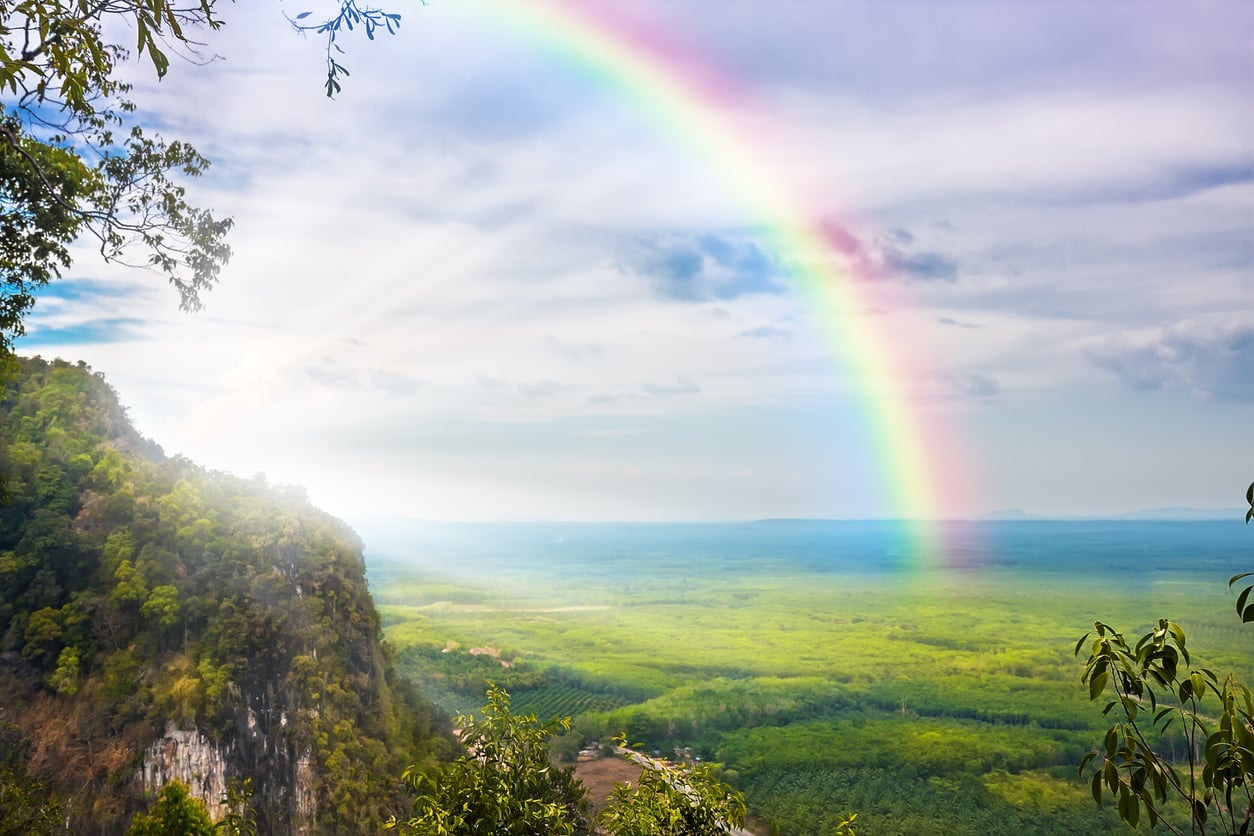
National Find a Rainbow Day falls on 3 April each year, encouraging people to look to the sky, seek out rainbows, and appreciate the beauty of this natural phenomenon. Whether spotted after a spring shower or created with a garden hose, rainbows have captivated humans for millennia, and this lighthearted day celebrates the joy they bring.
How to Celebrate National Find a Rainbow Day
National Find a Rainbow Day is all about seeking colour, wonder, and a moment of delight. Here are some ideas:
- Go rainbow hunting after a rain shower – The best time to spot a rainbow is just after rain when the sun breaks through. Head outside, position yourself with the sun behind you, and scan the sky opposite the sun. Early morning and late afternoon offer the best angles.
- Make your own rainbow – No rain? No problem. Use a garden hose on a sunny day to create a fine mist, and position yourself with the sun behind you. You can also use a glass prism or even a CD to split white light into its component colours indoors.
- Photograph a rainbow – If you spot one, capture it. Rainbow photography can be stunning, especially with a dramatic backdrop of dark storm clouds. Share your best shots on social media to brighten someone’s day.
- Learn the science behind rainbows – Rainbows form when sunlight refracts, reflects, and disperses through water droplets. Understanding the physics does not diminish the magic; if anything, it makes them more remarkable.
- Create rainbow art – Paint, draw, or craft something rainbow-themed. This is a particularly wonderful activity for children, who can learn about the colour spectrum while creating something colourful.
- Wear rainbow colours – Dress in the colours of the rainbow for the day. It is a simple, cheerful way to mark the occasion and spark conversations about the day.
- Read about rainbows in mythology – Rainbows appear in myths and legends across cultures, from the Norse Bifrost bridge connecting Earth to Asgard, to the Irish pot of gold, to the Australian Aboriginal Rainbow Serpent. Explore these stories and the cultural meanings behind them.
- Visit a waterfall or fountain – Waterfalls and fountains often produce rainbow-like effects in their spray. If you live near one, a visit on National Find a Rainbow Day could reward you with a spectacular natural display.
What is National Find a Rainbow Day?
National Find a Rainbow Day is an annual observance on 3 April that celebrates rainbows and encourages people to actively look for them. The day appeals to nature lovers, photographers, science enthusiasts, and anyone who appreciates a moment of colour and wonder in an ordinary day. It falls in early April, when spring showers make rainbow sightings more likely in much of the Northern Hemisphere. The day has no formal organisational backing but has gained popularity through social media and word of mouth. With April Fools’ Day just two days earlier, it offers a gentler, more contemplative way to enjoy early April.
When is National Find a Rainbow Day?
National Find a Rainbow Day is observed on 3 April every year. In 2026, it falls on a Friday. The date is fixed and does not change from year to year.
The History of National Find a Rainbow Day
The origins of National Find a Rainbow Day are something of a mystery. No individual or organisation has been definitively credited with founding the day, and no presidential proclamation or congressional resolution established it. The National Day Calendar, which tracks hundreds of observances, has noted that the day began appearing on calendars around 2018, though references to it may predate that.
What is clear is why April was chosen. Early spring in the Northern Hemisphere brings a mix of rain and sunshine, the perfect conditions for rainbow formation. April is traditionally one of the wettest months in many parts of the United States and United Kingdom, making rainbow sightings far more likely than at other times of the year. The day taps into a universal human fascination with rainbows that spans thousands of years and nearly every culture on Earth.
The science of rainbows was first fully explained by Rene Descartes in 1637, who described how light refracts and reflects within water droplets. Isaac Newton later demonstrated that white light is composed of a spectrum of colours, each bending at a slightly different angle. Despite this scientific understanding, rainbows have never lost their emotional power, remaining symbols of hope, beauty, and the promise that follows a storm.
Fun Facts About Rainbows
- A rainbow is actually a full circle, but from ground level, we can only see a semicircle. From an aeroplane or high mountain, it is sometimes possible to see a complete circular rainbow.
- The colours of a rainbow always appear in the same order: red, orange, yellow, green, blue, indigo, and violet, often remembered by the mnemonic Roy G. Biv.
- Double rainbows occur when light reflects twice inside water droplets. The second arc appears above the first with its colours reversed.
- Moonbows (lunar rainbows) are rainbows produced by moonlight rather than sunlight. They are rare and typically appear white to the naked eye because the light is too faint to activate colour-sensing cone cells in our eyes.
- The longest-lasting rainbow on record was observed over Sheffield, England, on 14 March 1994, lasting six hours from 9 am to 3 pm.
- In Norse mythology, the rainbow was called Bifrost, a burning bridge connecting the human world (Midgard) to the realm of the gods (Asgard).
Why National Find a Rainbow Day Matters
In a busy world, it is easy to rush past the small wonders around us. National Find a Rainbow Day is a gentle reminder to slow down, look up, and appreciate the beauty of the natural world. Rainbows are fleeting, appearing for just minutes before fading, and that impermanence is part of their appeal. The day encourages mindfulness, curiosity, and a connection with nature that benefits mental wellbeing.
Frequently Asked Questions
What is National Find a Rainbow Day?
National Find a Rainbow Day is an annual observance on 3 April that encourages people to look for rainbows in the sky or create their own, celebrating the beauty and science of this natural phenomenon.
When is National Find a Rainbow Day in 2026?
National Find a Rainbow Day falls on Friday, 3 April 2026.
How do rainbows form?
Rainbows form when sunlight enters water droplets in the atmosphere, refracts (bends), reflects off the back of the droplet, and refracts again as it exits. This process separates white light into its component colours, creating the arc of colour we see in the sky.
Spread the Word
Join the celebration and share your rainbow sightings, photos, or artwork on social media with #FindARainbowDay and #FindARainbowDay2026. Tag your friends and challenge them to spot a rainbow today!
Related Awareness Days
- International Mother Earth Day – Celebrated on 22 April, this day promotes appreciation for the natural world and environmental protection.
- Peach Blossom Day – Observed on 3 March, another day that celebrates the beauty of nature in early spring.
- Fun Day – Also in April, this day encourages everyone to find joy and fun in everyday activities.
Links
Plan your next campaign
Use Awareness Planner to discover events, build content calendars, and stay ahead of key dates.







2026 Awareness Days Wall Planner
Every key awareness day at a glance. Perfect for offices, staff rooms, and team planning.
View Calendar →