

Republic of the Congo – National Day 2027
Sunday 15 August 2027 · every year on 15 August
National Day in the Republic of the Congo is the country’s main national holiday, marking the proclamation of independence from France on 15 August 1960.
Also on 15 August: Victory In Japan Day · Acadia – National Acadian Day · India Independence Day
The Story Behind Republic of the Congo National Day
Republic of the Congo – National Day 2026 was on Saturday 15 August 2026. The next Republic of the Congo – National Day is on Sunday 15 August 2027.
National Day in the Republic of the Congo is the country’s main national holiday, marking the proclamation of independence from France on 15 August 1960. In 2027 it falls on Sunday 15 August. The day commemorates the birth of the modern Congolese state and is observed across the country with military parades, concerts, communal meals, and public ceremonies.
The territory that became the Republic of the Congo first encountered Europe through Portuguese explorers who reached the central African coast in the late fifteenth century. Sustained colonisation came much later. France began to assert control over the region in the late nineteenth century, declaring a protectorate over the area around 1880. By 1891 the territory had been organised into a French colony, and Brazzaville, named after the Italian-born French explorer Pierre Savorgnan de Brazza, grew into an important administrative centre. For a period it served as the capital of French Equatorial Africa, a federation of French colonial possessions in the region.
The decades of French rule reshaped the territory’s economy and society, but the path towards self-government accelerated after the Second World War. Unlike several neighbouring countries that endured violent struggles for liberation, the Congo moved towards statehood largely through political and constitutional channels. In 1958, Congolese voters chose autonomy within the French Community, establishing the Republic of the Congo as a self-governing member state rather than a fully sovereign nation.
Full independence followed on 15 August 1960. Fulbert Youlou, a Catholic priest turned politician, became the country’s first president. The ceremony marking the handover was held in Brazzaville, where speeches stressed unity and the work of nation-building that lay ahead. The date has been observed as the national day ever since, surviving decades of considerable political change, including periods of single-party rule and civil conflict in the 1990s.
It is worth distinguishing the Republic of the Congo, often called Congo-Brazzaville after its capital, from its much larger neighbour the Democratic Republic of the Congo, sometimes called Congo-Kinshasa. The two are separate countries with separate histories. The Democratic Republic of the Congo gained independence from Belgium on 30 June 1960 and marks its own national day on that date, as covered in our entry on Democratic Republic of the Congo Independence Day.
When and Where is Republic of the Congo National Day Celebrated?
National Day is observed every year on 15 August, the anniversary of the 1960 proclamation of independence. In 2027 the date falls on Sunday 15 August. The date is fixed and does not move, so it lands on a different day of the week each year. Celebrations take place throughout the Republic of the Congo, from the capital Brazzaville to the port city of Pointe-Noire and smaller towns across the country, as well as among Congolese communities living abroad.
Plan around Republic of the Congo – National Day and every key date in August
Content planning tools and templates for 2027: editorial calendars, Google Sheets, Excel, calendar feeds and printable calendars. The rest of 2026 is included.
Traditions and Customs
The national day blends formal state ceremony with widespread public celebration. Common customs include the following.
- Military and civic parades – The most prominent tradition is the parade. In Brazzaville, a large procession moves through the city centre, with soldiers, officials, and the president taking part, while smaller parades are organised in towns and cities nationwide.
- Presidential address – The head of state typically delivers a national address reflecting on independence, the year’s events, and the country’s direction, echoing the unity themes of the first independence speech in 1960.
- Concerts and cultural performances – Music is central to Congolese identity, and live performances, including the country’s renowned rumba and soukous styles, feature heavily in the festivities.
- Communal meals and festivals – Families and communities gather to share food, and local festivals add a celebratory atmosphere to the public holiday.
- Fireworks and public displays – Evening fireworks and decorations in the national colours of green, yellow, and red round off the day in major centres.
Ways to Celebrate Republic of the Congo National Day
Whether you have ties to the Congo or simply want to learn more, there are many ways to mark the day.
- Read about Congolese history – Spend time learning about the road from French Equatorial Africa to independence in 1960 and the figures who shaped the new republic.
- Listen to Congolese music – Explore Congolese rumba, a style recognised by UNESCO for its cultural importance, and discover its influence across African popular music.
- Cook a Congolese dish – Try preparing staples such as saka-saka, made from cassava leaves, or fish dishes served with plantain and rice.
- Attend a community event – In cities with Congolese diaspora communities, look out for cultural gatherings, music nights, and food events around mid-August.
- Display or learn the national colours – The Congolese flag carries green, yellow, and red, colours shared across many African nations as a symbol of pan-African solidarity.
- Share what you learn – Use the day as an opportunity to raise awareness of a country that is often confused with its neighbour, and help others understand the distinction.
Facts and Figures
- The Republic of the Congo became independent from France on 15 August 1960, with Fulbert Youlou as its first president.
- The capital, Brazzaville, is named after the explorer Pierre Savorgnan de Brazza and once served as the capital of French Equatorial Africa.
- The Republic of the Congo and the Democratic Republic of the Congo are two distinct countries, separated largely by the Congo River.
- The main independence parade in Brazzaville is traditionally held along a central boulevard during the morning of 15 August.
- Congolese rumba, a music genre rooted in both Congos, was added to UNESCO’s list of intangible cultural heritage in 2021.
Hashtags
Links
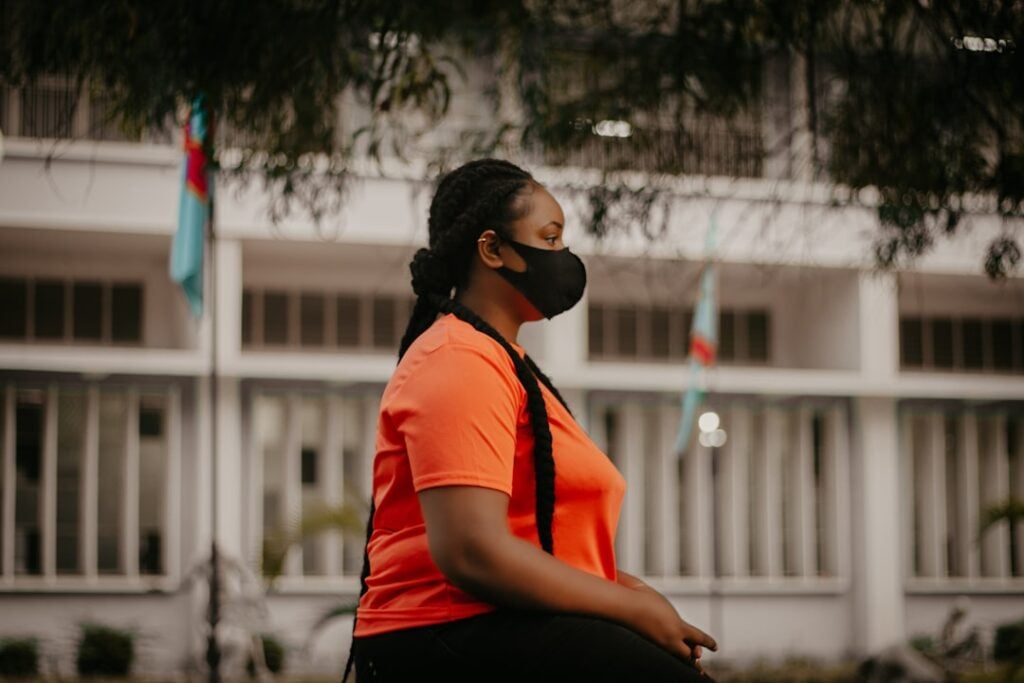
Featured image: Photo by Trésor Kande on Unsplash.




Frequently asked questions
What is Republic of the Congo National Day?
It is the main national holiday of the Republic of the Congo, commemorating the country’s independence from France, which was proclaimed on 15 August 1960. It is marked with parades, speeches, music, and public celebrations.
When is Republic of the Congo National Day in 2027?
National Day falls on Sunday 15 August 2027. The date is fixed each year as it marks the anniversary of independence.
Is this the same as the Democratic Republic of the Congo’s independence day?
No. The Republic of the Congo, or Congo-Brazzaville, gained independence from France on 15 August 1960. The Democratic Republic of the Congo, or Congo-Kinshasa, is a separate country that became independent from Belgium on 30 June 1960. They are two different nations with two different national days.
More awareness days in August
See all → 19 Aug19 AugThursdayArts & Culture AwarenessInternationalWorld Photography Day 2027
 19 Aug19 AugThursdayCommunityInternationalWorld Humanitarian Day 2027
 23 Aug – 6 SepWeek23 Aug to 6 SepWeekSeasonalInternationalBack to School 2027
 26 Aug26 AugThursdayAnimals & WildlifeInternationalNational Dog Day 2027
 30 Aug30 AugMondaySeasonalUKUK Summer Bank Holiday
 8 Aug8 AugSundayAnimals & WildlifeUK, US, Australia and worldwideInternational Cat Day 202715Aug15 Aug15 AugSundayReligious & FaithInternationalAssumption Day15Aug15 Aug15 AugSundayEducation & YouthUSNational Back-to-School Prep Day