Time of Remembrance and Reconciliation for Those Who Lost Their Lives During the Second World War 2027
Saturday 8 May to Sunday 9 May 2027
Dates can vary from year to year, so check the organiser’s website for the latest details.
The UN designates 8–9 May as a time to remember all victims of the Second World War and reflect on reconciliation and peace. Its resolution invites observance of either day or both days.
Add this date to my calendarA full year of awareness dates, ready to edit, print or sync.
Get the full 2027 awareness days calendar£49.99 a year. Renews annually.
On this page
Dates and event details
Time of Remembrance and Reconciliation for Those Who Lost Their Lives During the Second World War 2027 runs from 8 May 2027 to 9 May 2027. The UN designates 8–9 May as a time to remember all victims of the Second World War and reflect on reconciliation and peace. Its resolution invites observance of either day or both days.
| Date status | Date calculated from a fixed annual pattern |
|---|---|
| Date-check source | United Nations or designated agency |
| Where | International |
What is Time of Remembrance and Reconciliation for Those Who Lost Their Lives During the Second World War?
The General Assembly established the remembrance period through resolution 59/26 in 2004. It recognises that countries have their own days of victory, liberation and commemoration while inviting a shared tribute to those who lost their lives.
The UN’s explanation connects the devastation of the war with the creation of the United Nations and the aim of settling disputes peacefully. This international observance is not interchangeable with a national Victory in Europe Day event, even where the dates or educational activities overlap.
Date and common questions
The UN invites observance annually on either or both of 8 and 9 May. The 2027 range is therefore 8–9 May 2027. It is one named international observance covering two days, not two separately designated campaigns.
Must an event run for both days?
No. The UN resolution explicitly allows observance of either day or both. A local organiser can choose an appropriate format while explaining the full international remembrance period.
Is this simply another title for VE Day?
No. The UN period pays tribute to all victims of the Second World War and recognises different national commemorations. VE Day has its own specific historical and national contexts, even when a programme makes a connection between them.
Why it matters
A thoughtful commemoration can hold remembrance and historical learning together. It should acknowledge civilian and military losses across affected regions and use sources with clear context. Reconciliation does not require forgetting crimes, flattening historical differences or asking people to accept a simplified account of the past.
Practical ways to take part
- Read a primary account. Choose an age-appropriate diary, letter or official document from a reliable archive. Explain who created it, when and for what purpose. Ask what it reveals and what further evidence is needed before making broader historical claims.
- Create a remembrance display. Use accurately captioned material and explain the scope of the UN observance. Avoid graphic content and decorative imagery that obscures the people being remembered. Check permissions and let visitors choose how closely they engage.
- Investigate local connections. A class or community group can research a memorial, archive or local history collection. Work with the relevant institution and distinguish documented evidence from a family story that has not been independently checked. Share uncertainty honestly.
- Discuss the meaning of reconciliation. Use an appropriate historical example to consider remembrance, accountability, dialogue and rebuilding relationships. Set respectful discussion boundaries. Do not ask participants to speak for a nation, community or relative who experienced the war.
- Learn about international cooperation. Explore why the UN was created and how its Charter describes peaceful settlement of disputes. Keep the task focused on a few clearly explained principles, rather than expecting a short activity to resolve every question about post-war history.
Plan a useful activity
Develop a short, sourced resource for a defined audience, such as a school assembly or a library display. Agree the scope first: whose experiences are included, which dates are being marked and what the audience should understand afterwards. Ask a history teacher, archivist or other appropriate reviewer to check the text. Offer a quiet alternative to group discussion for anyone who prefers it, and record the sources so future organisers can maintain accuracy.
Official information
Use the official Time of Remembrance and Reconciliation for Those Who Lost Their Lives During the Second World War information for background and organiser resources. The annual date does not confirm a particular local event, booking arrangement or future campaign theme. Check those details with the relevant organiser.
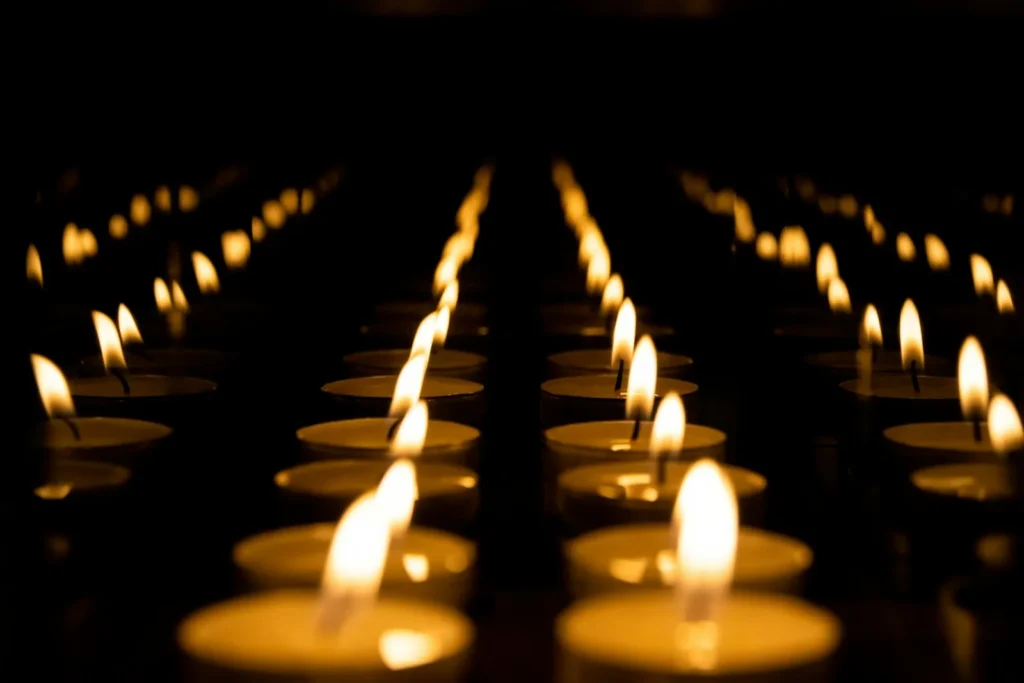
Featured image: Photo: Thomas Bormans / Unsplash