

Vesak, the Day of the Full Moon 2026
Friday 1 May 2026
This listing retains the last specifically confirmed UN edition, observed on 1 May 2026. The UN's exact 2027 observance date remains to be confirmed here; it has not been guessed from a general lunar-calendar website.
Add this date to my calendarA full year of awareness dates, ready to edit, print or sync.
Get the full 2027 awareness days calendar£39 a year. Renews annually.
On this page
Dates and event details
Vesak, the Day of the Full Moon 2026 takes place on 1 May 2026. This listing retains the last specifically confirmed UN edition, observed on 1 May 2026. The UN’s exact 2027 observance date remains to be confirmed here; it has not been guessed from a general lunar-calendar website.
| Date status | Date source-confirmed for 2026 |
|---|---|
| Date-check source | United Nations or designated agency |
| Where | International |
What is Vesak, the Day of the Full Moon?
Vesak is a Buddhist observance associated with the birth, enlightenment and passing of the Buddha. The UN Secretary-General’s 2026 message explicitly states that the UN observance was on 1 May 2026 and reflects on compassion, non-violence and service to others.
The UN describes Vesak in relation to the full moon in May. Religious and national calendars can differ in their observance, so a single unsourced date should not be imposed on every community. A local temple or community’s own announcement is the appropriate source for its service or celebration.
Date and common questions
The UN Secretary-General’s primary 2026 message explicitly gives 1 May 2026. Those are historical stored dates. No exact UN 2027 edition has been confirmed in this research, so the event uses a manual rule and must not be automatically rolled forward.
Is 1 May a fixed annual date for Vesak?
No. It is the explicitly confirmed UN 2026 edition retained here. Vesak follows a lunar context and dates can differ by calendar and community; this page does not create a fixed 1 May recurrence.
Where should we confirm a local celebration?
Check the temple, community or event organiser directly for its own date and participation arrangements. Confirm the relevant year and location rather than borrowing a date from a different tradition or country.
Why it matters
For schools and wider community groups, Vesak can be an opportunity to learn about Buddhist traditions through respectful, accurate material. It is important to distinguish learning about a religion from requiring participation in worship. People should be able to ask questions without one Buddhist pupil or colleague being expected to speak for every tradition.
Practical ways to take part
- Learn from community sources. Use a reliable introduction and, where appropriate, invite a willing local community representative to describe their own practice. Explain that the account has a particular context rather than representing every Buddhist community across the world.
- Explore compassion through a story. Choose an age-appropriate text with a clear source and discuss what compassion or non-violence means in its context. Allow different responses and avoid reducing a religious teaching to a generic slogan detached from its tradition.
- Check a local event. If a visit or service is open to visitors, confirm the date, access arrangements and expected conduct directly with the host. Ask whether booking is needed and what clothing or photography guidance applies. Do not assume every event welcomes unannounced groups.
- Plan a voluntary act of service. A group could support an established community project chosen with its participants. Keep the purpose clear and avoid presenting volunteering as a substitute for understanding the observance’s religious meaning or as a compulsory test of belief.
- Compare calendars carefully. A classroom can investigate why a lunar observance may be recorded differently in different calendars. Record which community and year each date describes. Do not treat variation as evidence that a community is observing its own tradition incorrectly.
Plan a useful activity
Create a short guide that distinguishes three things: the UN observance, the religious background and any locally announced activity. Include the source and year for each date. Ask an appropriately knowledgeable reviewer to check the explanation, and allow hosts to describe their own traditions in their preferred terms. A clear statement that the 2027 date is pending is more useful than a confident but unsupported countdown.
Official information
Use the official Vesak, the Day of the Full Moon information for background and organiser resources. The annual date does not confirm a particular local event, booking arrangement or future campaign theme. Check those details with the relevant organiser.
Frequently asked questions
When is Vesak, the Day of the Full Moon 2026?
What is Vesak, the Day of the Full Moon 2026?
More awareness days in May
See all → 1–7 MayWeek1 May to 7 MayWeekFood & NutritionInternationalTime For A Cuppa 2027
 17 May17 MaySundayCommunityInternationalWalk the Talk: 2026 Edition and Date Guide
 17–23 MayWeek17 May to 23 MayWeekDisability AwarenessInternationalNational Epilepsy Week 2027
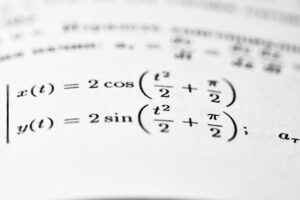 20 May20 MayWednesdayEducation & YouthUKNational Numeracy Day 2026