September 2, 2027
| Date | Thursday 2 September 2027 |
|---|---|
| When it falls | Every year on 2 September |
| Where | International |
About Vietnam – National Day
Vietnam – National Day 2026 was on Wednesday 2 September 2026. The next Vietnam – National Day is on Thursday 2 September 2027.
Vietnam’s National Day falls on 2 September each year, commemorating the declaration of independence read by President Ho Chi Minh at Ba Dinh Square in Hanoi on 2 September 1945. The day marks the founding of the Democratic Republic of Vietnam and is the country’s most significant national holiday, observed with parades, fireworks, and public ceremonies across the country.
What is Vietnam’s National Day?
Vietnam’s National Day, known in Vietnamese as Ngay Quoc Khanh, is the annual public holiday celebrating the proclamation of Vietnamese independence from French colonial rule. It is recognised as the birthday of modern Vietnam as a sovereign nation and is observed by Vietnamese communities worldwide. The day carries deep historical, political, and cultural significance, representing the end of nearly a century of colonial rule and the beginning of the country’s long journey toward its current unified form.
When is Vietnam’s National Day?
Vietnam’s National Day is observed on 2 September every year. It is a national public holiday in the Socialist Republic of Vietnam, meaning schools, government offices, and most businesses are closed. Workers typically receive several days of public holiday around the date, making it one of the most extended holiday periods in the Vietnamese calendar alongside the Lunar New Year celebrations.
Why is Vietnam’s National Day on 2 September?
The date commemorates 2 September 1945, the day Ho Chi Minh delivered the Declaration of Independence of the Democratic Republic of Vietnam. Speaking before a crowd of hundreds of thousands in Hanoi’s Ba Dinh Square, Ho Chi Minh opened his speech by quoting directly from the United States Declaration of Independence, declaring that “all men are created equal” and that Vietnam was entitled to the same principles of liberty and justice.
The declaration came at a pivotal moment in world history. Japan had surrendered to the Allied powers on the same day, ending the Second World War. Vietnam had been under French colonial administration since the late nineteenth century, with a period of Japanese occupation during the war. With Japan’s defeat, the Viet Minh nationalist movement, led by Ho Chi Minh, moved quickly to establish Vietnamese sovereignty before France could reassert control.
September 2 did not immediately bring peace or stability. France refused to recognise Vietnamese independence, and a decade of conflict followed, including the First Indochina War, which ended with French defeat at the Battle of Dien Bien Phu in 1954. The date became the official national day by formal decree in 1954, enshrining its place in the national calendar.
Why Vietnam’s National Day Matters
For Vietnamese people, National Day represents far more than a historical anniversary. It is a reminder of resilience, national identity, and the sacrifices made across generations to secure sovereignty. The day is a moment for reflection on how far the country has come from colonial subjugation to one of the fastest-growing economies in Southeast Asia.
The holiday also provides an important cultural touchstone for the Vietnamese diaspora. Communities in Australia, the United States, France, and elsewhere use the occasion to celebrate Vietnamese heritage, connect with cultural traditions, and introduce younger generations to the history of their homeland.
How is Vietnam’s National Day Celebrated?
- Official ceremonies – The government hosts formal commemorations in Hanoi, including wreath-laying at the Ho Chi Minh Mausoleum and official speeches from national leaders.
- Military parades – On significant anniversaries, large military and civilian parades take place in major cities, particularly Hanoi and Ho Chi Minh City.
- Fireworks displays – Fireworks are set off in cities across Vietnam on the evening of 2 September, drawing large crowds.
- Family gatherings – The extended break is widely used for family reunions, travel, and leisure.
- Cultural events – Music concerts, folk performances, and sporting events take place throughout the holiday period.
- Flag displays – Vietnamese flags are flown widely across the country, from government buildings to private homes.
History of Vietnam’s Path to Independence
France began its colonisation of Vietnam in the mid-nineteenth century, establishing the Indochina Union in 1887 to administer present-day Vietnam, Laos, and Cambodia. Under French rule, Vietnamese resources were exploited extensively, and political opposition was suppressed.
During the Second World War, Japan occupied Indochina from 1940, initially allowing the French colonial administration to continue under Japanese supervision before taking full control in March 1945. The Viet Minh, a broad coalition of nationalist and communist groups led by Ho Chi Minh, organised resistance against both the Japanese and French throughout this period.
With Japan’s surrender in August 1945, the Viet Minh seized control of Hanoi and other cities in what became known as the August Revolution. Ho Chi Minh’s declaration on 2 September 1945 formalised this transition, though the following decades brought further conflict, including the partition of Vietnam in 1954, the Vietnam War, and eventual reunification in 1975.
Noteworthy Facts About Vietnam’s National Day
- Ho Chi Minh’s declaration quoted both the American Declaration of Independence and the French Declaration of the Rights of Man and of the Citizen, deliberately invoking the values of colonial powers to argue for Vietnam’s freedom.
- The Ho Chi Minh Mausoleum in Ba Dinh Square, the site of the original declaration, remains one of the most visited sites in Vietnam.
- On the same day, 2 September 1945, Japan formally signed the instrument of surrender aboard the USS Missouri in Tokyo Bay, ending the Second World War.
- The Socialist Republic of Vietnam, the current unified state, was established in 1976 following the end of the Vietnam War and the fall of Saigon in 1975.
- Vietnam’s National Day is one of two major national holidays in the country; the other is Liberation Day, observed on 30 April.
Hashtags for Vietnam’s National Day
- #VietnamNationalDay
- #NgayQuocKhanh
- #Vietnam
- #IndependenceDay
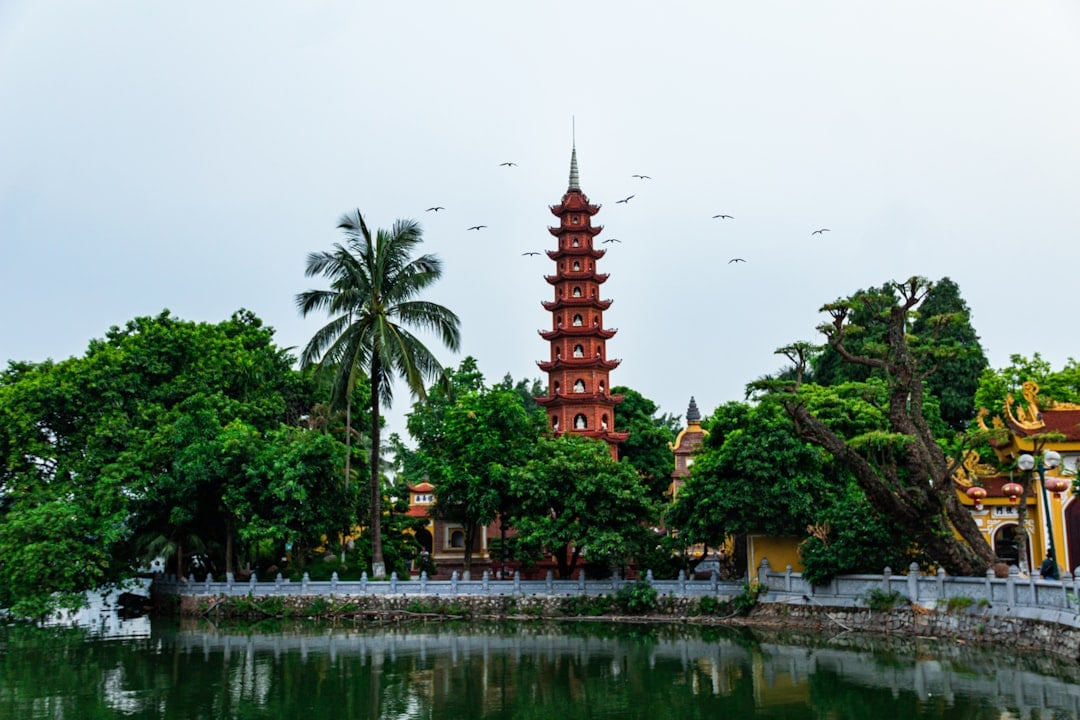
Featured image: Photo by BehindTheTmuna on Unsplash.
When is Vietnam – National Day?
| Year | Date |
|---|---|
| 2026 | Wednesday 2 September |
| 2027 | Thursday 2 September |
| 2028 | Saturday 2 September |







2026 Awareness Days Wall Planner
Every key awareness day at a glance. Perfect for offices, staff rooms, and team planning.
View Calendar →