
India Independence Day 2027
Sunday 15 August 2027
India Independence Day falls on Sunday 15 August 2027, marking 80 years since the nation gained freedom from British rule in 1947. It is a national holiday across India, observed with flag hoisting ceremonies, the Prime Minister’s address from the Red Fort in Delhi, and cultural events both in India and among the Indian diaspora worldwide.
Add this date to my calendarA full year of awareness dates, ready to edit, print or sync.
Get the full 2027 awareness days calendar£49.99 a year. Renews annually.
On this page
Dates and event details
India Independence Day 2026 was on Saturday 15 August 2026. The next India Independence Day is on Sunday 15 August 2027.
| Where | India |
|---|
About India Independence Day
India Independence Day falls on Sunday 15 August 2027, marking 80 years since the nation gained freedom from British rule in 1947. It is a national holiday across India, observed with flag hoisting ceremonies, the Prime Minister’s address from the Red Fort in Delhi, and cultural events both in India and among the Indian diaspora worldwide.
When and Where is India Independence Day Celebrated?
India Independence Day is observed every year on 15 August, a fixed date that does not change. In 2026 it fell on a Saturday and marks the 80th Independence Day since 1947. It is a gazetted national holiday throughout India, with schools, offices, and businesses closed. The day is also marked enthusiastically by the Indian diaspora across the world, from the United Kingdom and the United States to the Gulf states, Australia, and beyond, with community gatherings, parades, and cultural performances.
The Story Behind India Independence Day
The road to Indian independence stretched across decades of struggle, negotiation, and sacrifice. For nearly 200 years, the Indian subcontinent had been under British control, first through the East India Company and later under the direct rule of the British Crown, known as the British Raj. By the early twentieth century, a powerful independence movement had taken shape, drawing in millions of ordinary people alongside political leaders.
Central to that movement was Mohandas Karamchand Gandhi, known the world over as Mahatma Gandhi, whose philosophy of non-violent resistance, or satyagraha, became the defining strategy of the campaign. Mass civil disobedience, boycotts of British goods, and acts such as the 1930 Salt March galvanised the population and drew international attention to the cause. Leaders including Jawaharlal Nehru, Sardar Vallabhbhai Patel, and Subhas Chandra Bose each shaped the struggle in their own way, and countless lesser-known figures gave their lives to it.
The end came swiftly after the Second World War, which had left Britain economically exhausted and its hold on empire weakened. Lord Louis Mountbatten, the last Viceroy of India, advanced the timetable for the transfer of power, choosing 15 August because it marked the second anniversary of Japan’s surrender in 1945. The Indian Independence Act, passed by the British Parliament in July 1947, formally divided the territory into two new dominions: a mainly Hindu India and a mainly Muslim Pakistan. This division, known as Partition, triggered one of the largest mass migrations in human history and immense communal violence, a sobering shadow that accompanied the joy of freedom.
At the stroke of midnight on 14 August 1947, as the country crossed into 15 August, Jawaharlal Nehru rose before the Constituent Assembly in New Delhi to deliver his celebrated “Tryst with Destiny” speech. “At the stroke of the midnight hour, when the world sleeps,” he declared, “India will awake to life and freedom.” Nehru became independent India’s first Prime Minister, and a new chapter in the nation’s history began.
Traditions and Customs
Independence Day blends solemn ceremony with joyful celebration, and several customs have become firmly established over the decades.
- Flag hoisting at the Red Fort – The day’s centrepiece is the Prime Minister hoisting the national tricolour at the historic Red Fort in Delhi, a tradition rooted in Nehru’s first address there in 1947, followed by the national anthem and a 21-gun salute.
- The Prime Minister’s address – After raising the flag, the Prime Minister delivers a speech to the nation, reflecting on achievements of the past year and setting out priorities for the future.
- Flag ceremonies nationwide – State chief ministers hoist the flag in their respective capitals, and schools, colleges, government offices, and residential communities hold their own ceremonies.
- Cultural programmes – Children perform patriotic songs, dances, and plays depicting the freedom struggle, often dressing in the colours of the flag: saffron, white, and green.
- Kite flying – In many regions, particularly in northern India, the skies fill with kites on Independence Day, a colourful symbol of freedom and the open sky.
Ways to Celebrate India Independence Day
Whether you are in India or marking the day from abroad, there are many ways to honour the occasion.
- Attend a flag-hoisting ceremony – Join a local event in your town, school, or community centre, or watch the Red Fort ceremony broadcast live from Delhi.
- Learn about the freedom struggle – Read about figures such as Gandhi, Nehru, and Patel, or explore the events of the independence movement to understand the sacrifices made.
- Wear the tricolour – Dress in saffron, white, and green, or display the national flag respectfully at home in line with the official flag code.
- Cook a celebratory meal – Prepare traditional Indian dishes and share them with family and friends, with many making tricolour-themed sweets and treats.
- Support local communities – Many people mark the day through charitable acts, volunteering, or community service in the spirit of nation-building.
- Share India’s story – Use the occasion to teach younger generations about the meaning of independence and the values enshrined in the Indian constitution.
Facts and Figures
- India became independent at midnight on 15 August 1947, ending nearly two centuries of British rule.
- Jawaharlal Nehru’s “Tryst with Destiny” speech was delivered to the Constituent Assembly shortly before midnight on 14 August 1947.
- The date of 15 August was chosen by Lord Mountbatten to coincide with the second anniversary of Japan’s surrender in the Second World War.
- India and Pakistan share the same independence period, with Pakistan marking its day on 14 August and India on 15 August.
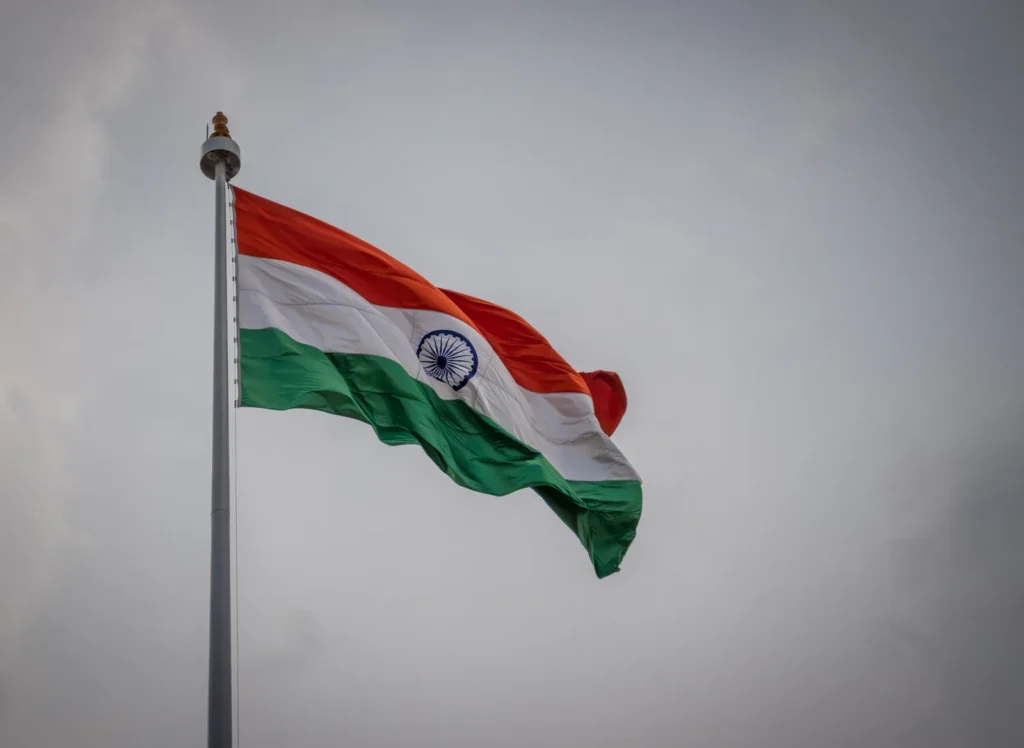
- The Indian national flag features three horizontal bands of saffron, white, and green, with the navy-blue Ashoka Chakra wheel at its centre.
Links
Hashtags
Share India Independence Day with your community using #IndependenceDay and #IndependenceDay2026. Whether you mark the occasion by hoisting the tricolour, sharing a meal, or teaching others about the freedom struggle, every bit of awareness helps keep this proud tradition alive.
Frequently asked questions
What is India Independence Day?
India Independence Day commemorates the country’s freedom from British rule, achieved on 15 August 1947. It is a national holiday marked by flag hoisting, the Prime Minister’s address from the Red Fort, and celebrations across India and the global Indian diaspora.
When is India Independence Day in 2026?
India Independence Day falls on Saturday, 15 August 2026. The date is fixed and does not change from year to year. In 2026 it marks the 80th Independence Day since 1947.
Why is 15 August the date of Indian independence?
Lord Mountbatten, the last Viceroy of India, selected 15 August because it marked the second anniversary of Japan’s surrender in the Second World War. The Indian Independence Act formally transferred power at midnight between 14 and 15 August 1947.
More awareness days in August
See all → 19 Aug19 AugThursdayCommunityInternationalWorld Humanitarian Day 2027
 19 Aug19 AugThursdayArts & Culture AwarenessInternationalWorld Photography Day 2027
 23 Aug – 6 SepWeek23 Aug to 6 SepWeekSeasonalInternationalBack to School 2027
 26 Aug26 AugThursdayAnimals & WildlifeInternationalNational Dog Day 2027