Black Saturday
April 4
About Black Saturday
Black Saturday, also known as Holy Saturday, is the final day of Holy Week, falling between Good Friday and Easter Sunday. Observed by Christians worldwide, it commemorates the day that Jesus Christ lay in his tomb following the crucifixion. In 2026, Black Saturday falls on Saturday, 4 April. The day is marked by solemn reflection in most traditions, culminating in the Easter Vigil — one of the most significant liturgical services of the Christian year.
The Story Behind Black Saturday
The origins of Black Saturday are inseparable from the Easter narrative at the heart of Christianity. According to the Gospels, after Jesus was crucified on Good Friday, his body was taken down from the cross and placed in a tomb donated by Joseph of Arimathea. A large stone was rolled across the entrance, and Roman soldiers were posted to guard it. The Saturday that followed was a day of waiting, grief, and uncertainty for his followers.
In the earliest centuries of Christianity, this day was observed as a strict fast — the only day in the church calendar when no Eucharist was celebrated. The theological significance is profound: Holy Saturday represents the period when Christ descended into the realm of the dead (referred to in the Apostles’ Creed as “He descended into hell”) to liberate the righteous who had died before his coming. Eastern Orthodox theology calls this the “Harrowing of Hell,” a triumphant act depicted in some of the most powerful icons in Christian art, showing Christ shattering the gates of death and pulling Adam and Eve from their graves.
The name “Black Saturday” comes from its association with mourning. In the Philippines, where the term is most commonly used, the colour black reflects the grief of a predominantly Catholic nation that takes Holy Week observances with particular intensity. The Philippine government officially designates Black Saturday as a Special Non-Working Holiday. In other parts of the world, the day is known by different names — Holy Saturday, Great Saturday, the Saturday of Light, Easter Eve, or Hallelujah Saturday — each reflecting a slightly different theological emphasis.
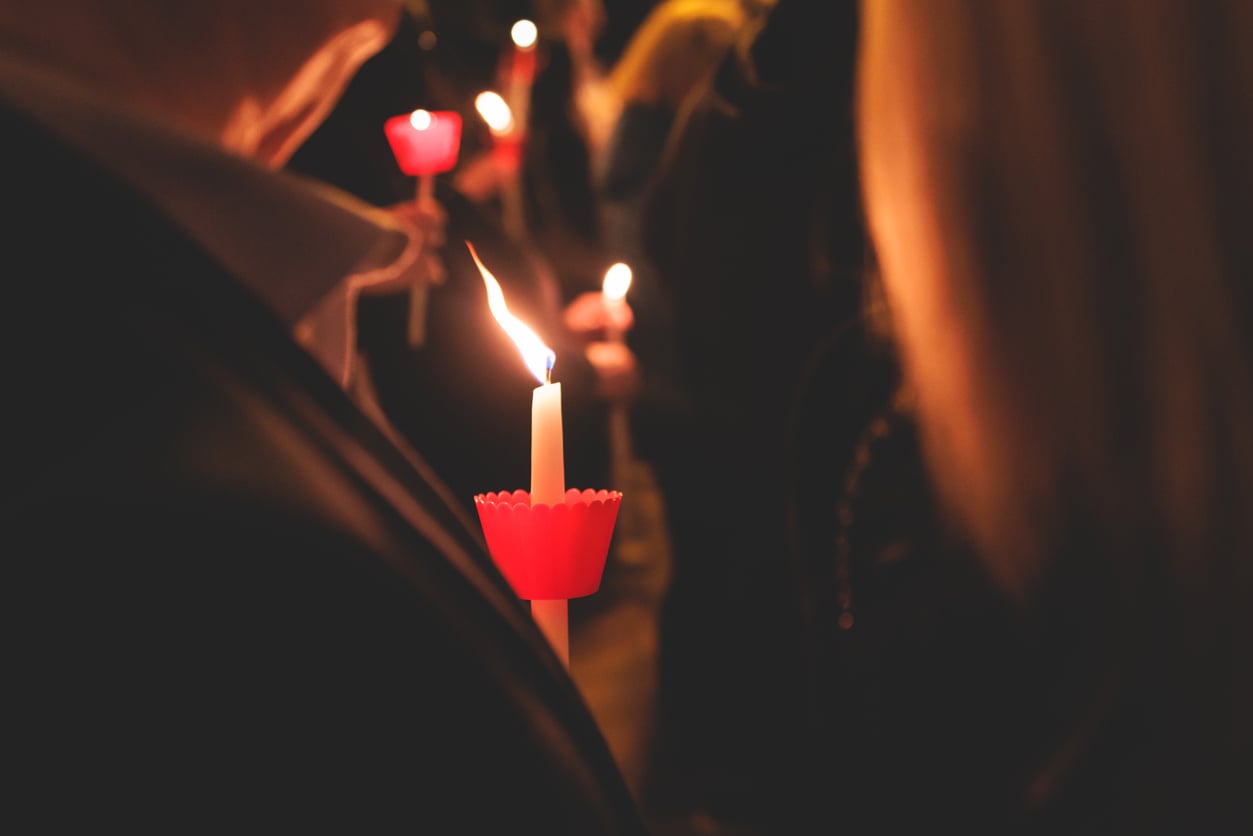
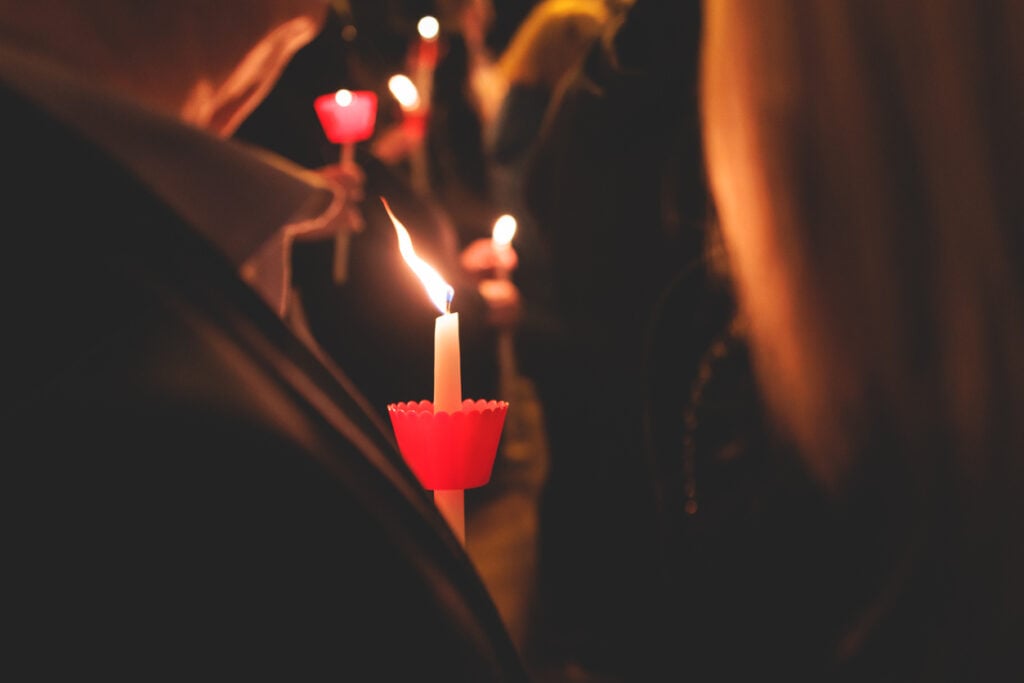
The Easter Vigil service, held after nightfall on Holy Saturday, marks the transition from mourning to celebration. It begins in total darkness, with a single Paschal candle lit from a new fire outside the church. The flame is shared among the congregation until the entire building is illuminated — a powerful symbol of the resurrection. This vigil includes readings spanning the full arc of salvation history, from creation to the exodus from Egypt to the prophets, building toward the proclamation of the resurrection at midnight.
When and Where is Black Saturday Celebrated?
Black Saturday falls on the Saturday before Easter Sunday. Because Easter is a moveable feast, calculated based on the lunar calendar, the date changes each year. In 2026, Black Saturday is on Saturday, 4 April. The day is observed by Christians of all denominations worldwide, though it holds particular cultural significance in the Philippines, Latin America, Poland, Greece, and other predominantly Christian countries.
| Year | Date |
|---|---|
| 2026 | Saturday, 4 April |
| 2027 | Saturday, 27 March |
| 2028 | Saturday, 15 April |
| 2029 | Saturday, 31 March |
| 2030 | Saturday, 20 April |
Traditions and Customs
Black Saturday is observed with a wide range of traditions that vary by country and denomination:
- The Easter Vigil — The most significant liturgical event of the day, held after sunset. It begins with the Service of Light, where a new fire is blessed and the Paschal candle is lit. The congregation shares the flame, filling the dark church with light. Readings, baptisms, and the first celebration of Easter follow.
- Visita Iglesia (Philippines) — Filipino Catholics observe the tradition of visiting and praying in at least seven churches on Holy Thursday and continuing through Black Saturday. This pilgrimage represents a spiritual journey and act of devotion.
- Święconka (Poland) — One of Poland’s most beloved Easter traditions, Święconka involves bringing baskets of food — eggs, ham, bread, horseradish, and butter lambs — to church on Holy Saturday to be blessed by a priest, in preparation for the Easter feast.
- Silence and abstinence (Philippines) — Conservative Filipino Catholics observe strict prohibitions on loud conversation, electronic devices, travel, and entertainment from Holy Thursday through Black Saturday, as a sign of mourning and respect.
- Laurel leaves and noise-making (Greece and Cyprus) — In Greek and Arabic Christian tradition, clergy strew laurel leaves and flower petals throughout the church. The congregation stamps feet, bangs pews, and clangs pots and pans to symbolise Christ shattering the gates of death.
Ways to Observe Black Saturday
Whether you are deeply religious or simply curious about the tradition, there are several ways to observe the day:
- Attend an Easter Vigil service — Many churches welcome visitors to the Easter Vigil, which is widely considered the most beautiful liturgical service of the year. Arrive early, as these services are often well-attended.
- Spend time in quiet reflection — Black Saturday’s spirit of waiting and contemplation offers an opportunity to step away from noise and busyness, even for a few hours.
- Prepare Easter food — Many cultures use Holy Saturday as a day to prepare the Easter feast. Bake hot cross buns, colour Easter eggs, or prepare a traditional dish from your heritage.
- Visit a church or cathedral — Even outside of formal services, many churches are open for private prayer and silent meditation on Black Saturday. The stripped altars and bare interiors offer a stark, contemplative atmosphere.
- Learn about Holy Week traditions — Read about how different cultures around the world observe Black Saturday, from the dramatic crucifixion re-enactments in Pampanga, Philippines, to the basket blessings of Poland.
- Volunteer your time — Many church communities organise charitable activities during Holy Week. Consider helping with food distribution, visiting the elderly, or supporting those in need.
Facts and Figures
- Black Saturday is the only day in the traditional Christian calendar when no Mass or Eucharist is celebrated until the Easter Vigil after nightfall.
- In the Philippines, Black Saturday is officially designated as a Special Non-Working Holiday by presidential proclamation.
- The Moriones Festival in Marinduque, Philippines, features masked participants in Roman soldier costumes who march through towns throughout Holy Week, culminating on Easter Sunday.
- In Pampanga, Philippines, some devotees undergo actual crucifixion as an act of penance — a practice that the Catholic Church does not officially endorse but has continued for decades. One devotee, Ruben Enaje, was crucified 35 times as of Easter 2024.
- The Easter Vigil’s tradition of lighting the Paschal candle from a new fire dates back to at least the 4th century and symbolises Christ as the light of the world emerging from the darkness of the tomb.
Frequently Asked Questions
What is Black Saturday?
Black Saturday, also known as Holy Saturday, is the day between Good Friday and Easter Sunday in the Christian calendar. It commemorates the day Jesus lay in his tomb and is observed with solemn reflection, fasting, and the Easter Vigil service.
When is Black Saturday in 2026?
Black Saturday falls on Saturday, 4 April 2026.
Is Black Saturday a public holiday?
It depends on the country. In the Philippines, Black Saturday is an official Special Non-Working Holiday. In many Western countries, it is not a public holiday, though the preceding Good Friday and following Easter Monday often are. In the United Kingdom, it falls within the Easter bank holiday weekend.
Spread the Word
Share Black Saturday with your community using #BlackSaturday and #HolySaturday2026. Whether you observe the day through prayer, quiet reflection, or preparing for the Easter celebrations ahead, every act of remembrance connects you to a tradition spanning two millennia.
Related Awareness Days
- Good Friday — The day before Black Saturday, commemorating the crucifixion of Jesus Christ and observed with solemn church services worldwide.
- Easter Sunday — The day after Black Saturday, celebrating the resurrection of Jesus Christ and the most joyful day in the Christian calendar.
- Passover (Pesach) — The Jewish festival of liberation, which in 2026 overlaps with Holy Week, reflecting the shared historical roots of the Easter and Passover traditions.
Links
]]>Plan your next campaign
Use Awareness Planner to discover events, build content calendars, and stay ahead of key dates.





2026 Awareness Days Wall Planner
Every key awareness day at a glance. Perfect for offices, staff rooms, and team planning.
View Calendar →