

Ganesh Chaturthi 2026
Monday 14 September to Friday 25 September 2026 · dates set by the organiser each year
Ganesh Chaturthi, also known as Vinayaka Chaturthi, is one of the most widely celebrated Hindu festivals in the world.
Also on 14 September: World Mitochondrial Disease Week · Sexual Health Week · Recycle Week
What Is Ganesh Chaturthi?
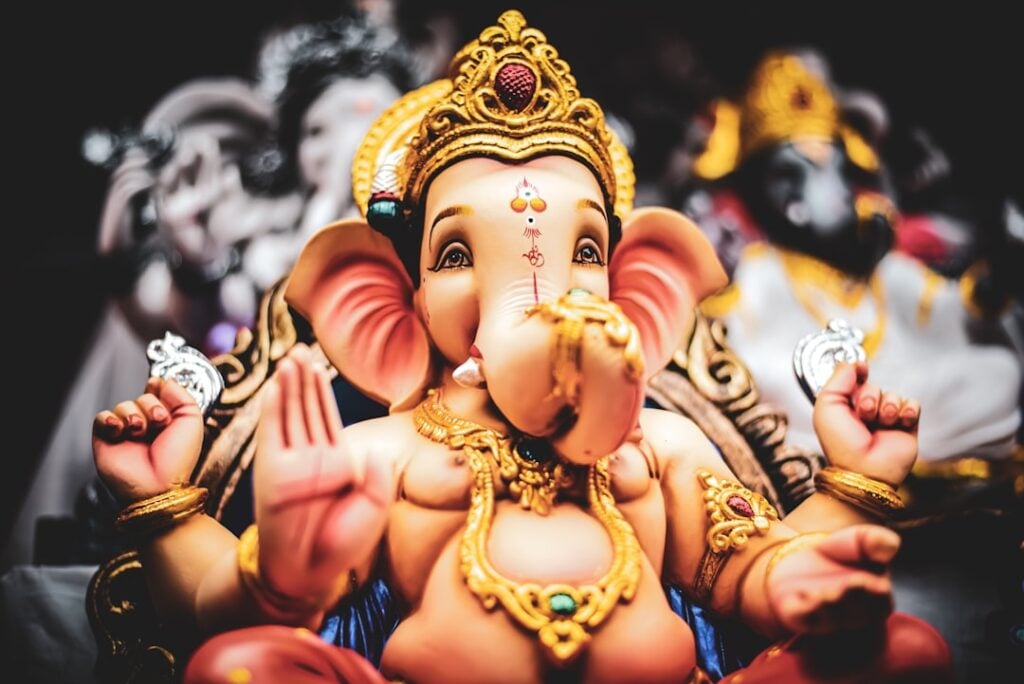
Ganesh Chaturthi, also known as Vinayaka Chaturthi, is one of the most widely celebrated Hindu festivals in the world. In 2026, the festival begins on 14 September and runs for ten days until Ganesh Visarjan (the immersion ceremony) on 23 September. The festival marks the birth anniversary of Lord Ganesha, the elephant-headed deity revered across Hindu traditions as the remover of obstacles, the god of wisdom, prosperity, and new beginnings. It is celebrated with particular fervour in Maharashtra, Karnataka, Andhra Pradesh, Telangana, Goa, and Gujarat, and by Hindu communities across the globe.
Ganesh Chaturthi is a ten-day Hindu festival that begins on the fourth day (Chaturthi) of the waxing moon in the Hindu lunar month of Bhadrapada. The festival centres on the installation of clay idols of Lord Ganesha in homes and in elaborately decorated public pavilions known as pandals, followed by ten days of worship, prayer, music, dance, and community celebration. The festival concludes with Ganesh Visarjan, the immersion of the idols in rivers, lakes, or the sea.
Lord Ganesha is one of the most widely worshipped deities in Hinduism. He is traditionally invoked at the beginning of any auspicious undertaking, from a business venture to a wedding, an academic year to a new home. The festival is therefore a celebration of beginnings, of the clearing of obstacles, and of the potential that lies within fresh starts.
When Is Ganesh Chaturthi?
Ganesh Chaturthi is observed on Bhadrapada Shukla Chaturthi, the fourth day of the bright half of the Hindu month of Bhadrapada. This date shifts each year according to the lunar calendar. In 2026, Ganesh Chaturthi falls on 14 September, with the ten-day festival concluding on 23 September with Anant Chaturdashi and the Ganesh Visarjan.
Plan around Ganesh Chaturthi and every key date in September
The Awareness Days Toolkit puts every awareness day for 2026 and 2027 in a spreadsheet, printable PDF calendars and an iCal feed that keeps itself up to date.
Why It Matters
Ganesh Chaturthi carries deep spiritual, cultural, and historical significance. For devout Hindus, the festival is a time of intense devotion, an opportunity to seek Ganesha’s blessing for wisdom, prosperity, and the removal of life’s obstacles. The daily rituals of prayer, the offering of sweets, and the chanting of mantras connect worshippers to a tradition that stretches back centuries.
The festival also holds immense community importance. In Maharashtra, the Ganesh pandals (community shrines) become focal points of local life for the duration of the festival. Elaborate decorations, cultural performances, classical music, folk art, and charitable activities surround the idol installations. The festival cuts across socioeconomic lines, with neighbourhood pandals welcoming everyone regardless of background.
For the Indian diaspora worldwide, Ganesh Chaturthi is a vital thread connecting communities to their cultural heritage. Celebrations take place in the United Kingdom, the United States, Australia, Canada, Singapore, and across South-East Africa, each adding local flavour while maintaining the core traditions of the festival.
How to Get Involved
- Attend a community celebration: Hindu temples and cultural organisations in the UK, US, Australia, and beyond organise public Ganesh Chaturthi events that are often open to all. These are wonderful opportunities to experience the music, food, and visual culture of the festival.
- Learn about Lord Ganesha: Explore the mythology, symbolism, and significance of the deity through books, documentaries, or temple resources. Each element of Ganesha’s iconography, the broken tusk, the modak, the mouse vehicle, carries layered meaning.
- Make or taste modak: Modak is the sweet most closely associated with Ganesha. Made from rice flour, jaggery, and coconut, the steamed ukadiche modak is considered his favourite offering. Indian sweet shops often stock them during the festival season.
- Support eco-friendly celebrations: Traditional clay idols dissolve harmlessly in water, but mass-produced plaster-of-Paris idols cause significant water pollution. If participating, choose or encourage the use of natural clay idols.
- Learn the Visarjan chant: The chant “Ganpati Bappa Morya, Pudcha Varshi Laukar Ya” (Come soon next year, Lord Ganesha) is the soundtrack of the immersion procession and a joyful expression of devotion and community spirit.
History
The veneration of Ganesha dates back at least to the 4th and 5th centuries CE, with evidence of organised Ganesha worship found in texts and temple carvings from the Gupta period. Some historians connect large-scale public celebrations to the patronage of Chhatrapati Shivaji Maharaj in the 17th century, who used the festival to foster unity among the Maratha people.
The festival’s transformation into a major public event is most directly linked to Bal Gangadhar Tilak, who in 1893 converted what had largely been a private, household observance into a large-scale community festival. Tilak recognised the festival’s potential to unite Hindus across caste and class divisions at a time when the British colonial government had banned large public gatherings. By organising celebrations around public pandals, he created a space for political meetings and the building of collective identity under the pretext of religious observance.
The traditions he established, including ten days of public worship and a grand procession to immerse the idol, remain the template for Ganesh Chaturthi celebrations to this day. The festival has grown from its origins in Pune and Maharashtra into one of the defining cultural events of South Asia and now of the global Hindu diaspora.
Noteworthy Facts
- The Lalbaugcha Raja idol in the Lalbaug neighbourhood of Mumbai typically draws millions of visitors across the ten-day festival period, making it one of the most visited religious attractions in the world.
- Lord Ganesha is depicted with four arms, an elephant head, and a large belly. The broken tusk represents the sacrifice of one’s ego for the sake of knowledge.
- Modak is traditionally offered in sets of 21, the number considered sacred in the context of Ganesha worship.
- During Ganesh Visarjan, the idol’s immersion symbolises the cycle of creation and dissolution, and Ganesha’s return to his divine abode carrying the prayers of his devotees.
- Ganesha is worshipped under 108 names, each highlighting a different aspect of his divine qualities.
- Environmental concerns have led to a growing movement to use biodegradable clay idols and to hold symbolic immersions in specially prepared tanks rather than in natural water bodies.
Explore related calendar entries including Religious and Faith Days and the broader Arts, Culture and Heritage collection.
Hashtags
Frequently asked questions
When is Ganesh Chaturthi?
Ganesh Chaturthi runs from 14 September 2026 to 25 September 2026. It is held dates set by the organiser each year.
What is Ganesh Chaturthi?
Ganesh Chaturthi, also known as Vinayaka Chaturthi, is one of the most widely celebrated Hindu festivals in the world.
More awareness days in September
See all → 16–22 SepWeek16 Sep to 22 SepWeekHealth & WellbeingInternationalNational Coding Week 2026
 21 Sep – 4 OctWeek21 Sep to 4 OctWeekEducation & YouthUK, US, Australia and worldwideFairtrade Fortnight 2026
 14–20 SepWeek14 Sep to 20 SepWeekHealth & WellbeingUK, US, Australia and worldwideWorld Mitochondrial Disease Week 2026
 14 Sep14 SepMondayFood & NutritionUSNational Cream Filled Donut Day
 14–20 SepWeek14 Sep to 20 SepWeekHealth & WellbeingUK and AustraliaJeans for Genes Day
 14–18 SepWeek14 Sep to 18 SepWeekCommunityInternationalProfessional Care Workers’ Week 2026
 14–20 SepWeek14 Sep to 20 SepWeekOctober Awareness DaysUKRecycle Week 2026
 14–18 SepWeek14 Sep to 18 SepWeekSeptember Awareness DaysUKRheumatoid Arthritis Awareness Week 2026