November 5
| Date | Thursday 5 November 2026 |
|---|---|
| When it falls | Every year on 5 November |
| Where | UK |
| Dates checked | 28 September 2026 against parliament.uk |
About Bonfire Night (Guy Fawkes Night)
This year: Bonfire Night 2026 is on Thursday 5 November. See the Bonfire Night (Guy Fawkes Night) 2026 page for this year’s date, theme and what’s on.
| Year | Date | Day |
|---|---|---|
| 2026 | 5 November 2026 | Thursday |
| 2027 | 5 November 2027 | Friday |
| 2028 | 5 November 2028 | Sunday |
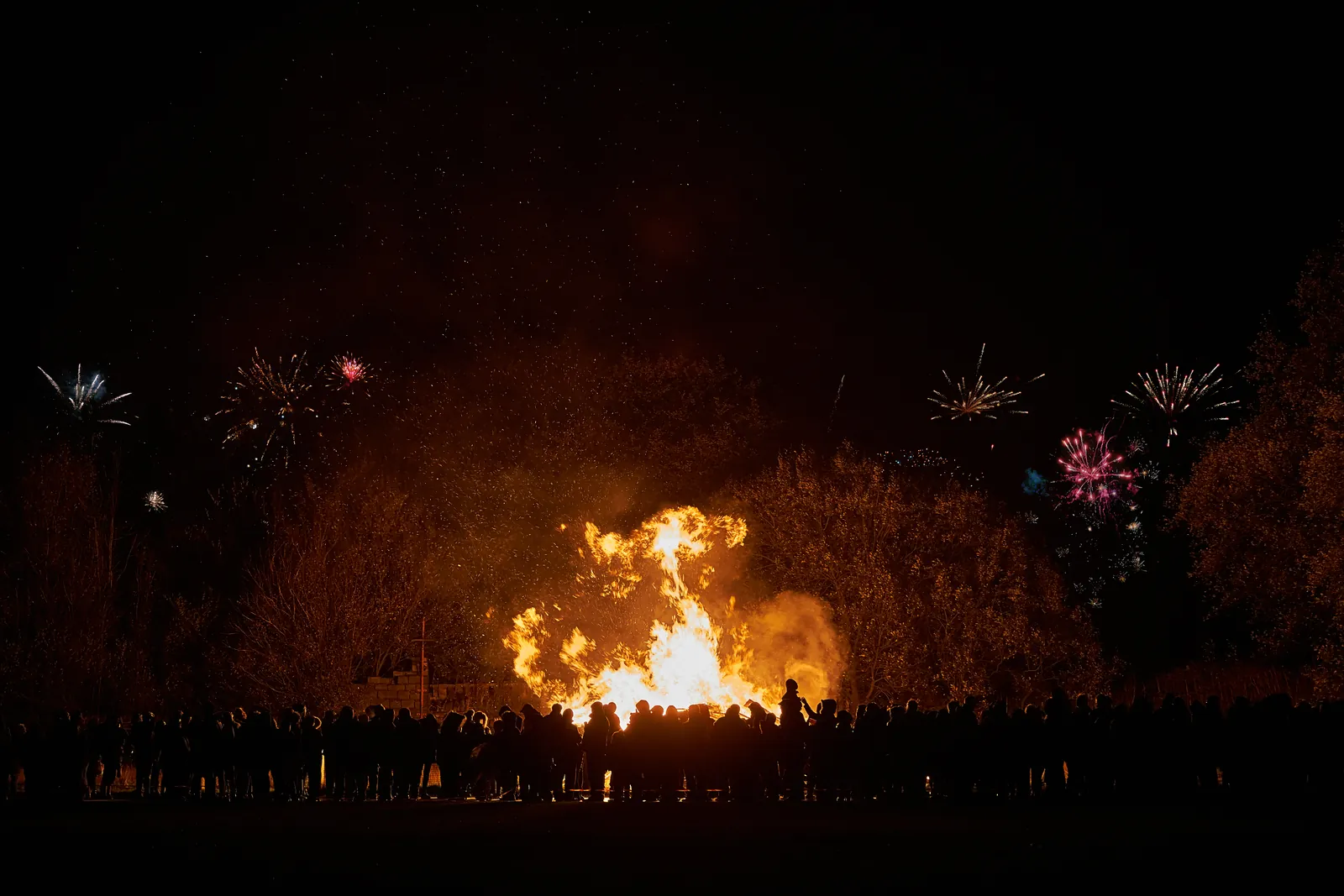
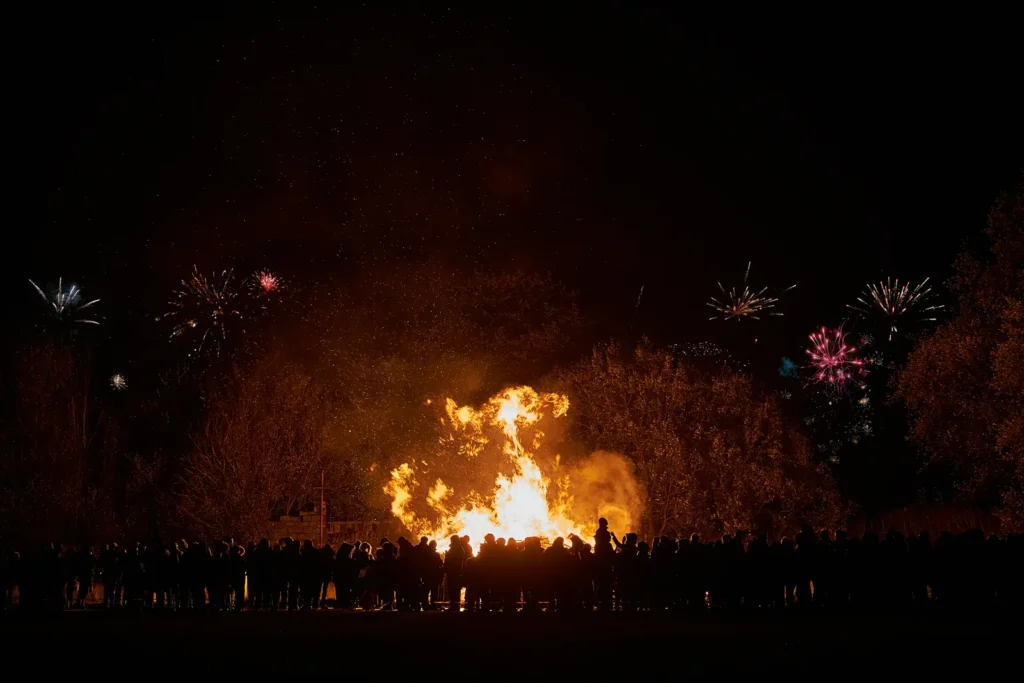
The 5th of November means one thing in Britain: bonfires, fireworks, toffee apples and the smell of gunpowder in cold autumn air. Across the country, families head to organised displays, town greens fill with sparkler-waving children, and the sky lights up for an hour after dark. The date is fixed – always 5 November, whatever day of the week – though the biggest community bonfires usually move to the nearest Friday or Saturday for convenience.
In 2026 Bonfire Night falls on a Thursday. Many organised events will run on the preceding weekend (31 October – 1 November) or the following weekend (7-8 November). Check your local council website or the relevant town’s events listing from mid-October onwards, as many major displays sell tickets in advance.
What happens on Bonfire Night in the UK?
The centrepiece of Bonfire Night is a public bonfire and fireworks display. Most events also feature a guy – a straw effigy of Guy Fawkes – placed on top of the fire before it is lit. The tradition of making the “guy” was a Victorian street custom; children would wheel their creation around and ask passers-by for “a penny for the guy” to buy fireworks.
The Lewes Bonfire Night in East Sussex is the most famous in Britain, drawing tens of thousands of visitors each year. Several competing bonfire societies process through the town in historical costume, carrying burning crosses and rolling blazing barrels before lighting their respective bonfires at sites around the town. It is arguably the most atmospheric Bonfire Night event in the country and has been running continuously since the early 19th century. Other well-known events include Edenbridge (known for celebrity effigies), Battle, and the Taunton carnival procession.
Ideas for schools, families and workplaces
- Schools: use Bonfire Night as a hook for a history lesson on the Gunpowder Plot, the religious tensions of Jacobean England, and why the Houses of Parliament are still ceremonially searched before every State Opening today.
- Schools: science clubs can explore combustion, light spectra, and the chemistry of firework colours – though actual fireworks stay firmly outside.
- Families: attend an organised local display rather than buying fireworks for home use. Most councils run free or low-cost events that are far safer, and the professional displays are more impressive.
- Families: make traditional Bonfire Night food together: parkin (the sticky oat-and-treacle cake from Yorkshire and Lancashire), toffee apples, jacket potatoes, and hot chocolate.
- Pet owners: more dogs go missing on Bonfire Night than on any other night of the year. Keep pets indoors from dusk, draw curtains, and use a white-noise machine or the radio to muffle the bangs. The RSPCA guidance on fireworks and animals is updated each autumn.
History of Guy Fawkes Night
On 5 November 1605, a group of Catholic conspirators – Robert Catesby, Thomas Percy, Guy Fawkes and others – were caught attempting to blow up the House of Lords during the State Opening of Parliament and kill King James I. Fawkes was found in the cellars beneath Westminster guarding 36 barrels of gunpowder, enough to have destroyed much of the building and the surrounding area. He was arrested in the early hours of 5 November, tortured over several days, and executed at the Old Palace Yard in Westminster on 31 January 1606.
Parliament passed the Observance of 5th November Act 1605 within weeks, making it a day of public thanksgiving and ordering annual church services. The law remained on the statute book until 1859, by which time bonfires and fireworks had become so embedded in British custom that the celebration needed no legal mandate. The “guy” tradition became popular in the 19th century, and the burning of effigies gradually extended to other unpopular public figures. The Lewes bonfire societies have historically burnt effigies of public figures alongside Guy Fawkes – a tradition that occasionally causes controversy but remains fiercely protected as local custom.
Frequently asked questions
- Is Bonfire Night a public holiday?
- No. 5 November is not a bank holiday in the UK. Schools and businesses remain open as normal.
- What are the firework rules in England?
- Private individuals can buy and use consumer fireworks between 7am and 11pm most nights, with a midnight curfew extended to 1am on 5 November. Some local authorities are pushing for a licensing regime that would restrict fireworks to organised displays. Check your local council before buying.
- Do other countries celebrate Bonfire Night?
- New Zealand has observed Guy Fawkes Night with considerable enthusiasm and large public displays, though the government removed the right for members of the public to buy fireworks for private use in 2023, shifting observance to licensed displays only. Communities with strong British heritage in Canada and parts of the Caribbean also mark the night.
- Why is it called Bonfire Night?
- The two names are interchangeable. “Bonfire Night” describes the centrepiece of the celebration; “Guy Fawkes Night” or “Guy Fawkes Day” names the historical event it commemorates – the failed Gunpowder Plot of 1605.
Last reviewed: 2026-09-20. Tentpole refresh: dates table added, history and FAQ sections rewritten, hashtag section removed, RSPCA pet guidance linked.






2026 Awareness Days Wall Planner
Every key awareness day at a glance. Perfect for offices, staff rooms, and team planning.
View Calendar →