Hungary – Saint Stephen’s Day
August 20, 2027

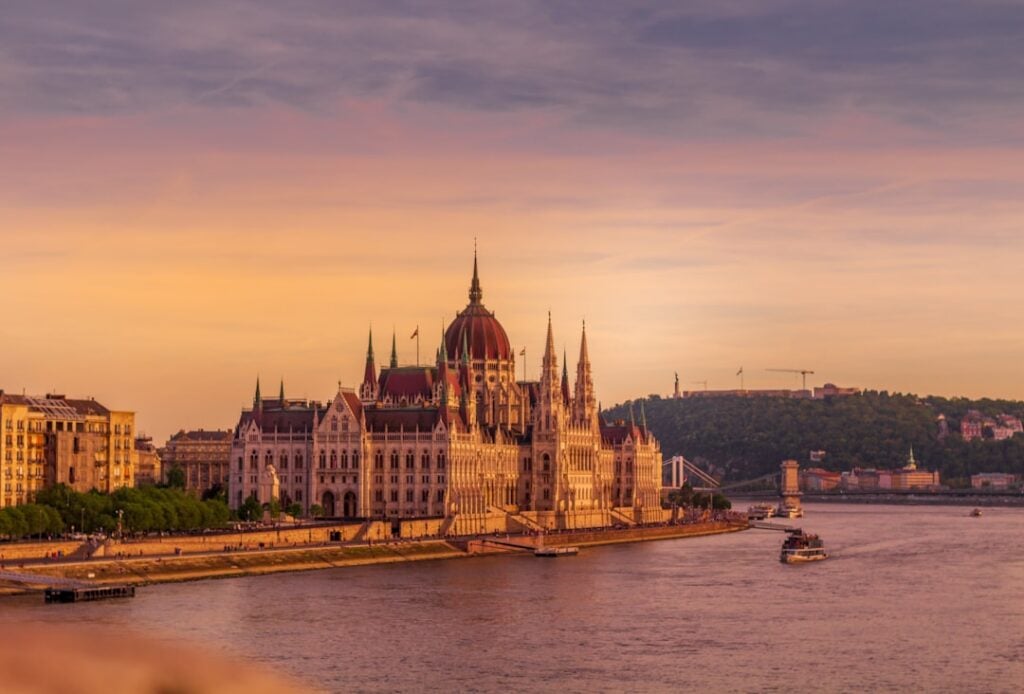
About Hungary – Saint Stephen’s Day
Saint Stephen’s Day is Hungary’s most important national holiday, observed on 20 August each year. Known in Hungarian as “Istvan kiraaly unnpe” (the Feast of King Stephen), it commemorates the founding of the Christian Hungarian state by Stephen I, who was crowned the first King of Hungary on Christmas Day in the year 1000. The day is also referred to as Foundation Day or the Day of the New Bread, and it is celebrated with spectacular fireworks over the Danube in Budapest, grand processions, cultural festivals, and traditional ceremonies attended by the head of state.
What is Hungary’s Saint Stephen’s Day?
Saint Stephen’s Day in Hungary is a state holiday that combines religious commemoration, national pride, and cultural celebration. It honours King Stephen I, who united the Magyar tribes into a single Christian kingdom, received recognition from Pope Sylvester II in the form of the “Sacred Crown of Hungary,” and is revered as the founder of the Hungarian nation. The day marks both his sainthood in the Catholic calendar and the broader founding narrative of the Hungarian state. It is a public holiday throughout Hungary and is celebrated with a wide range of official and popular events.
When is Hungary’s Saint Stephen’s Day?
Saint Stephen’s Day in Hungary is observed on 20 August each year without exception. Unlike some religious feast days that move according to the liturgical calendar, the Hungarian national celebration is fixed to this date, which has been associated with Stephen since his canonisation. It is a full public holiday, meaning banks, businesses, and schools are closed, and public events are organised throughout the country.
Why it Matters
Saint Stephen’s Day is central to Hungarian national identity. The story of Stephen I represents a foundational moment in Hungarian history: the conversion of a nomadic people to Christianity, the establishment of a centralised state structure, and Hungary’s integration into the community of European Christian kingdoms. These events took place over a thousand years ago, yet their significance continues to be actively celebrated and commemorated in Hungarian civic and cultural life.
The day also carries contemporary political meaning. The formal ceremonies on 20 August, including the raising of the national flag and the presentation of state awards to distinguished Hungarians, reflect the ongoing importance of national unity and civic identity. The mass fireworks display on the Danube draws hundreds of thousands of spectators to Budapest, making it one of the largest public events in Central Europe.
How to Get Involved
For those in Hungary or visiting the country around 20 August, there are many ways to experience Saint Stephen’s Day:
- Watch the Budapest fireworks over the Danube, typically launched from three separate sites along the river in the evening, creating a display visible from both the Buda and Pest sides of the city.
- Attend the ceremonial flag-raising at Kossuth Square in front of the Parliament building, which takes place in the morning and includes military honours.
- Visit the procession of the Holy Right Hand, a relic of Saint Stephen kept in St Stephen’s Basilica in Budapest, which is carried in a ceremonial procession through the city streets.
- Taste “new bread” in keeping with the tradition of the Feast of the New Bread, which marks the end of the harvest and the cutting of the first loaf from the new wheat.
- Attend the Cake of Hungary competition, an annual event in which bakers from across the country compete to create the official Cake of Hungary for the year, with the winning cake presented and distributed at national events.
History of Saint Stephen’s Day
Stephen I, born around 975 CE, was the son of Geza, the leader of the Magyar people who had settled in the Carpathian Basin following their migration westward from the Eurasian steppe. Geza had already begun the process of converting the Magyars to Christianity, and Stephen continued and accelerated this transformation after inheriting leadership.
In the year 1000, Pope Sylvester II sent Stephen a crown and the title of “Apostolic King,” legitimising his rule in the eyes of the Catholic Church and of Europe’s Christian monarchs. The crown, known as the Holy Crown of Hungary or the Crown of Saint Stephen, became one of the most powerful symbols of Hungarian sovereignty and is still displayed in the Parliament building in Budapest today.
Stephen ruled until his death on 15 August 1038. He was canonised by Pope Gregory VII in 1083, with his feast day set at 20 August, the date on which his relics were translated. August 20 has been a day of national significance ever since.
The day was declared an official national holiday by Queen Maria Theresa of Austria in 1771. Under communist rule after 1945, the religious associations were suppressed and the date was relabelled Constitution Day, celebrating the 1949 Soviet-style constitution. Following the democratic transition, the Hungarian Parliament restored the original meaning of the holiday in 1990, reinstating it as Saint Stephen’s Day and a celebration of the nation’s founding.
Noteworthy Facts
- The Holy Crown of Hungary, associated with Stephen’s coronation in 1000 CE, is one of the oldest surviving royal crowns in Europe and is considered a national symbol of the highest importance.
- The “new bread” tradition on 20 August reflects Hungary’s deep agricultural heritage and the historical importance of the wheat harvest to rural communities.
- The Budapest fireworks display on Saint Stephen’s Day typically involves more than 40,000 firework shells and is one of the largest pyrotechnic displays in Europe.
- The Cake of Hungary competition, held annually since 2005, has become a beloved food tradition, with cakes inspired by Hungarian flavours and ingredients.
- Saint Stephen’s relics, including his right hand (the “Holy Right”), are preserved in Budapest and are the subject of special veneration on 20 August.
- Stephen I was married to Giselle of Bavaria, sister of Holy Roman Emperor Henry II, reflecting the strong ties between early medieval Hungary and the wider European Christian world.
Hashtags
#SaintStephensDay #HungarySaintStephensDay #HungaryNationalDay #AugustTwentieth #Budapest
Featured image: Photo by Umair Ali Asad on Unsplash.
When is Hungary – Saint Stephen’s Day?
| Year | Date |
|---|---|
| 2026 | 20 August |
| 2027 | TBC |
| 2028 | TBC |







2026 Awareness Days Wall Planner
Every key awareness day at a glance. Perfect for offices, staff rooms, and team planning.
View Calendar →