International Day of Awareness of Food Loss and Waste 2027
Wednesday 29 September 2027
Dates can vary from year to year, so check the organiser’s website for the latest details.
Food Loss and Waste Awareness Day on 29 September raises awareness of food loss and waste and action to reduce them across food systems.
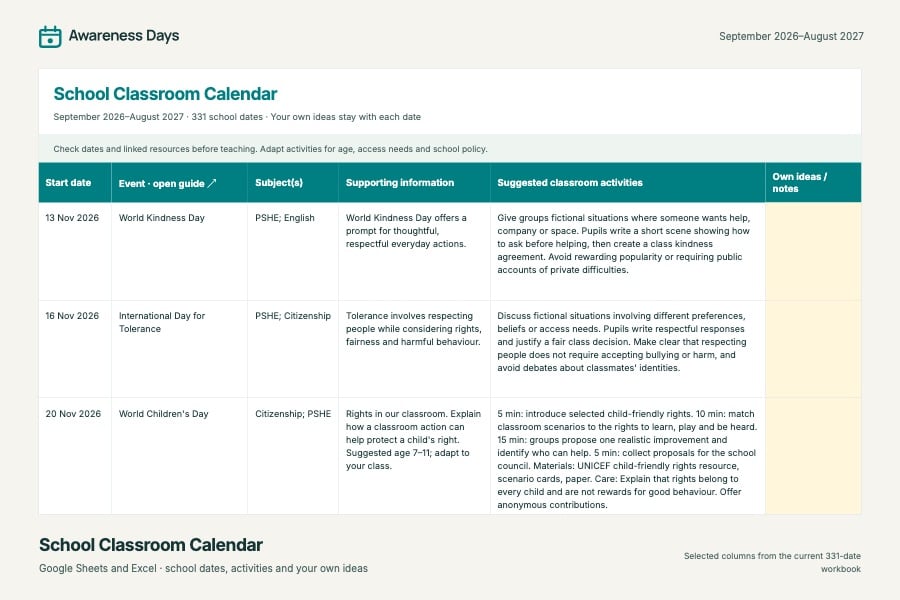
Add this date to my calendarA full year of awareness dates, ready to edit, print or sync.
Get the full 2027 school calendar£49.99 a year. Renews annually.
On this page
Dates and event details
International Day of Awareness of Food Loss and Waste 2026 was on Tuesday 29 September 2026. The next International Day of Awareness of Food Loss and Waste is on Wednesday 29 September 2027.
| Date status | Date calculated from a fixed annual pattern |
|---|---|
| Date-check source | United Nations / relevant agency |
| Where | International |
What is the day about?
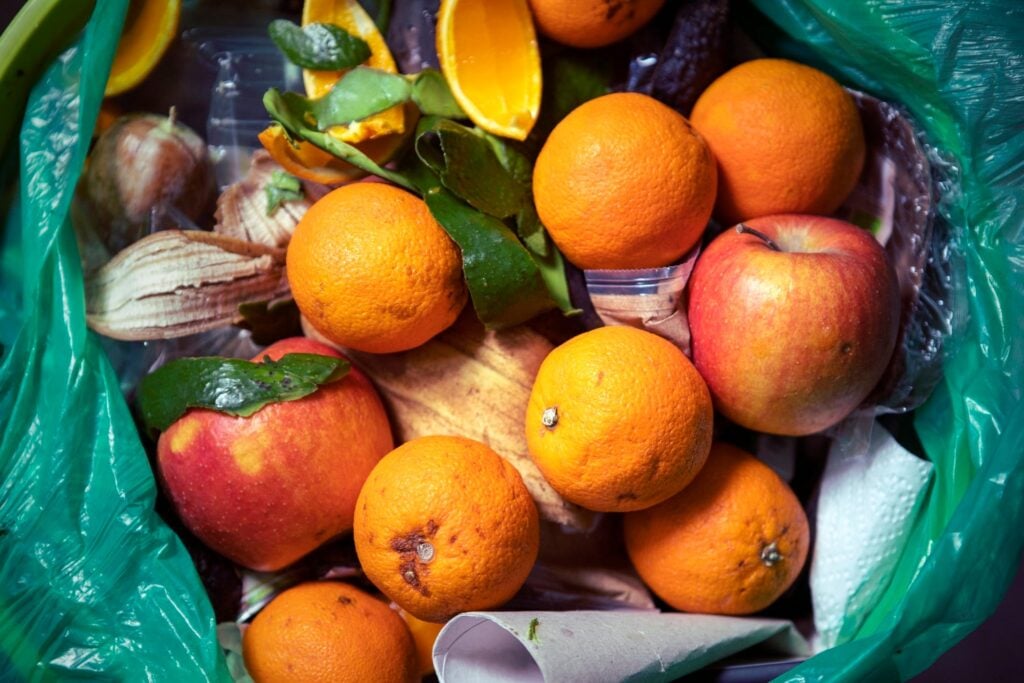
The day brings attention to food that is lost or wasted at different points, from production and supply chains to retail, food service and households. A useful local activity chooses one setting and asks what is happening there. Avoid assuming that a single household message explains all the causes or solutions across a food system.
International Day of Awareness of Food Loss and Waste takes place on 29 September 2027. This international observance raises awareness of food loss and waste and action to reduce them across food systems. It gives schools, organisations and communities a focused opportunity for suitable learning and practical activity.
Date and official background
The annual date is 29 September. The 2027 occurrence follows the established fixed annual rule. No unannounced 2027 theme or programme is assumed. See the official source for information.
The General Assembly established the annual 29 September observance through resolution A/RES/74/209 in 2019. FAO and UNEP are central to the international campaign. The date supports the 2027 listing; a 2027 theme has not been verified. Keep previous campaigns’ slogans and event details labelled with their original year.
Practical ideas for schools and organisations
The following are original editorial planning suggestions to adapt to your audience.
- Choose a defined observation. Work with the responsible team to identify what will be recorded and for how long. Explain which quantities are measured and which are estimated.
- Ask why food is discarded. Use appropriate non-identifying examples to explore the process. Separate possible explanations from causes that have actually been established.
- Review one communication. Ask whether instructions, planning information or contact routes are clear to the people using them. Follow the organisation’s existing food safety arrangements.
- Test a manageable change. Agree who can approve a change and how its effect will be reviewed. Keep a record of the starting point so that later claims have a basis.
Planning and participation
A school can explore the food system through a classroom research task or a project agreed with its catering team. A workplace can look at a process it controls, such as event ordering or communication between teams. Practical decisions about food handling or redistribution need the appropriate current local guidance and expertise.
Make participation respectful. A discussion should not require people to reveal their household income, food insecurity or dietary and medical circumstances. Use fictional examples or aggregate observations where possible, and offer different ways to contribute questions.
Official information
The date rule and factual background were checked against official UN-system information on 23 October 2026. Check new announcements before using edition-specific themes or registration details. Practical activities here are editorial suggestions.