

International Men’s Day
Thursday 19 November 2026 · every year on 19 November
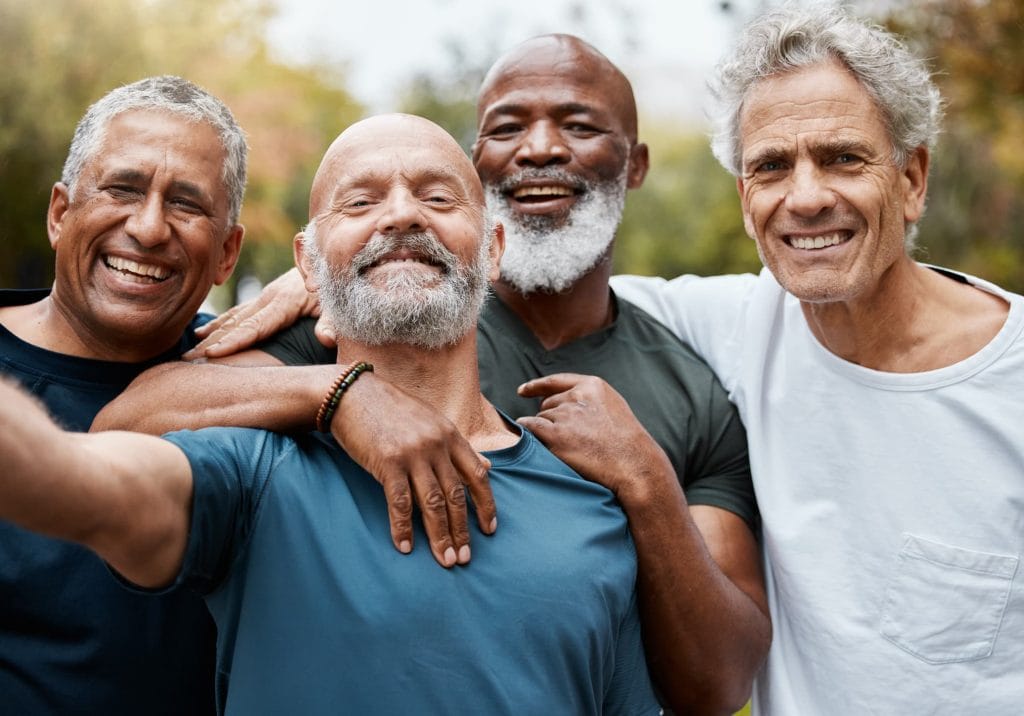
It is a global day that celebrates the positive contribution men make to their families, communities and society, and draws attention to the health and wellbeing of men and boys.
Also on 19 November: World Toilet Day · World Pancreatic Cancer Day · The Great American Smokeout
When is International Men’s Day?
This year: International Men's Day 2026 is on Thursday 19 November. See the International Men's Day 2026 page for this year’s date, theme and what’s on.
International Men’s Day is on 19 November every year. The date is fixed, so it falls on a different weekday each year but never moves. It is a global day that celebrates the positive contribution men make to their families, communities and society, and draws attention to the health and wellbeing of men and boys. Internationally it is coordinated through internationalmensday.com; in the UK it is run by the Association for Male Health and Wellbeing through ukmensday.org.uk, which lists the UK theme, events and free resources for employers and schools.
International Men’s Day is always 19 November, so you can plan ahead for as many years as you like. Many UK organisations hold their events in the week before or after rather than on the day itself, which helps when 19 November falls at a weekend. The day also sits inside Movember, the month-long men’s health campaign, so the two are often marked together.
| Year | Date | Day |
|---|---|---|
| 2025 | 19 November 2025 | Wednesday |
| 2026 | 19 November 2026 | Thursday |
| 2027 | 19 November 2027 | Friday |
| 2028 | 19 November 2028 | Sunday |
Plan around International Men’s Day and every key date in November
The Awareness Days Toolkit puts every awareness day for 2026 and 2027 in a spreadsheet, printable PDF calendars and an iCal feed that keeps itself up to date.
History of International Men’s Day
Calls for a day dedicated to men go back to at least the 1960s, but the day as it is now observed began in Trinidad and Tobago. Dr Jerome Teelucksingh, a history lecturer at the University of the West Indies, held the first International Men’s Day on 19 November 1999. He chose the date to mark his father’s birthday. The idea was well received across the Caribbean and gradually spread, with countries including Australia, India, Singapore, South Africa, Canada, the United States and the UK adopting it in the 2000s.
In the UK the day was first formally organised in 2010. It has since grown into one of the larger awareness days in the November calendar, with several hundred organisations taking part each year, and it has been the subject of debates in the House of Commons. The global organisation now sets a theme each year, which is announced on its website; the UK platform uses its own standing theme, described below.
The six pillars of International Men’s Day
The international objectives of the day are summarised as six pillars, published in full by the UK organisers. In short, they are:
- Positive male role models: not only sportsmen and celebrities, but everyday men living decent, honest lives.
- Celebrating men’s contributions to society, community, family, marriage, child care and the environment.
- Men’s health and wellbeing: social, emotional, physical and spiritual.
- Highlighting discrimination against men and boys in social services, social attitudes and expectations, and the law.
- Improving gender relations and promoting gender equality.
- A safer, better world, where people can be safe and grow to reach their full potential.
The pillars are deliberately broad. A workplace might focus on the third pillar and run a health session; a school might take the first and ask pupils who their role models are; a charity might use the fourth to talk about male victims of abuse. Picking one or two pillars is usually more effective than trying to cover all six.
International Men’s Day in the UK
The UK platform is run by the Association for Male Health and Wellbeing, a registered charity. Its theme is the same every year, “Supporting Men and Boys”, with three sub-themes that organisations are encouraged to adapt to their own setting:
- Making a positive difference to the wellbeing and lives of men and boys.
- Raising awareness and/or funds for charities supporting men and boys’ wellbeing.
- Promoting a positive conversation about men, manhood and masculinity.
The issues most often raised on the day in the UK are men’s mental health and suicide, men’s physical health and late presentation to GPs, boys’ education, male victims of violence and abuse, fathers and family life, and the way men and boys are portrayed. The figures behind some of these are stark. Office for National Statistics data for 2024 shows a male suicide rate in England and Wales of 17.6 per 100,000, roughly three times the female rate of 5.7, meaning around three quarters of suicides are men. UK life expectancy at birth for 2022 to 2024 was 79.1 years for men against 83.0 for women. And Cancer Research UK records around 58,000 new prostate cancer cases a year.
Events in the UK range from parliamentary debates and policy launches to staff networks, health days, fundraisers, conferences, quizzes and comedy nights. Organisers ask that events are registered on ukmensday.org.uk so they appear on the national listing, and the hashtag used is #internationalmensday. For this year’s date, theme and listed events, see the International Men’s Day 2026 page.
How workplaces mark International Men’s Day
Employers are now the largest group of participants, and the UK organisers’ suggestions for them are practical rather than ceremonial:
- Launch or spotlight a men’s staff network. Many organisations use the day to start one, or to give an existing network a slot at an all-staff meeting.
- Signpost support. Put the details of your employee assistance programme, occupational health service and relevant charities somewhere men will actually see them, and say plainly that they are for everyone.
- Run a health session. A talk on prostate and testicular cancer, heart health or sleep, led by a GP, a nurse or a men’s health charity, is one of the most common formats. Pair it with a reminder about free NHS health checks for those aged 40 to 74 in England.
- Talk about mental health honestly. A short session where a senior man talks about his own experience tends to do more than a poster. Build on the conversations started on World Mental Health Day in October.
- Recognise colleagues. Some employers run a “male colleague of the year” award or simply invite staff to thank a man who has helped them.
- Check your data. Look at uptake of health checks, flexible working and parental leave among men and ask why it is low where it is.
Schools, community groups and at home
Schools and colleges use assemblies, form time and PSHE lessons. Popular activities include asking pupils to nominate a positive male role model from their own lives, a discussion of what a good man looks like, and inviting men from the local community, such as coaches, nurses, carers and tradespeople, to talk about their work. The UK organisers stress that girls should be included; the day is about everyone’s relationships with the men and boys around them.
Community groups, clubs and places of worship often hold a social evening, a walk, a quiz or a fundraiser for a men’s charity, or host a speaker. Sports clubs are well placed to run a health check or mental health session for members who would not otherwise seek one.
At home, the organisers suggest something simpler: send a card or message to a man who matters to you, ring your dad or brother, or ask a friend how he is really doing and wait for the answer.
Frequently asked questions
When is International Men’s Day?
International Men’s Day is on 19 November every year. The date is fixed and does not change from year to year.
What day of the week is International Men’s Day?
It was a Wednesday in 2025, is a Thursday in 2026 and will be a Friday in 2027. Many organisations hold events in the surrounding week when the day falls at a weekend.
Why is International Men’s Day on 19 November?
The founder, Dr Jerome Teelucksingh of Trinidad and Tobago, held the first day on 19 November 1999 and chose the date to mark his father’s birthday. It has stayed on that date ever since.
Is International Men’s Day a bank holiday in the UK?
No. It is an awareness day, not a public holiday, so schools, offices and shops open as normal in the UK and in every other country that marks it.
Is there a theme for International Men’s Day?
Yes. The international organisation announces a new global theme each year, while the UK platform keeps the standing theme “Supporting Men and Boys”. The current year’s global theme is on our International Men’s Day 2026 page.
More awareness days in November
See all → 26 Nov26 NovThursdayArts & CultureInternationalThanksgiving 2026
 27 Nov27 NovFridaySeasonalUK, US, Australia and worldwideBlack Friday
 28 Nov28 NovSaturdayBusiness & FinanceInternationalSmall Business Saturday
 30 Nov30 NovMondayBusiness & FinanceInternationalCyber Monday 2026
 1–30 NovMonth1 Nov to 30 NovMonthHealth & WellbeingUK, US, Australia and worldwideMovember 2026 – Men’s Health Awareness Month
 5 Nov5 NovThursdaySeasonalUKBonfire Night (Guy Fawkes Night)
 8 Nov8 NovSundayReligious & FaithInternationalDiwali
 8 Nov8 NovSundayGlobal & NationalUKRemembrance Sunday 2026