

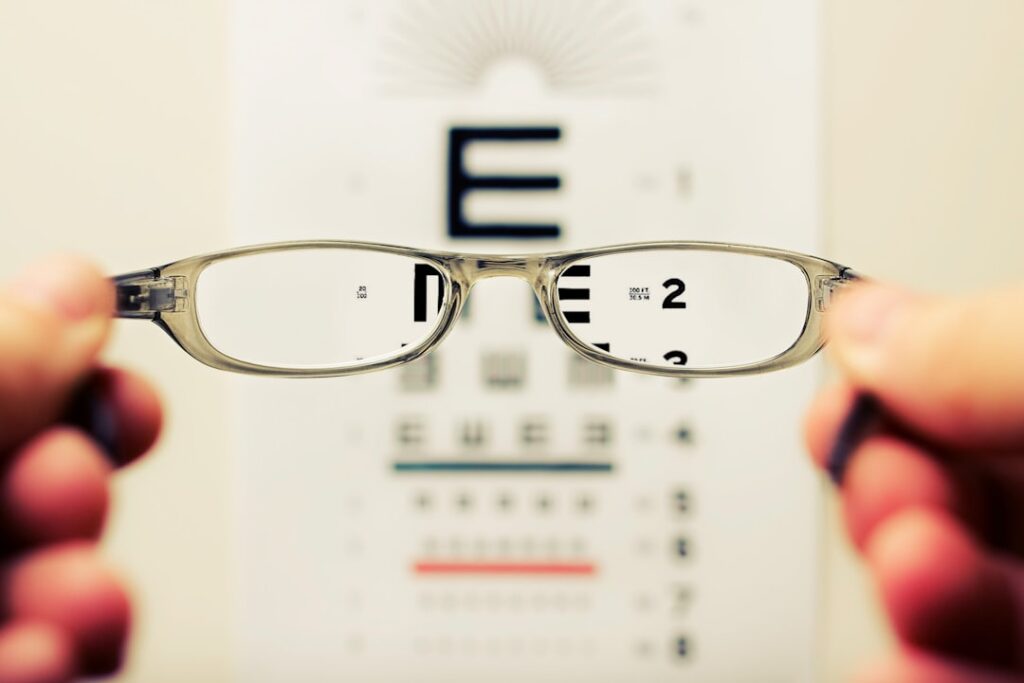
National Colour Blind Awareness Day 2027
Monday 6 September 2027 · every year on 6 September
Colour Blind Awareness Day is an annual observance dedicated to raising public understanding of colour vision deficiency (CVD), the clinical term for what is commonly called colour blindness.
Also on 6 September: National Read A Book Day · National Payroll Week · Labor Day
What is Colour Blind Awareness Day?
National Colour Blind Awareness Day 2026 was on Sunday 6 September 2026. The next National Colour Blind Awareness Day is on Monday 6 September 2027.
Colour Blind Awareness Day is observed annually on 6 September, a date chosen to mark the birthday of John Dalton (born 6 September 1766), the British chemist and meteorologist who was the first scientist to document and study colour vision deficiency in a systematic way. The observance is coordinated by Colour Blind Awareness, a United Kingdom charity, and is recognised internationally as part of Colour Blindness Awareness Month, which runs throughout September. The day aims to improve understanding of colour blindness, highlight its impact on everyday life, and advocate for practical adjustments in education, the workplace, and design.
Colour Blind Awareness Day is an annual observance dedicated to raising public understanding of colour vision deficiency (CVD), the clinical term for what is commonly called colour blindness. The condition affects the ability to distinguish between certain colours, most commonly red and green, though other forms affect blue-yellow differentiation or, in rare cases, result in the perception of no colour at all.
The day is promoted by Colour Blind Awareness, a UK-based charity founded to support individuals with CVD and to advocate for environments, products, and educational materials that are accessible to colour-blind people. Colour Blind Awareness also runs the ColourBlindAwareness.org website, which provides resources for parents, teachers, employers, and designers.
The observance operates within the broader context of Colour Blindness Awareness Month in September, giving organisations, schools, and businesses an extended window to introduce awareness initiatives, accessibility audits, and staff training programmes.
When is Colour Blind Awareness Day?
Colour Blind Awareness Day falls on 6 September each year, coinciding with John Dalton’s birthday. The date was established by Colour Blind Awareness to honour Dalton’s foundational contribution to the scientific understanding of colour vision deficiency. The observance sits within Colour Blindness Awareness Month (September), which provides additional context and momentum for awareness activities throughout the month.
Plan around National Colour Blind Awareness Day and every key date in September
The Awareness Days Toolkit puts every awareness day for 2026 and 2027 in a spreadsheet, printable PDF calendars and an iCal feed that keeps itself up to date.
Why It Matters
Colour vision deficiency is far more common than many people realise. Approximately 1 in 12 men and 1 in 200 women worldwide are affected by some form of colour blindness. Globally, an estimated 300 million people live with the condition, making it one of the most prevalent sensory differences in the human population.
Despite its prevalence, colour blindness is frequently overlooked in the design of everyday systems. Traffic signals, maps, charts, data visualisations, educational materials, and digital interfaces often rely on colour coding in ways that exclude colour-blind users. In classrooms, children with undiagnosed CVD may struggle to read colour-coded maps or scientific diagrams without understanding why. In professional settings, employees with colour blindness may face barriers in data-heavy roles where charts and graphs use colour as the primary differentiator.
Colour Blind Awareness Day draws attention to these practical barriers and advocates for universally accessible design as a straightforward, cost-effective solution. Adding labels, patterns, or shapes alongside colour in any visual communication ensures that information is conveyed to all users, not just those with typical colour vision.
The day also serves a diagnostic function: many people with colour blindness are unaware of their condition, particularly those with milder forms. Awareness activities can prompt individuals to seek testing and give parents, teachers, and employers the information they need to support people with CVD effectively.
How to Get Involved
There are many ways to participate in Colour Blind Awareness Day, whether as an individual, an employer, an educator, or a designer:
- Get tested: Colour vision tests are available from optometrists and, increasingly, via validated digital tools. If you have never been tested, 6 September is a prompt to find out.
- Wear red and green: Colour Blind Awareness encourages supporters to wear red and green on 6 September, the colours most commonly confused by people with colour blindness, as a visible show of solidarity.
- Audit your workplace or classroom: Review charts, presentations, and printed materials. Where colour is used as the sole differentiator, add a secondary indicator such as a label, pattern, or shape.
- Use accessible colour palettes: Tools such as the Colour Blind Simulator and accessible colour palette generators allow designers to check how their work appears to people with different forms of CVD.
- Share information on social media: Post facts about colour blindness, share the Colour Blind Awareness charity’s resources, and encourage others to consider accessibility in their own environments.
- Fundraise: Support Colour Blind Awareness or other CVD-related charities through sponsored events, workplace collections, or online fundraising pages.
History
John Dalton, born in Eaglesfield, Cumberland, on 6 September 1766, was a Quaker scientist best known for his contributions to atomic theory and meteorology. He and his brother both suffered from colour vision deficiency, a condition Dalton noticed when he mistook a scarlet academic gown for something drab and grey. In 1794, he published a paper titled “Extraordinary Facts Relating to the Vision of Colours with Observations,” becoming the first scientist to document colour blindness systematically. The condition was subsequently known for many years as “Daltonism” in his honour.
Dalton incorrectly attributed his colour blindness to a bluish discolouration of the aqueous humour in his eye. This hypothesis was disproved after his death in 1844, when his preserved eyes were examined and the aqueous humour was found to be clear. In 1995, molecular analysis of his eye tissue confirmed that he had deuteranopia, a form of red-green colour blindness caused by the absence of the medium-wavelength (green) photoreceptor cone.
Colour Blind Awareness, the UK charity that established the annual observance, was founded to address the lack of public understanding around CVD and its practical consequences. The charity launched Colour Blind Awareness Day on 6 September to honour Dalton’s birthday and anchor the observance to the history of scientific inquiry into the condition. Colour Blindness Awareness Month (September) was subsequently established to give organisations a fuller calendar window for awareness activities.
Research into treatment for colour blindness has advanced considerably in recent decades. Gene therapy trials using adeno-associated viruses to restore missing photoreceptor function have shown early promise in animal models, and researchers continue to investigate the potential for a one-time injection that could correct colour vision in humans with inherited forms of CVD.
Noteworthy Facts
- Approximately 1 in 12 men and 1 in 200 women worldwide are affected by some form of colour vision deficiency.
- Around 95% of all colour-blind people are male, as the most common forms are caused by mutations on the X chromosome, of which men have only one copy.
- Red-green colour blindness is the most prevalent form, affecting approximately 8% of men of Northern European descent.
- John Dalton’s eye tissue, preserved after his death in 1844, was used in 1995 for DNA analysis that confirmed his specific type of colour blindness: deuteranopia.
- Most colour-blind individuals do not see in black and white. They see colour, but perceive certain colours differently or struggle to distinguish particular hues from one another.
- Colour blindness affects people’s ability to perform certain jobs in some countries. Pilots, train drivers, and electricians in various jurisdictions are subject to colour vision tests as part of licensing requirements.
- Babies are not born with full colour vision; it develops over the first six months of life, after which colour blindness can be identified through clinical testing.
Hashtags
Frequently asked questions
When is National Colour Blind Awareness Day?
National Colour Blind Awareness Day is on 6 September 2027. It is held every year on 6 September.
What is National Colour Blind Awareness Day?
Colour Blind Awareness Day is an annual observance dedicated to raising public understanding of colour vision deficiency (CVD), the clinical term for what is commonly called colour blindness.
More awareness days in September
See all → 6 Sep6 SepMondayArts & CultureInternationalLabor Day 2027
 10 Sep10 SepFridayHealth & WellbeingInternationalWorld Suicide Prevention Day 2027
 24 Sep24 SepFridayCancerUKMacmillan Coffee Morning 2027
 27 Sep27 SepMondaySeptember Awareness DaysUK, US, Australia and worldwideWorld Tourism Day 2027
 5 Sep5 SepSundaySeptember Awareness DaysUK, US, Australia and worldwideInternational Day of Charity 20266Sep6 Sep6 SepMondayGlobal & NationalInternationalEswatini – Independence Day
 6–10 SepWeek6 Sep to 10 SepWeekSeptember Awareness DaysUKNational Payroll Week 2027
 6 Sep6 SepMondaySeptember Awareness DaysUK, US, Australia and worldwideNational Read A Book Day 2026