

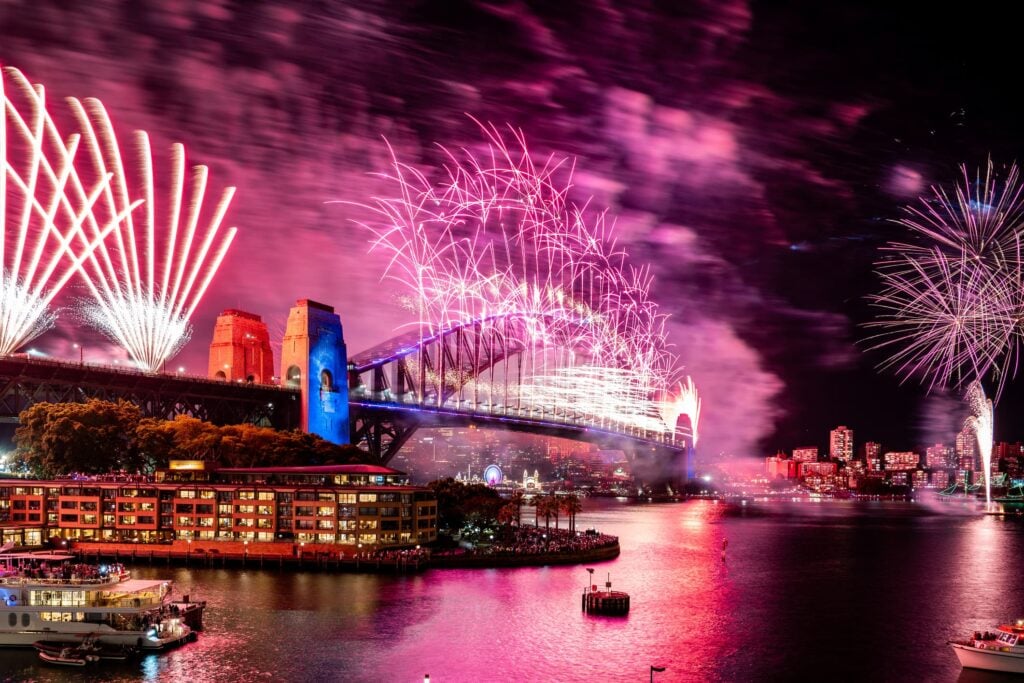
New Years Eve 2026
Thursday 31 December 2026 · every year on 31 December
New Year’s Eve is the night the old year ends and the new one begins.
Also on 31 December: First Night · National Champagne Day
What is New Year’s Eve?
New Year’s Eve 2026 is on Thursday 31 December 2026. It is always the last day of the calendar year, so the date never moves; only the day of the week changes.
| Year | Date | Day |
|---|---|---|
| 2026 | 31 December 2026 | Thursday |
| 2027 | 31 December 2027 | Friday |
| 2028 | 31 December 2028 | Sunday |
New Year’s Eve is the night the old year ends and the new one begins. Across the UK, people mark it with fireworks, parties, a countdown to midnight and the chimes of Big Ben, followed by New Year’s Day on 1 January, which is a bank holiday in England, Wales, Scotland and Northern Ireland. The two biggest public events are the Mayor of London’s New Year’s Eve fireworks on the Thames and Edinburgh’s Hogmanay, which runs over four days from 29 December to 1 January.
New Year’s Eve is 31 December, the final day of the Gregorian calendar year. Unlike most of the days on this site, nobody organises it. There is no charity, campaign or official body behind it. It is simply the point at which the calendar turns over, and the customs around it have built up over centuries: staying up until midnight, counting down the last ten seconds, singing Auld Lang Syne, kissing or hugging the people you are with, and watching fireworks.
In Scotland the day and the celebrations that follow it are called Hogmanay, and they are a bigger deal than Christmas was for much of Scottish history. In the rest of the UK, 31 December is a normal working day for many people, but most offices wind down early and pubs, restaurants and venues are busy well into the night.
A short history
The idea of a year beginning on 1 January comes from the Roman calendar. Julius Caesar’s reform in 45 BC fixed the start of the year in January, the month named after Janus, the two-faced god of doorways and beginnings who looks back at the old year and forward to the new one. Medieval Europe drifted away from that date, and in England the legal year began on 25 March (Lady Day) until 1752, when Britain adopted the Gregorian calendar and moved New Year’s Day back to 1 January. Scotland had already made the change in 1600.
Many of the traditions we think of as timeless are more recent: the Times Square ball drop began in 1907, and London’s organised midnight fireworks only in the early 2000s. What has stayed constant is the sense of a threshold, a moment to look back, let go and start again.
Plan around New Years Eve and every key date in December
The Awareness Days Toolkit puts every awareness day for 2026 and 2027 in a spreadsheet, printable PDF calendars and an iCal feed that keeps itself up to date.
New Year’s Eve in London
The Mayor of London’s New Year’s Eve fireworks is the UK’s largest single display, fired from the Thames around the London Eye at midnight. The official listing for 2026 gives the event as Thursday 31 December 2026 from 8pm until 12.30am on Friday 1 January 2027. The display is ticketed, and the Mayor’s office says a date for the ticket release will be announced in due course; you can register for updates on the event page. Tickets are not sold on the night, and the viewing areas along the Embankment and the South Bank are closed to anyone without one, so if you want to be there in person, book as soon as the release date is confirmed.
If you do not have a ticket, the display is shown live on the BBC, and many people watch from higher ground or riverside venues. Roads around the fireworks area close for much of the evening, so check travel arrangements before you set out.
Edinburgh’s Hogmanay
Edinburgh’s Hogmanay is the UK’s best-known New Year festival and one of the largest in the world. The 2026/27 programme runs from 29 December 2026 to 1 January 2027 and is produced by Unique Assembly with principal funding from the City of Edinburgh Council. It opens on 29 December with the Torchlight Procession, a river of flame carried through the Old Town by thousands of torch bearers, followed on 30 December by the Night Afore party in Princes Street Gardens, this year headlined by The Fratellis.
On 31 December itself the ticketed Street Party fills the city centre with stages, DJs and street theatre, while Hogmanay in the Gardens hosts Underworld beneath Edinburgh Castle, from where the Midnight Moment fireworks are launched. On 1 January the free, unticketed First Footin’ music trail takes over venues across the city. Tickets for the ticketed events sell out most years, so book early through the official site.
Hogmanay also carries older customs. First-footing holds that the first person to cross your threshold after midnight sets the luck for the year; a tall, dark-haired visitor bearing coal, shortbread or whisky is said to be ideal.
New Year’s Day bank holiday
New Year’s Eve is not a bank holiday anywhere in the UK, but New Year’s Day is. The official gov.uk bank holiday calendar lists Friday 1 January 2027 as a bank holiday in England and Wales, Scotland and Northern Ireland. Because 1 January 2027 falls on a Friday, there is no substitute day needed in England, Wales and Northern Ireland. Scotland observes its extra 2 January holiday on Monday 4 January 2027, because 2 January is a Saturday.
In practice the 2026/27 festive break ends with a long weekend for most people, and shops, GP surgeries and public transport run reduced timetables around 1 January.
How to mark New Year’s Eve
There is no right way to see out the year. Some ideas that work well for households, groups of friends and community organisations:
- Host a countdown at home. Put the BBC coverage on for the chimes, and give younger children their own early countdown.
- Go to a public event. Beyond London and Edinburgh, most large towns and cities have organised fireworks or parties. Check your council’s website, and sort transport home before you go.
- Look back and look forward. Write down three things that went well this year and one thing you want to change. It is a gentler alternative to a list of resolutions.
- Borrow a tradition. Eat twelve grapes at midnight as in Spain, one for each month of the year ahead, or try first-footing a neighbour.
- Plan for the morning. If you want a dry start, Dry January and Veganuary both begin on 1 January.
For workplaces, New Year’s Eve is a natural point to share a short end-of-year message and remind staff of the bank holiday arrangements. Schools are closed, so any New Year activity tends to happen in the first week of the spring term.
Around the world
Because the date is fixed but midnight is not, the new year arrives in waves. Kiribati and Samoa in the Pacific cross into 1 January first; Hawaii and American Samoa are among the last, nearly a day later. Sydney’s harbour fireworks reach UK television in the early afternoon of 31 December, and New York drops the Times Square ball at 5am UK time. In Japan, Buddhist temples ring their bells 108 times, and in Brazil crowds dressed in white gather on Copacabana Beach.
Frequently asked questions
When is New Year’s Eve 2026?
New Year’s Eve 2026 is on Thursday 31 December 2026. It is always 31 December, the last day of the year.
What day of the week is New Year’s Eve?
In 2026 it falls on a Thursday. In 2027 it will be a Friday and in 2028 a Sunday. The date is fixed, so only the weekday changes from year to year.
Is New Year’s Eve a bank holiday in the UK?
No. 31 December is a normal working day, although many employers close early. New Year’s Day, Friday 1 January 2027, is a bank holiday across the UK, and Scotland also has a holiday on Monday 4 January 2027 in place of 2 January.
Do I need a ticket for the London fireworks?
Yes. The Mayor of London’s display is ticketed and tickets are not sold on the night. The release date for 2026 tickets has not yet been announced; register on london.gov.uk to be told when it is.
What is Hogmanay?
Hogmanay is the Scots word for the last day of the year and the celebrations around it. Edinburgh’s Hogmanay festival runs from 29 December to 1 January and includes a torchlight procession, the Street Party and midnight fireworks from Edinburgh Castle.
More awareness days in December
See all → 1 Dec1 DecTuesdayBusiness & FinanceInternationalGiving Tuesday
 1–24 DecMonth1 Dec to 24 DecMonthSeasonalInternationalAdvent 2026
 1 Dec1 DecTuesdayHealth & WellbeingUK, US, Australia and worldwideWorld AIDS Day 2026
 3 Dec3 DecThursdayHealth & WellbeingUK, US, Australia and worldwideInternational Day of Persons with Disabilities 2026
 4–12 DecWeek4 Dec to 12 DecWeekCommunityInternationalHanukkah 2026
 10 Dec10 DecThursdayCommunityUKChristmas Jumper Day 2026
 10 Dec10 DecThursdayDecember Awareness DaysUK, US, Australia and worldwideHuman Rights Day 2026
 25 Dec25 DecFridayReligious & FaithUK, US, Australia and worldwideChristmas Day 2026