CalendarAwareness campaign
International Women’s Day
Monday 8 March 2027
ConfirmedDate confirmed with internationalwomensday.com, checked 18 November 2026.
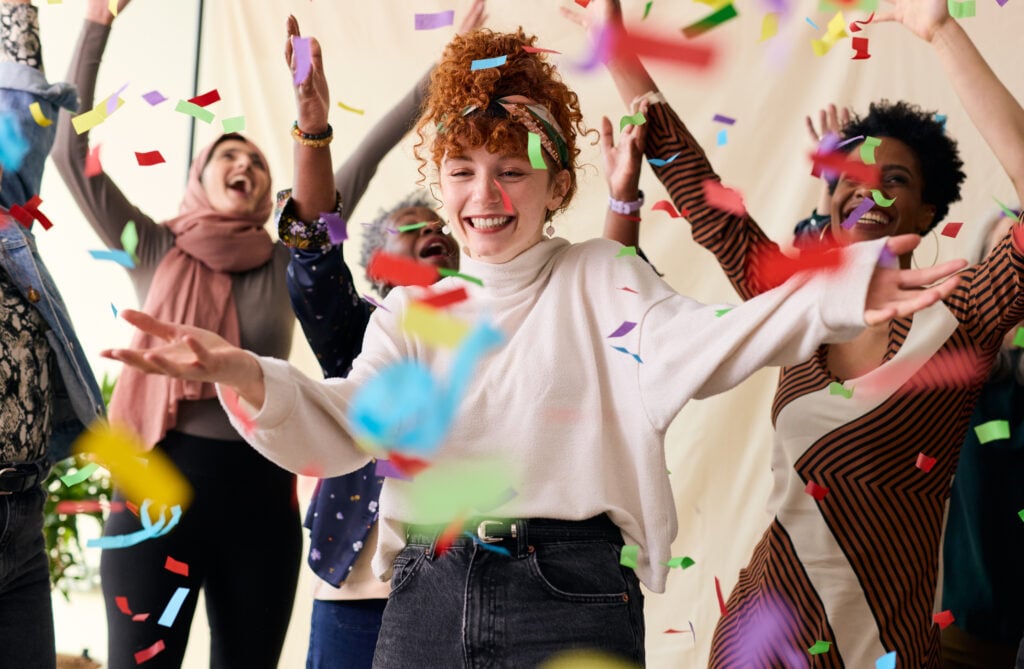
A global day celebrating the achievements of women and calling for faster progress toward gender equality.
- Rule
- 8 March every year
- Length
- One day
- Type
- Awareness campaign · public holiday
- About
- Equality and rights
- Standing
- Official United Nations observance
- Observed in
- Worldwide
- Search rank among awareness campaigns
- UK: 1st of 618 · US: 1st of 618
- Official website
- internationalwomensday.com
- Official hashtag
- #IWD2027
Download the 2027 template Get the data Every date on this site as an editable calendar, or as an API and data feed.
How big it is
- US30%
- Brazil17%
- UK14%
- India7%
- Canada6%
Dates by year
| 2026 | Sunday 8 March 2026 |
|---|---|
| 2027 | Monday 8 March 2027 |
| 2028 | Wednesday 8 March 2028 |
About International Women’s Day
International Women’s Day (IWD), held on 8 March, is a global day that celebrates the social, economic, cultural and political achievements of women and calls for faster progress towards gender equality. The International Women’s Day website and UN Women each set a theme for the year. The day was first marked in 1911. It is not a bank holiday in the UK, but the IWD website lists countries where it is an official holiday, among them Afghanistan, Angola, Armenia, Azerbaijan, Belarus, Cambodia, Cuba, Georgia, Kazakhstan, Mongolia, Nepal, Russia, Uganda, Ukraine and Zambia, with China and Madagascar giving the holiday to women only and Germany observing it in Berlin and Mecklenburg-Western Pomerania only.
Two organisations shape the day internationally. The International Women’s Day website runs the annual campaign theme, and UN Women sets a separate United Nations theme and hosts the official UN commemoration in New York. The IWD campaign theme for 2027 is Progress Parity (#ProgressParity). UN Women had not published a United Nations theme for 2027 when its page was checked on 19 November 2026.
What is International Women’s Day?
International Women’s Day is a day of recognition and a day of action. It recognises what women have achieved in every field, from science and sport to politics and the arts, and it draws attention to the gaps that remain: in pay, in representation, in safety and in access to justice. No single body owns the day. As the IWD campaign puts it, IWD is not country, group or organisation specific; it is a movement powered by the collective efforts of everyone who takes part.
The IWD website describes purple, green and white as the colours of women’s suffrage, “widely adopted by some groups for IWD”. It says their use originated with the Women’s Social and Political Union in the UK, founded in 1903, and that purple signifies justice and dignity, green symbolises hope and white represents purity, which it calls “a controversial concept”.
International Women’s Day 2027 theme
The IWD campaign theme for 2027 is Progress Parity. The campaign page sums it up as “Advancing gender equality through collective action, shared knowledge and opportunity”, and says the campaign encourages individuals, organisations and communities to recognise progress, share ideas, challenge barriers and explore meaningful ways to advance gender equality. The hashtags are #IWD2027 and #ProgressParity.
The campaign has a gesture for photographs: balanced hands, which the organisers say symbolises parity as a concept and a goal. Groups can also submit news of their IWD 2027 activity for publication on the IWD website, which is free of charge.
The United Nations theme is set separately. On 19 November 2026 the UN Women page still showed the 2026 theme, so the UN theme for 2027 is not yet known.
Last year’s themes (2026)
- IWD campaign theme 2026: Give To Gain. The campaign encouraged a mindset of generosity and collaboration, on the basis that “when we give, we gain”.
- UN Women theme 2026: Rights. Justice. Action. UN Women’s 2026 page states that women and girls have just 64 per cent of the legal rights of men, that in nearly 70 per cent of surveyed countries women face more barriers accessing justice than men, and that 676 million women and girls live within 50 km of active conflict zones.
A short history
The idea of a women’s day grew out of the labour and suffrage movements of the early twentieth century. In 1908, women garment workers marched through New York demanding better conditions and the vote. In 1910, at the Second International Socialist Women’s Conference in Copenhagen, the German campaigner Clara Zetkin proposed an International Women’s Day, and more than a hundred delegates from 17 countries backed the idea.
The first International Women’s Day was held on 19 March 1911 in Austria, Denmark, Germany and Switzerland, with more than a million women and men attending rallies. Russia first observed the day in 1913, and in 1914 a suffrage march in London went from Bow to Trafalgar Square, with Sylvia Pankhurst arrested on her way to address it. The 8 March date became fixed after women in Russia went on strike for bread and peace on that day in 1917, a protest that helped trigger the February Revolution.
The United Nations began celebrating 8 March as International Women’s Day in 1975, during International Women’s Year. In December 1977 the General Assembly adopted a resolution proclaiming a United Nations Day for Women’s Rights and International Peace, to be observed by member states on any day of the year in line with their own traditions. The United Nations launched its first IWD theme, “Celebrating the Past, Planning for the Future”, in 1996, and the campaign website internationalwomensday.com launched in 2001 as a free, not-for-profit hub for the day. You can read the full chronology on the IWD timeline and the UN background page.
What happens in the UK
International Women’s Day is not a public holiday in the UK, so most activity happens in and around the normal working and school day. The largest single event is the WOW (Women of the World) London festival at the Southbank Centre, which runs from 5 to 7 March 2027 with three days of talks, workshops, performances, a marketplace and family-friendly events. Day passes cover dozens of sessions; headline conversations are ticketed separately.
For events elsewhere, the IWD website has an events directory where anyone can search for IWD 2027 events or publish their own.
How to take part
The IWD campaign says that all IWD activity is valid and that each group can decide how best to use the day. What it offers for 2027, as its pages stood on 19 November 2026:
- Events. Search for or publish an event in the IWD events directory. The campaign suggests that events nominate a charity supporting women and girls to raise funds for or promote.
- Event packs. The IWD Event Pack is a kit of 288 items ordered through an IWD account, including posters, bunting, a tablecloth, conversation cards, pledge cards, gratitude cards, wristbands and pens. The campaign says stock is limited and orders are filled first come, first served.
- Free resources. The resources page lists save-the-date posters, web meeting backgrounds, pledge cards, social media cards and a planning toolkit. It said the IWD 2027 resources were coming soon.
- The Progress Parity gesture. Take a photograph using the balanced-hands gesture and submit the image with a short statement for the IWD 2027 Gallery, which the site said was coming soon.
- The IWD logo. The logo page says groups must request the Logo Pack through an IWD account and describe their proposed use, and that the logo must not be used on any product or merchandise.
Related awareness days
- National Religious Freedom DayAwareness campaignConfirmed
- Care DayAwareness campaignTo be confirmed
- World Thinking DayAwareness campaignConfirmed
- Celebrate Diversity MonthAwareness campaignCross-checked
- Asian American and Pacific Islander Heritage MonthAwareness campaignConfirmed
- World Press Freedom DayAwareness campaignConfirmed
More from the calendar
March awareness daysInternationalCommunity & Inclusion AwarenessFull calendar
From the Almanac
Record 61165. Guide last edited 19 November 2026. Spotted a wrong date? Tell us and we will check it with the organiser.
Get this record as data