Loading Events

« All Events

Kiribati – Independence Day

July 12

Home>Global & National>Kiribati – Independence Day 2026

Kiribati – Independence Day 2026

12 July 2026Global & NationalJuly Awareness Days
International

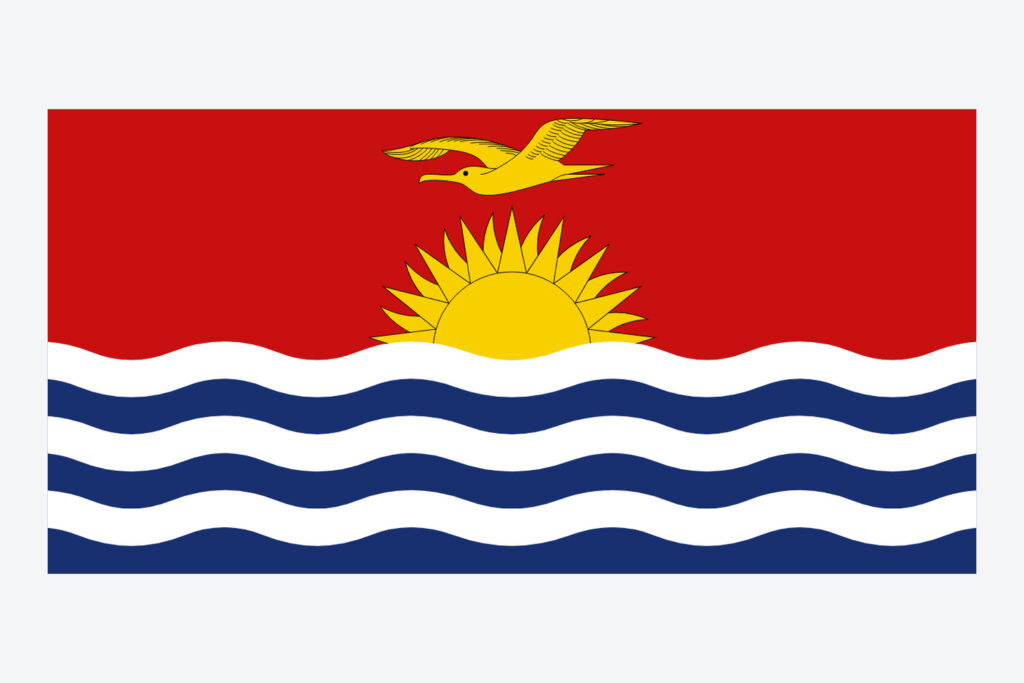
About Kiribati – Independence Day

Kiribati Independence Day is the national day of the Republic of Kiribati, marking the moment the central Pacific nation gained independence from the United Kingdom on 12 July 1979. In 2026 it falls on Sunday 12 July, a fixed-date celebration observed across all 33 islands and atolls that make up this far-flung country. Across the capital of South Tarawa and the outer islands, the day brings parades, traditional dancing, canoe races and three days of public festivities that honour both national sovereignty and one of the most distinctive island cultures in the Pacific.

The Story Behind Kiribati Independence Day

The islands that now form Kiribati were known for most of the colonial era as the Gilbert Islands, named after the British naval captain Thomas Gilbert, who sailed through them in 1788. Britain declared the Gilbert and Ellice Islands a protectorate in 1892 and a full colony in 1916. For decades the territory was administered as a single British possession, despite its scattered geography and the cultural differences between the Micronesian Gilbertese people and the Polynesian Ellice islanders to the south.

By the 1970s the push towards self-government had gathered pace across Britain’s remaining Pacific territories. The Ellice Islands voted to separate first, becoming the independent nation of Tuvalu in 1978. The following year it was the turn of the Gilberts. The Kiribati Independence Order 1979 passed through the British system, and at midnight on 12 July 1979 the new Republic of Kiribati was born, with Ieremia Tabai serving as its first president at just 29 years old, one of the youngest heads of state in the world at the time.

The name Kiribati is the Gilbertese pronunciation of “Gilberts”, rendered in the local language where the combination “ti” is sounded as “s”. It is spoken as “Kiri-bas”. The new nation deliberately chose this name to reflect more than the old Gilbert Islands alone, acknowledging the inclusion of Banaba, the Line Islands and the Phoenix Islands within its territory. The choice signalled a clear break from a colonial label and a return to a name rooted in the language of the people who live there.

Independence reshaped Kiribati from a remote colonial outpost into a sovereign member of the international community. The country joined the Commonwealth and later the United Nations in 1999, taking its place as a small island state with an outsized stake in some of the defining issues of the modern era, from ocean conservation to the rising seas that now threaten its low-lying atolls. Every Independence Day since has reaffirmed that hard-won status and the resilience of a nation spread across millions of square kilometres of the Pacific.

When and Where is Kiribati Independence Day Celebrated?

Kiribati Independence Day is held every year on 12 July, the anniversary of the 1979 independence. In 2026 the date lands on a Sunday. The date does not move, so it can fall on any day of the week from one year to the next, but the 12 July anchor remains constant.

In practice the celebrations stretch across several days. National holidays are commonly declared from 10 to 12 July, giving people time to travel between islands, prepare costumes and take part in the build-up. The largest gathering takes place in South Tarawa, the capital, where the Bairiki National Stadium hosts the centrepiece parade, official ceremonies and sporting contests. Smaller but equally heartfelt celebrations unfold on the outer islands and within the I-Kiribati diaspora in Fiji, New Zealand, Australia and beyond, where communities mark the day with shared meals and traditional performances.

Traditions and Customs

  • Te Mwaie, the traditional dance. Kiribati dancing is central to the celebrations, with movements of the hands, feet and body imitating the frigate bird and the Pacific golden plover. Styles such as Te Buki, Te Ruoia, Te Kaimatoa and the seated Te Bino are performed in costumes made from grass, shells and beads.
  • The Independence Day parade. Marching contingents from schools, churches, government departments and community groups process through Bairiki National Stadium in a colourful display of national pride.
  • Outrigger canoe racing. The traditional sailing canoe, a symbol of I-Kiribati seafaring skill, takes centre stage in races that draw crowds to the lagoon shores.
  • The Miss Kiribati pageant. A long-running fixture of the festivities, celebrating culture, poise and the young women representing each island community.
  • Shared feasting and maneaba gatherings. Families and villages come together in the maneaba, the traditional meeting house, to share food, songs and the storytelling that binds communities across the islands.

Ways to Celebrate Kiribati Independence Day

  • Learn the basics of the Gilbertese language, starting with “Mauri”, the common greeting, and the correct pronunciation of Kiribati itself.
  • Watch footage of Te Mwaie dancing online to appreciate the bird-inspired movements that make I-Kiribati performance unlike any other in the Pacific.
  • Read about the climate challenges facing Kiribati, one of the nations most exposed to rising sea levels, and the work being done to protect its atolls.
  • Cook a Pacific-inspired meal featuring coconut, fish and breadfruit, staples of the I-Kiribati diet, to mark the day at home.
  • Support I-Kiribati community events if you live near a diaspora population in Fiji, New Zealand or Australia, where the day is widely observed.
  • Share the history of the Gilbert Islands and the 1979 independence on social media to introduce others to a country few people know well.

Facts and Figures

  • Kiribati comprises 33 islands and atolls scattered across roughly 3.5 million square kilometres of the central Pacific Ocean, though its total land area is only around 800 square kilometres.
  • It is the only country in the world to sit in all four hemispheres, straddling both the equator and the International Date Line.
  • Kiribati is among the first places on Earth to welcome each new year, thanks to its position along the date line.
  • The population is roughly 130,000 people, the majority of whom are Micronesian I-Kiribati.
  • Ieremia Tabai became the nation’s first president in 1979 at the age of 29, making him one of the youngest heads of state of his era.

Frequently Asked Questions

When is Kiribati Independence Day in 2026?
It is on Sunday 12 July 2026. The date is fixed each year, marking independence from the United Kingdom in 1979.

Why is the country called Kiribati and not the Gilbert Islands?
“Kiribati” is the Gilbertese pronunciation of “Gilberts”, with “ti” sounded as “s”, so it is said as “Kiri-bas”. The name was chosen at independence to reflect the whole nation, including Banaba, the Line Islands and the Phoenix Islands, rather than the Gilbert chain alone.

How long do the celebrations last?
Although Independence Day itself is 12 July, public holidays are usually declared from 10 to 12 July, with parades, dancing, canoe races and sporting events spread across the period.

Spread the Word

Help others discover this remarkable Pacific nation and its national day. Share your celebrations using #KiribatiIndependenceDay, #Kiribati2026, #Kiribati and #PacificPride to join the conversation online.

Related Awareness Days

Links

Plan around Kiribati – Independence Day — and every 2026 awareness day
The Awareness Days Toolkit: all 1,900+ days as a spreadsheet, printable PDF calendars and iCal feed. Unlimited access to every article.
30-day money-back guarantee · Cancel anytime
2026 Awareness Days Wall Planner

2026 Awareness Days Wall Planner

Every key awareness day at a glance. Perfect for offices, staff rooms, and team planning.

View Calendar →

Details