

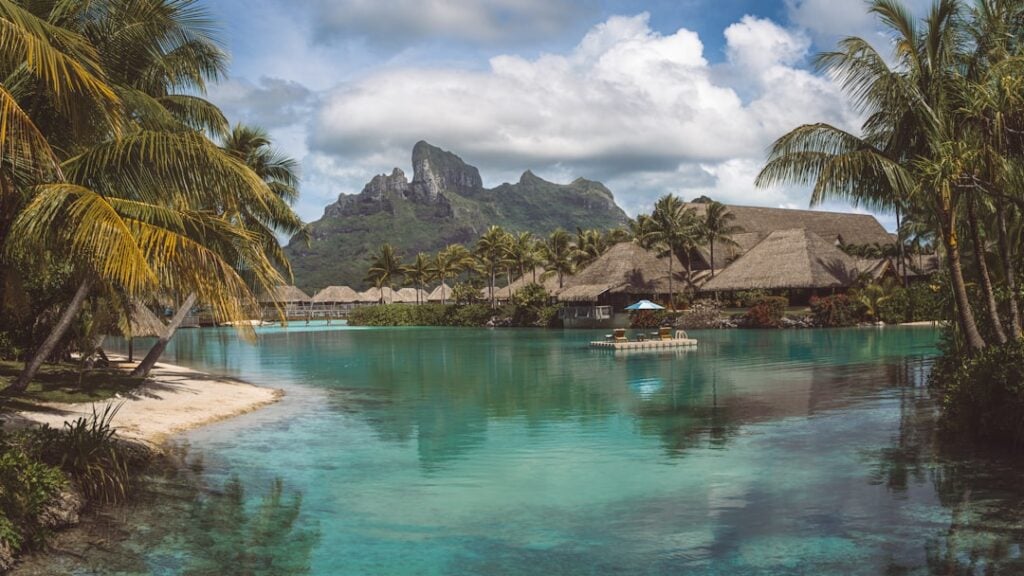
French Polynesia – Internal Autonomy Day 2026
Monday 29 June 2026
Internal Autonomy Day, known in French as Fête de l’autonomie, is an official public holiday in French Polynesia observed each year on 29 June.
Also on 29 June: Love Your Lungs Week · National Camera Day · Hug Holiday
The Story Behind Internal Autonomy Day
Internal Autonomy Day, known in French as Fête de l’autonomie, is an official public holiday in French Polynesia observed each year on 29 June. It marks the territory’s status as a self-governing overseas collectivity of France and serves as the opening day of the islands’ largest cultural festival. In 2026 it falls on Monday, 29 June.
The history of Internal Autonomy Day is layered and, for many Polynesians, deeply complicated. The date of 29 June carries two very different meanings. On 29 June 1880, King Pomare V signed away the sovereignty of the Kingdom of Tahiti and its dependencies, formally placing the islands under French rule. That act of annexation ended centuries of independent Polynesian monarchy and brought Tahiti firmly into the French colonial empire. The choice of this date for a holiday celebrating self-rule remains one of the most striking paradoxes in the Pacific.
The autonomy the holiday actually honours came more than a century later. On 6 September 1984, the French parliament passed loi n° 84-820, granting French Polynesia its first genuine statute of internal autonomy. This law created the office of President of the Government and gave local leaders real control over many domestic affairs, replacing the previous system of direct administration under a French-appointed governor. Gaston Flosse, who had served as vice-president of the government council, became the territory’s first president under the new arrangement, holding office from 1984 to 1987.
Rather than commemorate the September anniversary of the 1984 statute, authorities anchored the celebration to 29 June. Over the decades, the day evolved into a broad affirmation of Tahitian identity, language and culture, even as the historical anniversary it sits upon recalls a loss of sovereignty. This tension is openly acknowledged on the islands. Pro-autonomy parties embrace the day as a celebration of self-determination within the French Republic, while pro-independence figures such as former president Oscar Temaru have argued it should be remembered as a day of mourning rather than festivity. That ongoing debate gives the holiday a depth that goes well beyond parades and music.
When and Where is Internal Autonomy Day Celebrated?
Internal Autonomy Day always falls on 29 June, and in 2026 that is a Monday. The holiday is observed across French Polynesia, but the heart of the festivities is the capital, Papeete, on the island of Tahiti. The waterfront and To’ata Square host the largest gatherings, drawing participants from across the territory’s five archipelagos, including the Society Islands, the Marquesas, the Tuamotus, the Gambier Islands and the Austral Islands.
Crucially, 29 June also opens Heiva i Tahiti, the most important cultural festival in French Polynesia. What begins as a single public holiday flows into weeks of competition and performance that traditionally run through to Bastille Day on 14 July, when the French overseas territories mark the national holiday. This means Internal Autonomy Day is not an isolated occasion but the gateway to a season of celebration that defines the Polynesian winter.
Plan around French Polynesia – Internal Autonomy Day and every key date in June
The Awareness Days Toolkit puts every awareness day for 2026 and 2027 in a spreadsheet, printable PDF calendars and an iCal feed that keeps itself up to date.
Traditions and Customs
The customs of the day blend civic ceremony with vibrant Polynesian cultural expression:
- Parades and processions – Formal parades move through Papeete, with official ceremonies acknowledging the territory’s autonomous status and its institutions of self-government.
- Heiva dance competitions – The day launches the famous ‘ori Tahiti dance contests, where troupes perform meticulously rehearsed routines judged on choreography, costume and storytelling, keeping ancient traditions alive.
- Traditional music – Drumming ensembles and himene choral singing fill the waterfront, with rhythms and harmonies passed down through generations.
- Polynesian feasting – Families and communities share island dishes such as poisson cru (raw fish marinated in lime and coconut milk), poulet fafa (chicken with taro leaves) and freshwater prawns known locally as chevrettes.
- Sporting contests and pageants – To’ata Square comes alive with traditional sports, stone-lifting, javelin throwing, outrigger canoe races and beauty pageants celebrating Polynesian heritage.
Ways to Celebrate Internal Autonomy Day
Whether you are in Tahiti or marking the day from afar, there are many ways to take part:
- Attend the Heiva festivities – If you are in French Polynesia, head to Papeete’s To’ata Square to watch the dance competitions and live performances that open with the holiday.
- Learn the history – Read about the 1880 annexation and the 1984 autonomy statute to understand both sides of this complex anniversary.
- Cook a Polynesian meal – Try making poisson cru at home, a fresh and simple dish that captures the flavours of the islands.
- Explore ‘ori Tahiti – Watch performances online or join a Tahitian dance class to appreciate the art form at the centre of the celebrations.
- Support Polynesian artists – Seek out music, crafts and literature from French Polynesia to honour the living culture the day celebrates.
- Share the story – Use social media to introduce others to a holiday many people outside the Pacific have never heard of.
Facts and Figures
- French Polynesia comprises 121 islands and atolls spread across five archipelagos, covering an ocean area roughly the size of Europe.
- The 1984 statute of internal autonomy was enacted by loi n° 84-820 on 6 September 1984, yet the holiday is observed on 29 June.
- King Pomare V ceded sovereignty of Tahiti to France on 29 June 1880, the date the holiday now falls on.
- Gaston Flosse became the first President of the Government of French Polynesia under the 1984 statute, serving from 1984 to 1987.
- Internal Autonomy Day opens the Heiva i Tahiti festival, which traditionally runs from 29 June through to Bastille Day on 14 July.
Hashtags
Links




Frequently asked questions
What is Internal Autonomy Day?
Internal Autonomy Day, or Fête de l’autonomie, is an official French Polynesian holiday on 29 June that recognises the territory’s self-governing status as an overseas collectivity of France. It also opens the Heiva i Tahiti cultural festival.
When is Internal Autonomy Day in 2026?
Internal Autonomy Day falls on Monday, 29 June 2026. The date is fixed and does not change from year to year.
Why is the holiday on 29 June if autonomy was granted in 1984?
The 1984 autonomy statute was actually passed on 6 September, but the holiday is anchored to 29 June, the anniversary of King Pomare V ceding Tahitian sovereignty to France in 1880. This makes the date both historically significant and, for some, politically contentious.
More awareness days in June
See all → 23–26 Jun23 Jun to 26 JunBusiness & FinanceInternationalAmazon Prime Day 202629Jun29 Jun29 JunMondayEducation & YouthInternationalInternational Mud Day
 29 Jun – 5 JulWeek29 Jun to 5 JulWeekHealth & WellbeingUKLove Your Lungs Week
 29 Jun29 JunMondayFun & QuirkyUSNational Camera Day
 29 Jun29 JunMondayHealth & WellbeingInternationalHug Holiday
 29 Jun29 JunMondayCommunityInternationalInternational Fisherman Day
 30 Jun30 JunTuesdayGlobal & NationalInternationalDemocratic Republic of the Congo – Independence Day30Jun30 Jun30 JunTuesdayArts & CultureInternationalInternational Sailor Moon Day