National Acorn Squash Day
September 7
About National Acorn Squash Day
National Acorn Squash Day is observed annually on 7 September. The day celebrates the acorn squash, a versatile and nutritious winter squash that has been cultivated in North and Central America for thousands of years. It is observed in the United States, Canada, the United Kingdom, and Australia, and offers an opportunity to explore the culinary uses and health benefits of a vegetable that comes into its peak season in the autumn months.
What Is Acorn Squash?
Acorn squash (Cucurbita pepo var. turbinata), also known as pepper squash or Des Moines squash, is a winter squash named for its distinctive acorn-like shape: small, rounded, with a deeply ridged exterior and a pointed base. Despite being classified as a winter squash, reflecting when it is eaten rather than when it grows, it is botanically the same species as summer squashes including courgette and yellow crookneck squash.
The skin is typically dark green, though cultivated varieties range from golden yellow to white, orange, and multi-coloured. Inside, the flesh is sweet and yellow-orange in colour, with a mildly nutty flavour. A typical acorn squash is 10 to 18 centimetres in length and weighs between 450 grams and 1 kilogram. Its peak season runs from October through December, making September the cusp of its annual arrival.
When Is National Acorn Squash Day?
National Acorn Squash Day falls on 7 September each year. The precise origin of the date and the identity of whoever first designated it are not officially documented; like many food celebration days, it appears to have emerged organically through food blogging communities and national day calendars before gaining wider recognition. It is now included in day-of-year databases across multiple countries.
Why It Matters
Beyond being a celebration of a specific vegetable, National Acorn Squash Day draws attention to seasonal eating and the nutritional richness of winter squashes. Acorn squash is one of the most nutrient-dense foods available at low cost: a single cup of baked acorn squash contains roughly 115 kilocalories, approximately 9 grams of dietary fibre (around 17% of the recommended daily intake), and meaningful quantities of vitamins A, C, and B6, as well as potassium, magnesium, and manganese.
The day also connects to a longer history of agricultural diversity. Acorn squash was a staple food for many Native American nations long before European contact, and its cultivation dates back thousands of years in Mesoamerica. Celebrating it today is a small acknowledgement of that agricultural heritage.
How to Get Involved
National Acorn Squash Day is primarily a culinary celebration, and the most direct way to participate is to cook with acorn squash. Suggestions include:
- Roast it: halve the squash, scoop out the seeds, brush the flesh with butter or olive oil, add a sprinkle of brown sugar or maple syrup, and roast at 200°C for 35 to 45 minutes until tender
- Stuff it: the natural hollow of each half makes an ideal container for fillings such as seasoned rice, lentils, minced meat, cheese and breadcrumbs, or a mixture of wild rice, dried cranberries, toasted nuts, and fresh herbs
- Make soup: roast or steam the flesh, then blend with vegetable or chicken stock, warming spices such as nutmeg and ginger, and a splash of cream for a smooth autumn soup
- Toast the seeds: rinse, dry, toss with olive oil and salt, and roast at 180°C for 15 to 20 minutes for a nutritious snack
- Visit a farmers’ market and look for locally grown acorn squash, including heritage varieties such as golden acorn, white acorn, or the multi-coloured carnival squash
- Share recipes on social media using #NationalAcornSquashDay
Acorn squash pairs particularly well with autumn spices including nutmeg, cinnamon, coriander, cardamom, and ginger, as well as with savoury herbs such as sage and thyme.
History
Acorn squash is indigenous to North and Central America, where archaeological evidence of squash cultivation in Oaxaca, Mexico dates back as far as 4000 BC. It was a dietary staple for many Native American nations and was already well established when European explorers arrived in the Americas. Squash reached Europe by around 1591, unknown there before the late 16th century.
Acorn squash as a distinct commercially cultivated variety has a more recent history in the formal seed trade. In the 1800s, a specific type arrived in Iowa from Copenhagen, Denmark. The Iowa Seed Company formally introduced and named this cultivar in 1913, establishing it as a distinct product in the American seed market. From that point, the variety spread into mainstream US agriculture and eventually into global cultivation.
Today, acorn squash is grown commercially across North America, Europe, and beyond. Its exceptional storage properties, one of the reasons Native American communities valued it so highly, mean it can be kept for months without refrigeration, making it a practical staple for winter months.
Noteworthy Facts
- Acorn squash is botanically the same species as courgette (Cucurbita pepo) despite being classified as a winter squash; the classification refers to when it is eaten at maturity, not when it grows
- The skin of acorn squash is edible once cooked, though most recipes do not include it
- The flesh is high in beta-carotene, the plant pigment the body converts to vitamin A, which supports healthy vision and skin
- Acorn squash was one of the plants grown in the “Three Sisters” companion-planting system used by many Native American nations, alongside maize and beans, a technique that sustained entire civilisations for millennia
- Common varieties include standard dark green, golden acorn (bright yellow), white acorn, and carnival squash, a cross between acorn and sweet dumpling squash
- A well-stored acorn squash can last for two to three months at room temperature in a cool, dry place
- The seeds of acorn squash are edible when cleaned and roasted, similar to pumpkin seeds, and make a nutritious high-protein snack
- The fibre content of acorn squash supports healthy digestion and helps slow the absorption of glucose, making it beneficial for blood sugar regulation
Hashtags
- #NationalAcornSquashDay
- #AcornSquashDayRecipes
- #AllAboutAcornSquash
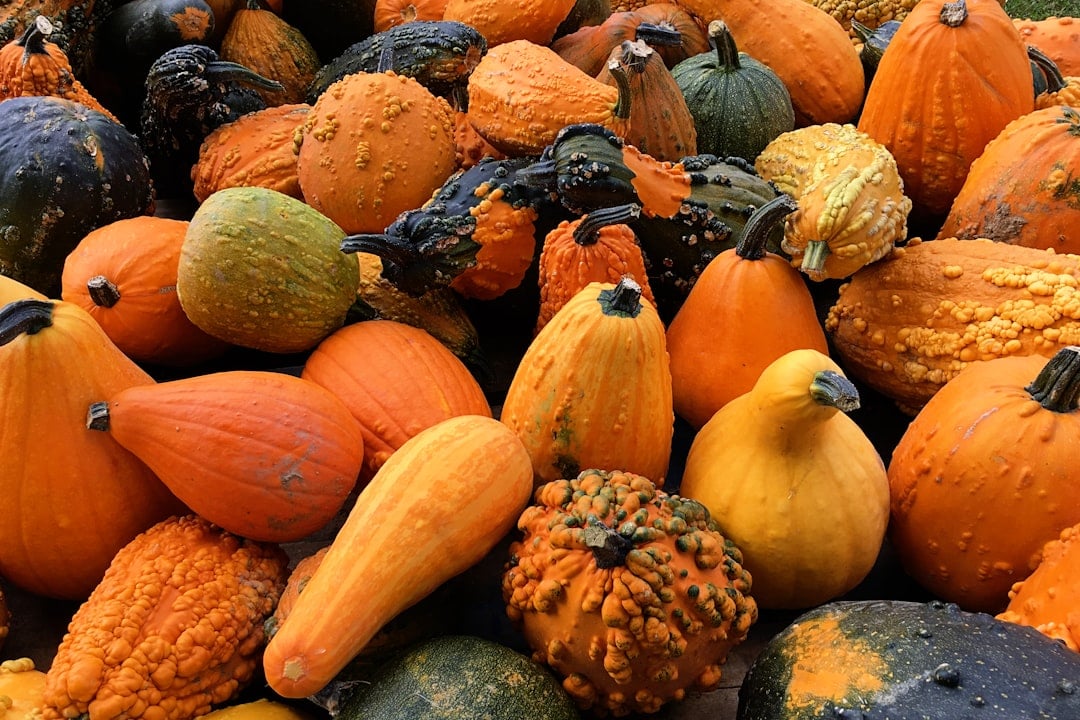
Featured image: Photo by Melanie Hughes on Unsplash.
When is National Acorn Squash Day?
| Year | Date |
|---|---|
| 2026 | 7 September |
| 2027 | TBC |
| 2028 | TBC |





2026 Awareness Days Wall Planner
Every key awareness day at a glance. Perfect for offices, staff rooms, and team planning.
View Calendar →