National Dictionary Day
October 16
About National Dictionary Day
National Dictionary Day takes place every year on 16 October and celebrates the dictionary, the value of words, and the legacy of Noah Webster, the American lexicographer born on this date in 1758. The day encourages people of all ages to expand their vocabulary, look up unfamiliar words, and appreciate the role reference books play in language and learning.
What is National Dictionary Day?
National Dictionary Day is an annual observance that recognises the importance of dictionaries and the skill of using them. It is timed to coincide with the birthday of Noah Webster, often called the Father of the American Dictionary, whose work shaped the way American English is spelled and defined. The day is popular in schools and libraries across the United States, where teachers use it to promote vocabulary building, spelling, and a love of language. While it has no single governing organisation, it is widely marked by educators, writers, and word enthusiasts who see it as a chance to champion clear communication.
When is National Dictionary Day?
National Dictionary Day falls on Friday, 16 October 2026. The date is fixed and never changes, because it honours Noah Webster’s birthday on 16 October 1758. Whatever day of the week it lands on, the observance is always held on the sixteenth of October, making it easy to plan classroom activities or library displays around it each year.
Why National Dictionary Day Matters
Vocabulary is one of the strongest predictors of reading comprehension and academic success, which is why a day dedicated to dictionaries carries real educational weight. Noah Webster’s first edition of An American Dictionary of the English Language contained around 70,000 words, of which roughly 12,000 had never appeared in a dictionary before. That ambition to record and define language as fully as possible still drives lexicographers today. In an age when many people reach for a phone to settle a spelling or meaning, National Dictionary Day is a reminder that behind every quick search sits centuries of careful, painstaking work to capture how we speak and write.
How to Get Involved in National Dictionary Day
There are plenty of simple, enjoyable ways to mark the occasion, whether at home, in the classroom, or at work.
- Learn a new word – Open a dictionary at random, pick out a word you have never used, and try to work it into conversation during the day. It is an easy habit that genuinely grows your vocabulary over time.
- Host a spelling bee – Gather friends, classmates, or colleagues for a friendly spelling contest. It tests recall, rewards reading, and captures the playful spirit of the day.
- Explore word origins – Use a dictionary’s etymology notes to trace where a familiar word came from. Many everyday terms have surprising roots in Latin, Greek, or Old English.
- Play word games – Bring out Scrabble, crosswords, or anagram puzzles. These games turn vocabulary practice into something competitive and fun for all ages.
- Compare British and American spellings – Look up words such as colour, centre, and travelling to see how Webster’s reforms split the two varieties of English. It is a quick way to understand his lasting influence.
- Donate a dictionary – Give a print dictionary to a school, library, or community group. Reference books remain valuable learning tools, especially where digital access is limited.
- Start a word-of-the-day routine – Sign up for a word-of-the-day email or set a reminder to learn one new term daily. National Dictionary Day is the perfect launch point for a habit that lasts all year.
- Read about Noah Webster – Spend a little time learning the story of the man behind the day. His determination to give the new United States its own dictionary is a remarkable piece of history.
History of National Dictionary Day
National Dictionary Day is rooted in the life of Noah Webster, who was born in West Hartford, Connecticut, on 16 October 1758. A teacher, writer, and tireless reformer, Webster believed that a young United States should have a language and reference works of its own rather than relying on British models. In 1806 he published A Compendious Dictionary of the English Language, his first dictionary, before turning to a far more ambitious project.
Webster spent decades compiling An American Dictionary of the English Language, which was finally published in 1828. To research the origins of words, he is said to have learned around twenty-six languages, including Latin, Greek, Hebrew, and Old English. The finished work held about 70,000 entries and introduced simplified American spellings, replacing colour with color, centre with center, and waggon with wagon. He also recorded distinctly American words such as skunk and squash that had not appeared in British dictionaries.
Because Webster’s name became almost synonymous with the dictionary itself, his birthday was a natural choice for a day celebrating reference books and vocabulary. Over the years the observance has been embraced by teachers, librarians, and language lovers, particularly across the United States, as an opportunity to encourage word learning and to remember the lexicographer whose work still underpins American English.
Noteworthy Facts About National Dictionary Day
- The day marks the birthday of Noah Webster, born on 16 October 1758, more than 250 years ago.
- Webster’s 1828 dictionary contained around 70,000 words, with roughly 12,000 appearing in a dictionary for the first time.
- It was one of the last major dictionaries to be compiled almost single-handedly by one person.
- Webster reportedly studied around twenty-six languages to trace the etymology of the words he defined.
- His spelling reforms are the reason American English uses color, center, and theater rather than the British colour, centre, and theatre.
Frequently Asked Questions
What is National Dictionary Day?
National Dictionary Day is an annual observance celebrating dictionaries, vocabulary, and the legacy of Noah Webster. It encourages people to learn new words, improve their spelling, and appreciate the work that goes into recording language.
When is National Dictionary Day in 2026?
National Dictionary Day is on Friday, 16 October 2026. The date is fixed every year because it honours Noah Webster’s birthday on 16 October 1758.
Why is National Dictionary Day held on 16 October?
The date was chosen to coincide with the birthday of Noah Webster, the lexicographer behind the first major American dictionary. Celebrating on his birthday links the day directly to the person most associated with the dictionary in the United States.
Spread the Word
Help raise awareness by sharing National Dictionary Day with your friends, family, and followers. Use the hashtags #NationalDictionaryDay and #NationalDictionaryDay2026 on social media, and challenge others to learn a brand new word. The more people who take part, the more we celebrate the words that connect us all.
Related Awareness Days
- National Grammar Day – A celebration of clear writing and correct grammar that pairs naturally with a day devoted to dictionaries.
- National Scrabble Day – The perfect companion event for anyone who loves turning their vocabulary into a competitive word game.
- Bowdler’s Day – Another date with deep roots in the history of language and the printed word.
Links
- Read about Noah Webster and his dictionary at Merriam-Webster
- Explore more awareness days at AwarenessDays.com
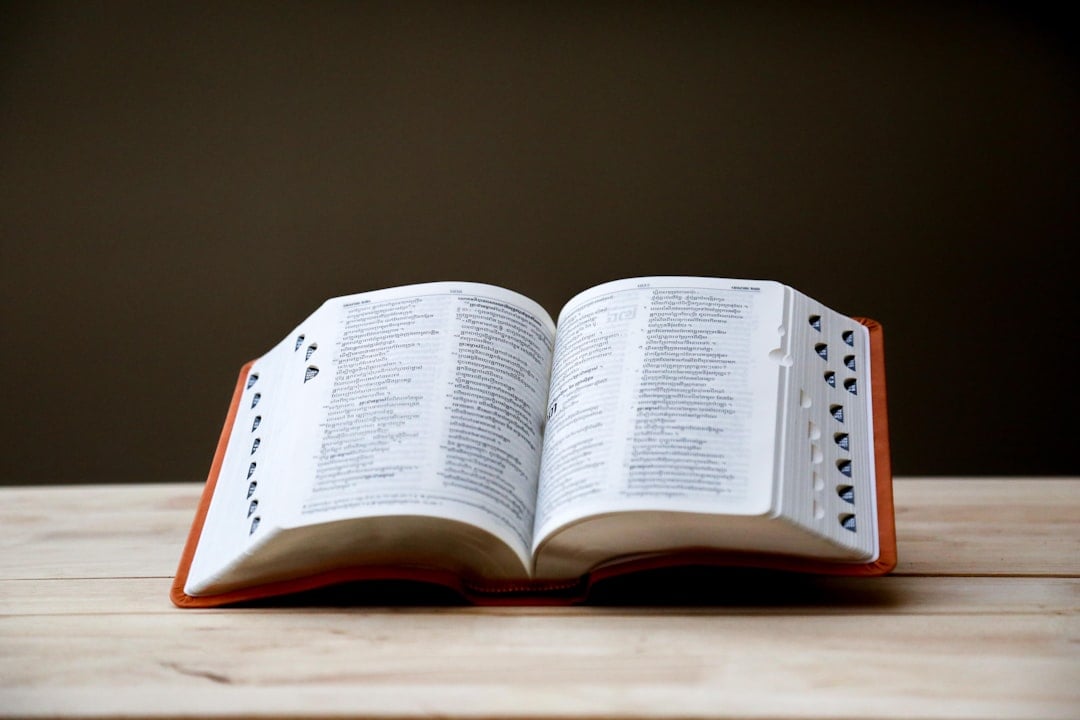
Featured image: Photo by Pisit Heng on Unsplash.



2026 Awareness Days Wall Planner
Every key awareness day at a glance. Perfect for offices, staff rooms, and team planning.
View Calendar →