World Day for Audiovisual Heritage 2026
Tuesday 27 October 2026
Established by UNESCO in 2005, the day commemorates the adoption of UNESCO’s 1980 Recommendation for the Safeguarding and Preservation of Moving Images. It recognises the vital role of audiovisual archives and the professionals working to prevent the loss of cultural memory held in recorded media.
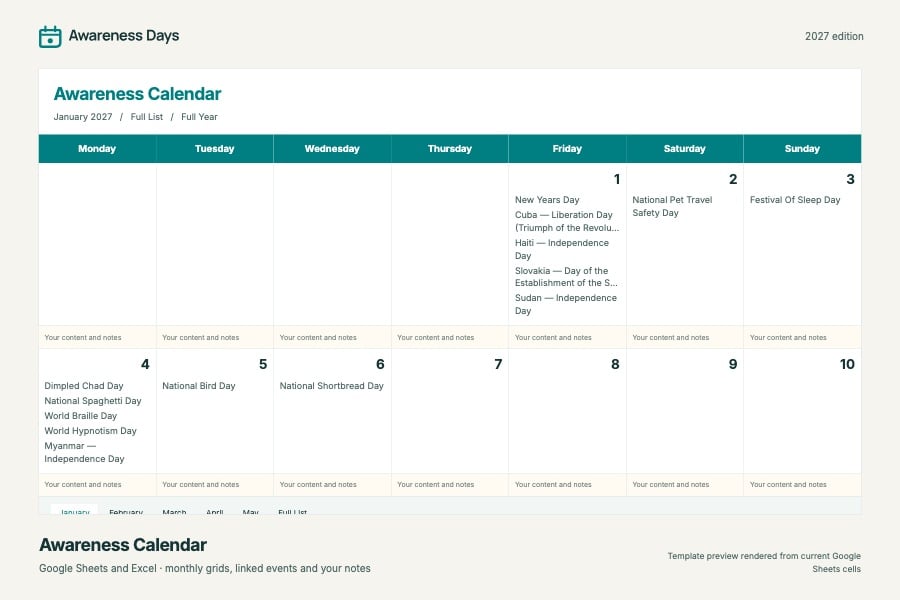
Add this date to my calendarA full year of awareness dates, ready to edit or print.
Get the full 2027 awareness days calendar£19.99. No automatic renewal.
On this page
Dates and event details
Tuesday 27 October 2026
| Where | International |
|---|
What is World Day for Audiovisual Heritage?
Established by UNESCO in 2005, the day commemorates the adoption of UNESCO’s 1980 Recommendation for the Safeguarding and Preservation of Moving Images. It recognises the vital role of audiovisual archives and the professionals working to prevent the loss of cultural memory held in recorded media.
Every year on October 27, communities across the globe unite to celebrate World Day for Audiovisual Heritage. This important observance highlights the value of preserving films, sound recordings, radio broadcasts, television programmes and other audiovisual treasures for future generations.
When is World Day for Audiovisual Heritage?
The day is observed each year on October 27. In 2026, that falls on a Monday. Leading up to and on the day, museums, archives and broadcasters host screenings, exhibitions, workshops, forums and public events to showcase their audiovisual collections.
How to Get Involved
- Visit an event: Find archive tours, public screenings or listening sessions at film institutes, libraries or cultural centres.
- Explore your own collections: Digitise old home videos, family recordings or oral testimonies before they deteriorate.
- Join workshops: Learn techniques for digitisation, cataloguing, restoration or proper storage.
- Share the stories: Post excerpts from historic recordings, explain their significance and use #AudiovisualHeritageDay.
- Support archive efforts: Donate time, funds or resources to preservation projects in your area.
Why the Day Matters
Audiovisual materials are both fragile and irreplaceable – stored on film, tape, VHS, DVD and digital formats that degrade or become obsolete without care. Preserving these records safeguards cultural identity, historical memory and social diversity. On this day, we acknowledge the work needed to save national and community stories from fading into silence.
Noteworthy Facts
- The day honours the work of archivists and institutions in preserving audiovisual records that might otherwise be lost.
- Audio‑visual materials – like analogue film and magnetic tape – can deteriorate irreversibly within a decade without proper care.
- Themes such as “Your Window to the World” encourage archives to invite the public behind the scenes each year.
- Since its launch, the observance has grown to involve government agencies, NGOs, universities and community archive groups.
- Public engagement events often include live recordings, digitisation demonstrations, oral-history sharing and open-access film festivals.
Links
History of the Day
The date marks the 1980 adoption of UNESCO’s Recommendation on the Safeguarding and Preservation of Moving Images. In 2005 it became an annual observance, co‑ordinated with the CCAAA and major associations like IASA, ICA and FIAF. Since 2007, memory institutions worldwide have taken part by sharing events, online highlights and educational programmes.
Hashtags
#AudiovisualHeritageDay, #WorldDayForAudiovisualHeritage, #PreserveOurArchives
Frequently asked questions
When is World Day for Audiovisual Heritage 2026?
What is World Day for Audiovisual Heritage 2026?
More awareness days in October
See all → 31 Oct31 OctSaturdaySeasonalUK, US, Australia and worldwideHalloween
 1–31 OctMonth1 Oct to 31 OctMonthCommunityUKBlack History Month
 1–31 OctMonth1 Oct to 31 OctMonthCancerUK, US, Australia and worldwideBreast Cancer Awareness Month 2026
 1 Oct1 OctThursdayFood & NutritionUK, US, Australia and worldwideInternational Coffee Day 2026