

Djibouti Independence Day 2026
Saturday 27 June 2026
Djibouti Independence Day is the national day of the Republic of Djibouti, observed every year on 27 June.
Also on 27 June: PTSD Awareness Day · International Sunglasses Day · National Bingo Day
The Story Behind Djibouti Independence Day
Djibouti Independence Day is the national day of the Republic of Djibouti, observed every year on 27 June. It marks the date in 1977 when the small but strategically vital country on the Horn of Africa gained its independence from France, becoming the last of France’s mainland African territories to do so. In 2026 the day falls on Saturday, 27 June, and is celebrated across the country with military parades, music, and family gatherings.
Djibouti’s road to nationhood was long and contested. France first established a foothold on this corner of the Red Sea coast in the 1880s, and by 1888 the colonial territory known as French Somaliland had taken shape around the port settlement that would become Djibouti City. The location was no accident. The territory sits on the Bab el Mandeb Strait, the narrow channel separating the Red Sea from the Gulf of Aden, through which a vast share of the world’s maritime trade still passes. For a colonial power, controlling this gateway meant controlling access to the Suez route and the Indian Ocean beyond.
For much of the twentieth century, the territory’s future was decided by referendum rather than revolution. In 1958, and again in 1967, the population was asked whether to remain tied to France or to break away, and on both occasions the official result favoured continued association. The territory was renamed the French Territory of the Afars and the Issas in 1967, reflecting its two principal communities. Both votes were dogged by accusations that the outcomes had been manipulated to keep France in place, and resentment over the arrangement deepened through the 1970s as other African nations achieved self-rule.
The decisive moment came on 8 May 1977, when a fresh referendum was held alongside elections for a constituent assembly. This time the vote for independence was overwhelming. A few weeks later, on 27 June 1977, the Republic of Djibouti was formally proclaimed. Hassan Gouled Aptidon, a veteran nationalist who had campaigned across decades of the independence struggle, became the country’s first president. The new state inherited a strategic port, a diverse population speaking Somali, Afar, Arabic, and French, and the considerable challenge of building national institutions almost from scratch.
Nearly fifty years on, Independence Day remains the most important fixture in Djibouti’s calendar, a moment when a nation of just over a million people pauses to remember how recently and how hard-won its sovereignty was.
When and Where is Djibouti Independence Day Celebrated?
Djibouti Independence Day is a fixed public holiday held on 27 June each year. In 2026 it falls on a Saturday. The date never moves, as it commemorates the exact anniversary of the 1977 proclamation. Celebrations are concentrated in the capital, Djibouti City, home to more than half the national population, but towns and villages across the country mark the day too. Members of the Djiboutian diaspora in France, the Gulf states, and further afield often gather for community events of their own, keeping the connection to home alive across borders.
Plan around Djibouti Independence Day and every key date in June
The Awareness Days Toolkit puts every awareness day for 2026 and 2027 in a spreadsheet, printable PDF calendars and an iCal feed that keeps itself up to date.
Traditions and Customs
The day blends formal state ceremony with relaxed family celebration. Common traditions include:
- The military parade – The centrepiece of the day is a parade through Djibouti City, where the national army displays new units and equipment, led by a marching band in full colour.
- Presidential speeches – After the parade, the President and senior officials address the nation from in front of the Presidential Palace, reflecting on the past year and the meaning of independence.
- Flag-raising ceremonies – The Djiboutian flag, with its light blue and green bands, white triangle, and red star, is hoisted at official sites and in neighbourhoods, and people wear the national colours.
- Traditional food – Families share dishes such as skudahkharis, a fragrant Djiboutian lamb and rice stew, often served with crisp sabaayad flatbread.
- Music and dance – Concerts, fairs, and informal street gatherings fill the evening, with singing and dancing carrying the festivities well into the night.
Ways to Celebrate Djibouti Independence Day
Whether you have ties to Djibouti or simply want to learn about one of Africa’s youngest nations, there are plenty of ways to take part:
- Cook a Djiboutian meal – Try making skudahkharis or sabaayad at home, dishes that reflect the country’s blend of East African and Arabian influences.
- Learn the history – Read about the 1977 independence vote and the life of Hassan Gouled Aptidon to understand how the republic came to be.
- Explore the geography – Look up the Bab el Mandeb Strait and Lake Assal, the lowest point in Africa, to appreciate Djibouti’s remarkable landscape.
- Support the diaspora – Seek out community events or Djiboutian-owned businesses in your area and join the celebrations.
- Share the flag – Display or share the Djiboutian flag and its symbolism, where blue represents the sea and sky, green the earth, white peace, and the red star unity.
- Discover the music – Listen to Djiboutian and wider Horn of Africa music, which draws on Somali and Afar oral traditions.
Facts and Figures
- Djibouti became independent on 27 June 1977, the last of France’s mainland African territories to do so.
- Hassan Gouled Aptidon served as the country’s first president, having campaigned for the cause as early as the 1958 referendum.
- Djibouti covers around 23,200 square kilometres, roughly the size of the US state of New Jersey.
- The country has a population of just over one million, with more than half living in the capital, Djibouti City.
- Its official languages are French and Arabic, while Somali and Afar are widely spoken national languages.
Hashtags
Links
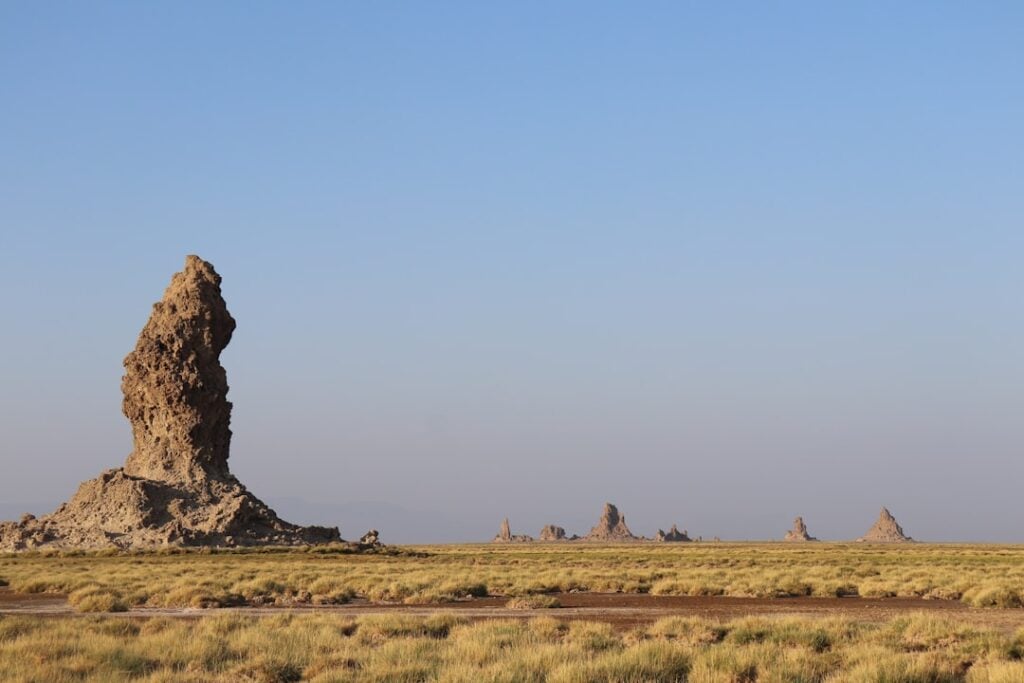
Featured image: Photo by Eva Mtalii on Unsplash.





Frequently asked questions
What is Djibouti Independence Day?
It is the national day of the Republic of Djibouti, marking its independence from France on 27 June 1977. It is celebrated with parades, speeches, and cultural festivities across the country.
When is Djibouti Independence Day in 2026?
Djibouti Independence Day falls on Saturday, 27 June 2026. The date is fixed and does not change from year to year.
Why did Djibouti gain independence so late?
Earlier referendums in 1958 and 1967 returned official results in favour of remaining with France, both amid claims of vote-rigging. It was only the 1977 referendum that delivered a clear mandate for independence, making Djibouti the last of France’s mainland African territories to become sovereign.
More awareness days in June
See all → 23–26 Jun23 Jun to 26 JunBusiness & FinanceInternationalAmazon Prime Day 2026
 27 Jun27 JunSaturdayFun & QuirkyInternationalGlobal Smurf Day27Jun27 Jun27 JunSaturdayBusiness & FinanceInternationalMicro, Small and Medium Enterprises Day
 27 Jun27 JunSaturdayHealth & WellbeingUSPTSD Awareness Day
 27 Jun27 JunSaturdayFood & NutritionInternationalNational Onion Day
 27 Jun27 JunSaturdayHealth & WellbeingUSNational HIV Testing Day
 27 Jun27 JunSaturdayFun & QuirkyInternationalInternational Sunglasses Day
 27 Jun27 JunSaturdayFun & QuirkyUSNational Bingo Day