- This event has passed.
Folklore Day
August 22
About Folklore Day
Folklore Day is celebrated annually on 22 August to mark the date in 1846 when British antiquary William John Thoms first coined the word “folklore” in an article published in The Athenaeum magazine. The day is observed around the world as an opportunity to celebrate cultural traditions, oral histories, folk music, storytelling, and the customs passed down through generations.
What is Folklore Day?
Folklore Day, also known as World Folklore Day, is an annual occasion dedicated to recognising and celebrating the traditions, stories, music, and customs that define communities and cultures across the globe. The day honours the vast body of cultural knowledge passed from one generation to the next through oral tradition, ritual, art, and performance.
Folklore encompasses a wide range of expressions: fairy tales and myths, folk songs and dances, proverbs and riddles, traditional crafts, culinary customs, and the beliefs and superstitions embedded in daily life. Each culture has its own rich folkloric heritage, from the storytelling traditions of the African griot to the Morris dancing of rural England, the corrido ballads of Mexico, and the Dreamtime narratives of Australian Aboriginal peoples.
When is Folklore Day?
Folklore Day is observed every year on 22 August. The date commemorates the anniversary of William John Thoms’s article in The Athenaeum on 22 August 1846, in which he proposed the term “folklore” to describe traditional popular antiquities. Several countries, including Brazil and Argentina, hold their own national Folklore Day on the same date.
Why Does Folklore Day Matter?
Folklore is often described as the living memory of a people. In an era of rapid globalisation and digital communication, many folk traditions are at risk of being lost or diluted as younger generations become increasingly disconnected from the practices of their ancestors.
Folklore Day draws attention to the importance of actively preserving and transmitting cultural heritage. Folk traditions carry encoded knowledge about history, local ecology, community values, and human psychology. By celebrating these traditions, communities reinforce a sense of shared identity and belonging.
UNESCO has recognised the importance of intangible cultural heritage, including folklore, through its 2003 Convention for the Safeguarding of the Intangible Cultural Heritage. World Folklore Day aligns with these global efforts by encouraging people to engage with, document, and share their cultural traditions. Folklore Day is one of a number of arts, culture, and heritage awareness days that champion the richness of human expression throughout the year.
How to Get Involved
- Attend a local folk festival, storytelling event, or traditional music and dance performance.
- Read a collection of folk tales or myths from a different culture to broaden your understanding of world folklore.
- Share a story, song, or custom that has been passed down in your own family or community.
- Visit a local museum or cultural centre to explore the folklore and traditions of your region.
- Take part in traditional crafts such as weaving, pottery, or folk embroidery.
- Support initiatives that document and preserve endangered oral traditions or indigenous languages.
History of Folklore Day
The word “folklore” was invented by William John Thoms, a British antiquary and writer who published under the pseudonym Ambrose Merton. On 22 August 1846, he wrote a letter to The Athenaeum proposing the compound term “folk-lore” to replace the then-current phrase “popular antiquities.” He defined it as the “traditional knowledge of a people,” encompassing the customs, observances, superstitions, ballads, and proverbs of ordinary folk.
The term was rapidly adopted and spread internationally, eventually becoming the standard word for the academic study and popular appreciation of traditional culture. Thoms went on to become a founding figure in the field of folkloristics, and the date of his original letter has since been adopted worldwide as the basis for celebrating folklore.
Argentina celebrates 22 August as its national Folklore Day, marking the birth of Juan Bautista Ambrosetti, an influential Argentine ethnographer born on this date in 1865. Brazil established its Folklore Day through a presidential decree in 1965, with the aim of preserving the country’s rich folk traditions and encouraging folklore as a field of academic study.
At the international level, UNESCO has promoted World Folklore Day since 2018 as part of its broader efforts to safeguard intangible cultural heritage. The European Association of Folklore Festivals also marks the occasion each year, encouraging folk festivals and cultural events across the continent.
Noteworthy Facts
- The Brothers Grimm published their first collection of folk tales, Children’s and Household Tales, in 1812, one of the earliest systematic efforts to document European folklore.
- The word “fairy tale” entered the English language in the 18th century as a translation of the French conte de fees, but oral fairy tales are far older, found in cultures across Africa, Asia, and the Americas.
- The Aarne-Thompson-Uther (ATU) index is an international classification system for folk tales, with thousands of tale types catalogued across cultures worldwide.
- The trickster figure is among the most universal characters in world folklore, appearing in traditions as diverse as Anansi stories from West Africa and the Nasreddin tales of the Middle East.
- Morris dancing, one of England’s most distinctive folk traditions, dates to at least the 15th century and continues to be performed at festivals and village fairs across the country.
- UNESCO’s list of intangible cultural heritage includes over 700 traditions from countries around the world, ranging from the Japanese art of washi paper-making to the Mongolian art of Ger-making.
Hashtags
#FolkloreDay #WorldFolkloreDay #Folklore #CulturalHeritage #FolkTraditions #Storytelling #IntangibleHeritage
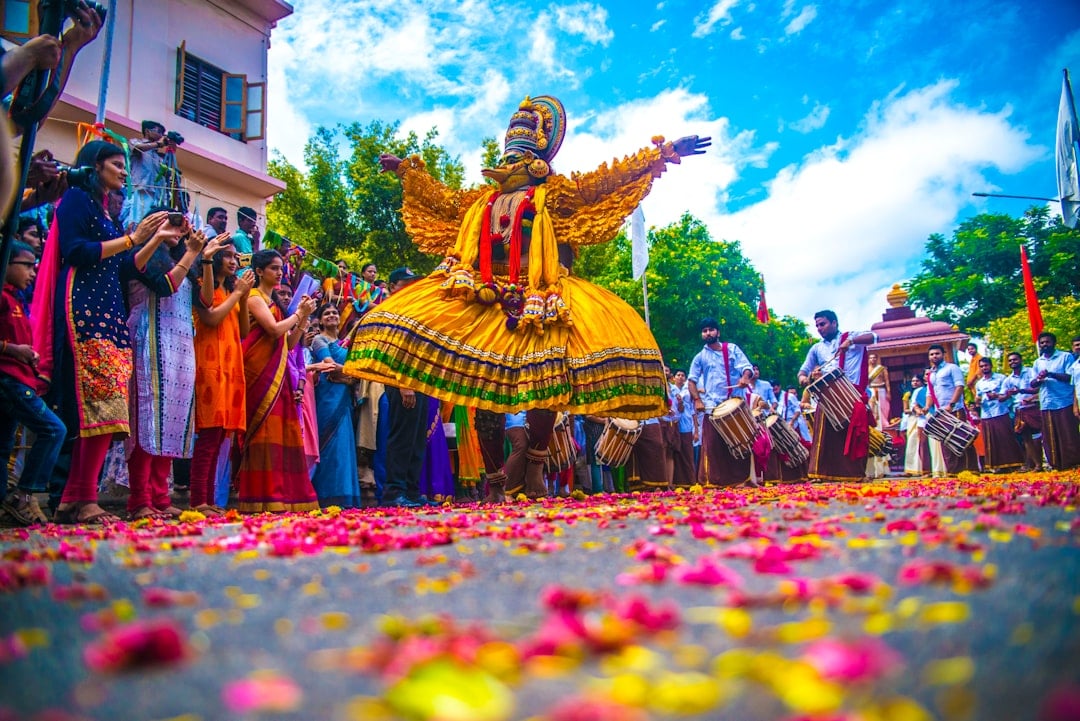
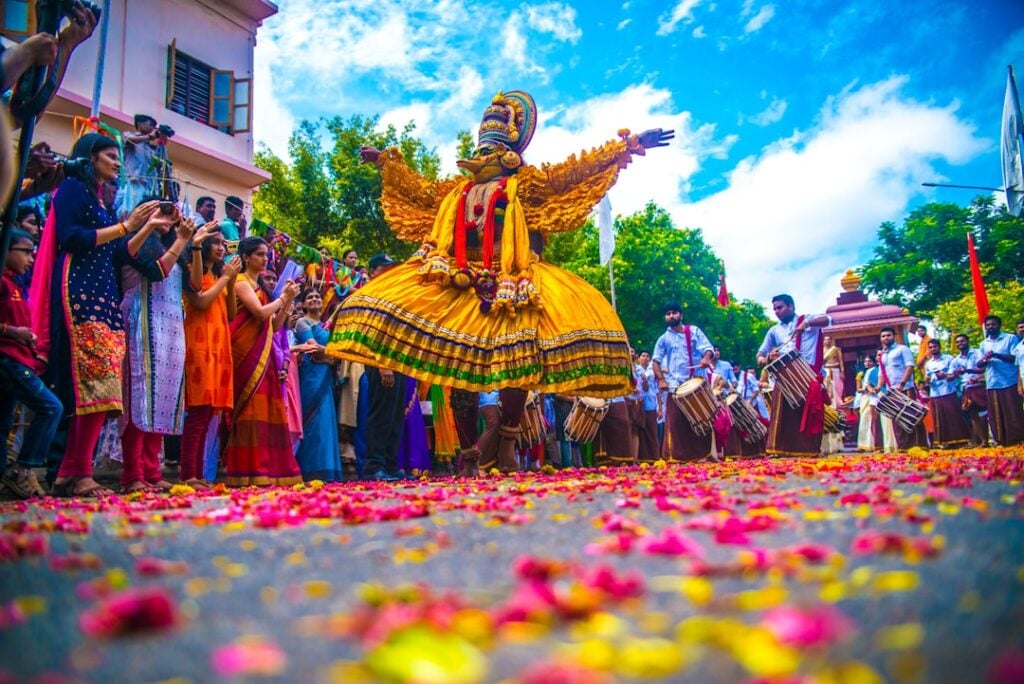
Featured image: Photo by Nandu Menon on Unsplash.
When is Folklore Day?
| Year | Date |
|---|---|
| 2026 | 22 August |
| 2027 | TBC |
| 2028 | TBC |







2026 Awareness Days Wall Planner
Every key awareness day at a glance. Perfect for offices, staff rooms, and team planning.
View Calendar →