
Heritage Day 2026
Thursday 24 September 2026
Heritage Day is a South African public holiday celebrated each year on 24 September, when people across the country mark the cultural traditions, languages, and histories that make up the nation.
Add this date to my calendarA full year of awareness dates, ready to edit, print or sync.
Get the full 2027 awareness days calendar£49.99 a year. Renews annually.
On this page
Dates and event details
Thursday 24 September 2026
| Where | International |
|---|
About Heritage Day
Heritage Day is a South African public holiday celebrated each year on 24 September, when people across the country mark the cultural traditions, languages, and histories that make up the nation. In 2026 it falls on Thursday, 24 September. The day invites all South Africans to recognise and honour the diversity of their society, often through music, food, traditional dress, and the now famous communal braai.
When and Where is Heritage Day Celebrated?
Heritage Day always falls on 24 September. In 2026 it lands on a Thursday. It is a national public holiday across South Africa, observed in every province, and it is recognised by South African communities living abroad as well. The character of the celebration shifts from place to place: a gathering in rural KwaZulu-Natal may centre on Zulu tradition, while events in Cape Town, Johannesburg, or Durban often bring together a wide mix of cultures within a single afternoon.
The Story Behind Heritage Day
The date of 24 September carries a long history in South Africa. In the province of KwaZulu-Natal it was originally observed as Shaka Day, commemorating the legendary Zulu king Shaka, who is widely credited with uniting the many Nguni clans into a single, cohesive Zulu nation in the early nineteenth century. The date is taken as the presumed anniversary of his death in 1828, and for generations communities gathered at his grave in KwaDukuza to pay their respects.
When the Public Holidays Bill came before the newly democratic Parliament in 1994, the first year of South Africa’s post-apartheid era, the proposed list of public holidays did not include 24 September. The Inkatha Freedom Party, a party with a large Zulu membership, objected strongly to the omission of a date so meaningful to its community. Rather than let the disagreement harden, lawmakers reached a compromise that reflected the spirit of the new nation.
The solution was to create a holiday that belonged to everyone. Instead of marking a single people or figure, 24 September would become a day on which all South Africans could observe and celebrate the full breadth of their cultural inheritance. Heritage Day was first celebrated on 24 September 1995, and it quickly took its place among the country’s most widely embraced public holidays.
In a 1996 address, former President Nelson Mandela captured the thinking behind the holiday when he spoke of how a people’s heritage gives them depth and helps define who they are. That framing, of heritage as something shared rather than something that divides, remains at the heart of how the day is understood today.
Traditions and Customs
Heritage Day is marked in a variety of ways, from the deeply traditional to the playfully modern.
- The braai – The communal barbecue, known by its Afrikaans name braai, has become the day’s signature ritual. Families and friends gather around an open fire to cook and share food, and many feel the braai is something that crosses every cultural and language barrier in the country.
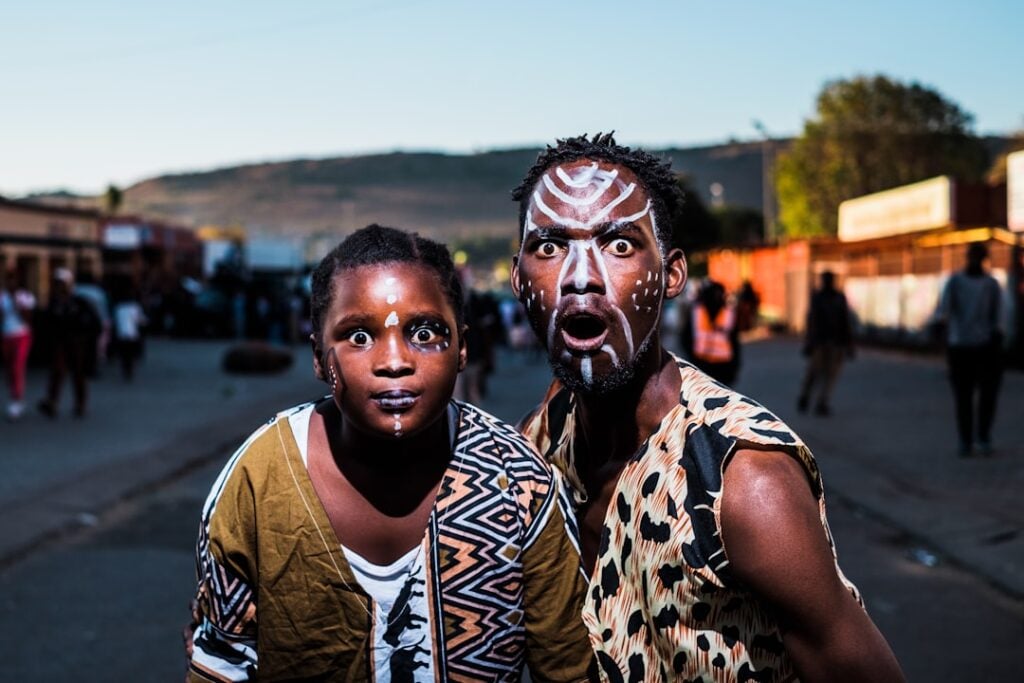
- Traditional dress – Many people wear the clothing of their cultural background, whether that is Zulu, Xhosa, Sotho, Ndebele, Afrikaner, or one of the country’s many other communities, turning streets and gatherings into a display of the nation’s variety.
- Music and dance – Performances of traditional song and dance feature heavily, from Zulu drumming to gumboot dancing, often staged at community festivals and cultural centres.
- Sharing traditional food – Beyond the braai, households prepare dishes tied to their heritage, such as pap, chakalaka, bobotie, bunny chow, and umngqusho, and meals are frequently shared between neighbours of different backgrounds.
- The annual theme and Presidential address – Each year the government sets a national theme for Heritage Day, and the President delivers an address to the nation, giving the celebration a formal, unifying focus.
Ways to Celebrate Heritage Day
Whether you live in South Africa or simply want to honour its cultures from afar, there are many ways to take part.
- Host a braai – Gather friends and family around a fire and share a meal. It is the most popular way South Africans mark the day, and the spirit of it travels easily wherever you are.
- Cook a traditional South African dish – Try your hand at bobotie, bunny chow, or a pot of pap and chakalaka, and learn a little about where the recipe comes from as you go.
- Learn about a culture other than your own – Read about the histories and customs of one of South Africa’s communities, an act that sits at the very centre of what the day was created to encourage.
- Visit a museum or heritage site – Many cultural institutions hold special exhibitions and events, offering a deeper look at the nation’s layered past.
- Wear traditional clothing – Dressing in the attire of your heritage, or simply celebrating that of others, is a warm and visible way to honour the occasion.
- Support local artists and craftspeople – Buy from makers working in traditional crafts, music, and food, helping to keep living traditions alive.
Facts and Figures
- Heritage Day was first celebrated on 24 September 1995, the year after South Africa’s first democratic elections.
- The date was previously observed as Shaka Day, commemorating the Zulu king Shaka on the presumed anniversary of his death in 1828.
- South Africa recognises 11 official languages, and the country is often described as the Rainbow Nation, a phrase associated with Archbishop Desmond Tutu.
- In 2005 a media campaign launched a movement to rebrand the holiday informally as National Braai Day, celebrating the shared tradition of the barbecue.
- Each year the South African government announces an official theme for Heritage Day, and the President delivers a national address.
Heritage Day shares its themes of culture and national identity with many days on our calendar, including Mexican Independence Day, another vivid national celebration that falls earlier in September.
Links
- Visit the South African Government’s Heritage Day page
- Explore more awareness days at AwarenessDays.com
Featured image: Photo by Mpumelelo Macu on Unsplash.
Hashtags
Share Heritage Day with your community using #HeritageDay and #HeritageDay2026. Whether you mark the occasion with a braai, a traditional dish, or simply by learning about a culture other than your own, every bit of awareness helps keep this tradition alive.
Frequently asked questions
What is Heritage Day?
Heritage Day is a South African public holiday on which all citizens are encouraged to celebrate their cultural traditions and the wider diversity of the nation. It was created as a unifying holiday in the country’s post-apartheid era.
When is Heritage Day in 2026?
Heritage Day falls on Thursday, 24 September 2026. It is observed on the same date every year.
Why is Heritage Day also called Braai Day?
In 2005 a media campaign sought to rebrand the holiday informally as National Braai Day, after the South African tradition of the communal barbecue. The braai is seen as something that unites people across cultures, and the nickname has stuck for many South Africans, though the official name remains Heritage Day.
More awareness days in September
See all → 16–22 SepWeek16 Sep to 22 SepWeekScience & TechnologyInternationalNational Coding Week 2026
 21 Sep – 4 OctWeek21 Sep to 4 OctWeekEducation & YouthUK, US, Australia and worldwideFairtrade Fortnight 202624Sep24 Sep24 SepThursdayAnimals & WildlifeInternationalWorld Gorilla Day
 24 Sep24 SepThursdayHealth & WellbeingUKYouth Mental Health Day