Halloween 2026
Saturday 31 October 2026
Halloween is the evening celebration before All Saints’ Day, marked with costumes, pumpkin lanterns, trick-or-treating and ghost stories. Its customs draw on Christian observances, Irish and Scottish traditions, and later developments in North America.
Add this date to my calendarA full year of awareness dates, ready to edit or print.
Get the full 2027 awareness days calendar£29 once. No automatic renewal.
On this page
Dates and event details
Halloween 2026 is on Saturday 31 October.
| Year | Halloween date | Day |
|---|---|---|
| 2026 | 31 October 2026 | Saturday |
| 2027 | 31 October 2027 | Sunday |
| 2028 | 31 October 2028 | Tuesday |
| 2029 | 31 October 2029 | Wednesday |
| 2030 | 31 October 2030 | Thursday |
| Where | UK, international, US and Australia |
|---|
What is Halloween?
Halloween is the celebration held on the evening of 31 October, known for costumes, pumpkin lanterns, trick-or-treating and ghost stories. The name comes from All Hallows’ Eve: the evening before All Saints’ Day on 1 November. Today, people celebrate in different ways, from neighbourhood visits and family parties to school activities and community trails.
Its traditions include Christian observances, Irish and Scottish seasonal customs, and later developments in North America. Halloween has no single organiser or universal annual theme, so a local event can focus on the history, creative activities, fundraising or simply enjoying time together.
When is Halloween in 2026?
Halloween falls on Saturday 31 October 2026. It is on 31 October every year; only the day of the week changes. The date is the same in the UK, Ireland, the United States and Australia, although local celebrations and organised events may take place on other days.
Halloween is not a UK bank holiday. Check individual opening hours and event listings rather than assuming that schools, workplaces or attractions follow a special Halloween timetable.
Planning Halloween in 2026
The Saturday date gives families and community groups the option of celebrating on Halloween itself. A daytime pumpkin trail can suit younger children, while an evening event needs a clear start time, finish time and meeting point.
- For workplaces: Friday 30 October is an option for teams working Monday to Friday. Set an activity that colleagues working remotely or on different shifts can join.
- For schools: check your school’s own calendar before announcing a dress-up day or assembly. School term and holiday dates vary; there is no single UK half-term week.
- For community organisers: say whether booking is needed, give the age range and accessibility information, and explain whether the event includes jump scares or a quieter session.
In the UK, Bonfire Night on 5 November comes five days later. It is a separate occasion commemorating the Gunpowder Plot, so label combined autumn events clearly. For more planning dates, browse the October awareness days calendar.
Halloween activities for families, schools and workplaces
Ideas for families and community groups
- Make a pumpkin trail. Display decorated pumpkins with a letter or picture at each stop, then give children a short puzzle to solve.
- Try a storytelling evening. Invite everyone to bring a favourite spooky story or tell a joke in costume, inspired by Scottish guising.
- Decorate before you cook. Hubbub’s Eat Your Pumpkin campaign suggests decorating an intact pumpkin rather than carving it, then using it for a meal. Choose removable decorations and keep cooking ingredients separate from outdoor lanterns.
Ideas for schools
- Compare traditions. Use the history below to explore All Hallows’ Eve, Scottish guising and Irish turnip lanterns. Ask pupils how customs change as people move between countries.
- Make a paper lantern display. Draw faces on paper pumpkins or turnips and add a short caption explaining the tradition.
- Connect with autumn learning. Compare pumpkins, apples and harvest foods, linking to Apple Day on 21 October. Offer an alternative activity for pupils who do not celebrate Halloween.
Ideas for workplaces and communications teams
- Run an optional costume or desk-decoration challenge. Set a small budget, allow homemade entries and include a remote-entry option.
- Give a fundraiser a clear purpose. If holding a bake sale or collection, name the charity, explain where donations go and let people take part without dressing up.
- Plan useful seasonal content. A costume-reuse idea, pumpkin recipe or local-event guide gives your audience something practical. Animal charities can also connect with National Black Cat Day on 27 October.
Trick-or-treating in the UK: when and how
Trick-or-treating usually takes place on Halloween evening, but there is no single UK start or finish time. Agree a suitable time with participating neighbours, check local guidance and avoid calling late. An organised trail may have its own published hours.
Havering Council’s advice, issued with police and fire services, recommends that younger children go with an adult and older children have an agreed route and return time. Visit households where you know the residents, respect “no trick or treating” signs, stay on the doorstep and accept that some people do not wish to take part.
Choose well-lit routes, take a torch and make sure costumes allow children to see and move comfortably. The Scottish Fire and Rescue Service recommends battery-operated candles for pumpkin lanterns to avoid an exposed flame near costumes and decorations.
Halloween history and origins
All Hallows’ Eve and the Christian calendar
All Hallows’ Eve is the evening before All Saints’ Day on 1 November; All Souls’ Day follows on 2 November. These observances remember saints and the dead. English Heritage explains the connection with medieval soul cakes: people gave food to visitors who offered prayers for departed relatives. This custom, known as souling, is one of the older door-to-door traditions associated with this season.
Samhain and Scottish guising
Samhain in Ireland, and Samhainn in Scotland, marks the seasonal transition towards winter. Historic Environment Scotland describes traditions involving spirits, bonfires, turnip lanterns and guising. Guisers visit neighbours in costume and may tell jokes to earn treats. These customs are part of Halloween’s history, alongside its Christian name and observances; the modern celebration has developed through several overlapping traditions.
Why do we carve pumpkins at Halloween?
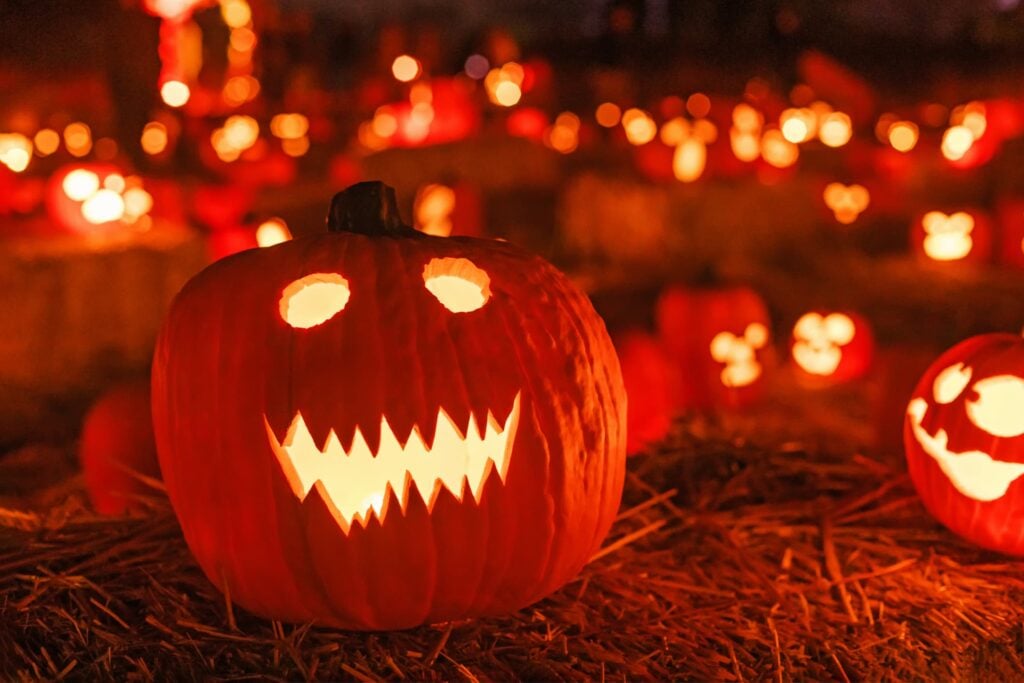
Before pumpkin lanterns became familiar, people in Ireland and Scotland carved faces into turnips. The National Museum of Ireland’s ghost turnip records a Donegal lantern tradition practised around 1900. The museum describes the pumpkin lantern as an American development of the Irish custom. A carved pumpkin, or jack-o’-lantern, is now one of Halloween’s most recognisable decorations.
Last reviewed: 23 October 2026. Checked calendar dates, historical sources, local planning advice and related links.
Frequently asked questions
When is Halloween?
Halloween is on 31 October every year. The date stays fixed, while the day of the week changes.
What day is Halloween 2026?
Halloween 2026 falls on Saturday 31 October. A party or school activity may be scheduled for another day, but Halloween itself remains on the 31st.
Is Halloween on the same date in the UK and the US?
Yes. Halloween is on 31 October in both the UK and the United States, as well as Ireland and Australia. Individual events may run on other dates.
Is Halloween a bank holiday in the UK?
No. Halloween is not a UK bank holiday. In 2026 it falls on a Saturday; opening hours and school holiday dates depend on the workplace, venue or school.
What does Halloween mean?
The name is a shortened form of All Hallows’ Eve, the evening before All Saints’ Day on 1 November. It is also written Hallowe’en.
What time does trick-or-treating start in the UK?
There is no single UK timetable. Agree an early-evening visit with neighbours, follow any local event hours, and avoid late calls or homes displaying a “no trick or treating” sign.
Is Halloween an American tradition?
Halloween has traditions from several places, including Irish and Scottish seasonal customs and Christian All Hallows’ Eve. Pumpkin lanterns developed in America from an older Irish turnip-lantern tradition.
When is Halloween 2027?
Halloween 2027 is on Sunday 31 October.
More awareness days in October
See all → 1–31 OctMonth1 Oct to 31 OctMonthCommunityUKBlack History Month
 1–31 OctMonth1 Oct to 31 OctMonthCancerUK, US, Australia and worldwideBreast Cancer Awareness Month 2026
 1 Oct1 OctThursdayFood & NutritionUK, US, Australia and worldwideInternational Coffee Day 2026
 1–7 OctWeek1 Oct to 7 OctWeekFood & NutritionInternationalNational Vegetarian Week 2026