

International Day for the Conservation of the Mangrove Ecosystems 2026
Sunday 26 July 2026
The International Day for the Conservation of the Mangrove Ecosystems takes place every year on 26 July.
Also on 26 July: Parents’ Day · National Dog Photography Day · National Tree Day
What is the International Day for the Conservation of the Mangrove Ecosystems?
The International Day for the Conservation of the Mangrove Ecosystems takes place every year on 26 July. Designated by UNESCO, it raises awareness of the importance of mangrove ecosystems as a unique, special and vulnerable habitat, and promotes solutions for their sustainable management, conservation and protection. In 2026 the day falls on Sunday, 26 July.
The International Day for the Conservation of the Mangrove Ecosystems is an annual observance coordinated by UNESCO to draw global attention to mangroves, the salt-tolerant forests that grow along tropical and subtropical coastlines. It is aimed at governments, conservation bodies, coastal communities, scientists and the wider public. The day highlights the value of mangroves for biodiversity, climate stability and the livelihoods of millions of people, while calling for stronger protection of a habitat that has been lost at an alarming rate over recent decades.
When is the International Day for the Conservation of the Mangrove Ecosystems?
The day is marked on 26 July every year. The date is fixed and does not move, so it always falls on the same day of the month regardless of the year. In 2026 it falls on Sunday, 26 July. The observance has been held annually since its first commemoration in 2016, the year after UNESCO formally adopted it.
Plan around International Day for the Conservation of the Mangrove Ecosystems and every key date in July
The Awareness Days Toolkit puts every awareness day for 2026 and 2027 in a spreadsheet, printable PDF calendars and an iCal feed that keeps itself up to date.
Why the International Day for the Conservation of the Mangrove Ecosystems Matters
Mangroves are among the most productive and valuable ecosystems on Earth, yet they remain under serious threat. They sequester carbon at an exceptional rate, storing up to four times more carbon per unit area than tropical rainforests, with most of it locked in waterlogged soils. Mangrove soils alone hold more than 6.4 billion tonnes of carbon globally, and although mangroves cover less than two per cent of tropical and subtropical coastlines, they account for around 30 per cent of all carbon buried by coastal ecosystems.
Their value extends well beyond carbon. Mangroves act as natural sea defences, with their dense root systems breaking up incoming waves. A mangrove belt just 100 metres wide can reduce wave height by up to 77 per cent during a typhoon, shielding homes, farmland and aquaculture from storm damage. They also contribute an estimated 42 billion US dollars to global fisheries each year and provide flood protection to more than 15 million people annually. Despite this, global mangrove cover declined by around 3.4 per cent between 1996 and 2020, with commercial aquaculture, rice cultivation and coastal development the main drivers of loss. Clearing mangroves is especially damaging because it exposes carbon-rich soils to the air, releasing stored carbon back into the atmosphere.
How to Get Involved in the International Day for the Conservation of the Mangrove Ecosystems
There are many ways to take part, whether you live near a coastline or far inland:
- Learn about mangroves – Read up on how mangrove forests work and why they are so important. Understanding the ecosystem is the first step to protecting it and to sharing accurate information with others.
- Support a mangrove restoration project – Many conservation organisations run planting and restoration schemes. Donating to or volunteering with a reputable project helps rebuild lost habitat in the regions that need it most.
- Join a local clean-up – If you live near a coast or estuary, take part in a beach or shoreline clean-up. Removing plastic and litter protects the marine life that depends on mangrove nurseries.
- Reduce your carbon footprint – Because mangroves are a frontline defence against climate change, cutting your own emissions complements efforts to keep these forests standing.
- Choose sustainable seafood – Much mangrove loss is driven by aquaculture. Choosing certified sustainable seafood reduces demand for products linked to mangrove clearance.
- Raise awareness online – Share facts, photographs and conservation campaigns on social media. Many people have never seen a mangrove, so spreading the word broadens public support.
- Visit a mangrove reserve – If you have the opportunity, visit a protected mangrove site or nature reserve. Responsible eco-tourism can fund conservation and connect people with the habitat.
- Get schools and workplaces involved – Organise a talk, display or fundraiser. Education campaigns help embed long-term support for coastal conservation.
History of the International Day for the Conservation of the Mangrove Ecosystems
The International Day was officially adopted on 6 November 2015, at the 38th session of UNESCO’s General Conference in Paris. The proposal came at the request of Ecuador, a country with a long tradition of mangrove protection. The first official commemoration took place on 26 July 2016.
The choice of 26 July was not arbitrary. The date had already been observed by coastal communities across the Southeast Pacific for years before UNESCO recognised it. During preparation of a regional plan for the conservation of mangroves, representatives from Chile, Colombia, Ecuador, Panama and Peru recommended that the day, already celebrated locally as a day in defence of the mangrove ecosystem, be given international recognition. In Ecuador in particular, mangrove users had marked the occasion for many years as a way of defending their coastal forests against destruction.
Since its adoption, the day has grown into a global focal point for mangrove science, policy and community action. Conservation bodies, research institutions and environmental agencies now use it each year to publish new data, launch restoration initiatives and call for stronger legal protection of one of the planet’s most threatened habitats.
Noteworthy Facts About the International Day for the Conservation of the Mangrove Ecosystems
- UNESCO formally proclaimed the day on 6 November 2015, and it was first observed on 26 July 2016.
- Mangroves can store up to four times more carbon per unit area than tropical rainforests, with most of it held in their soils.
- Global mangrove soils contain more than 6.4 billion tonnes of carbon.
- A mangrove belt 100 metres wide can cut wave height by as much as 77 per cent during a typhoon.
- Mangroves contribute an estimated 42 billion US dollars to global fisheries and help protect more than 15 million people from flooding each year.
Hashtags
Links
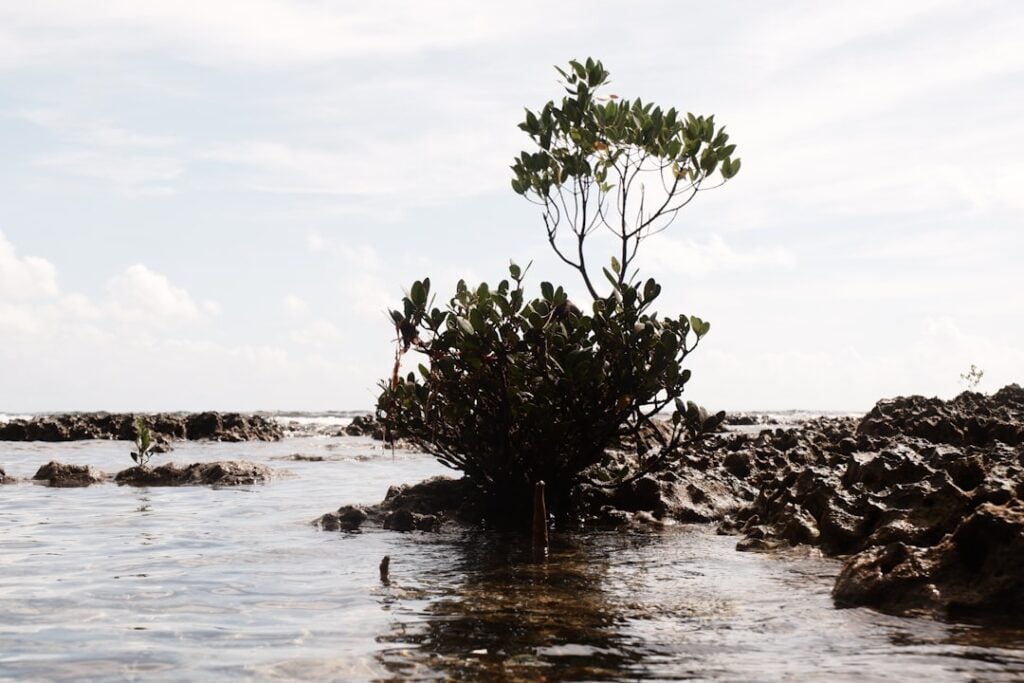
Featured image: Photo by Jericka Cruz on Unsplash.




Frequently asked questions
What is the International Day for the Conservation of the Mangrove Ecosystems?
It is an annual UNESCO observance held on 26 July that raises awareness of mangrove ecosystems and promotes their sustainable management, conservation and protection. It highlights the role of mangroves in supporting biodiversity, storing carbon and protecting coastal communities.
When is the International Day for the Conservation of the Mangrove Ecosystems in 2026?
It falls on Sunday, 26 July 2026. The date is fixed and is the same every year.
Who created the International Day for the Conservation of the Mangrove Ecosystems?
UNESCO adopted the day in November 2015 at the request of Ecuador, building on a date already observed by coastal communities in the Southeast Pacific. The first commemoration was held in 2016.
More awareness days in July
See all → 26 Jul26 JulSundayCommunityInternationalParents’ Day 2026
 26 Jul26 JulSundayAnimals & WildlifeInternationalNational Dog Photography Day
 26 Jul26 JulSundayEnvironmentAustraliaNational Tree Day
 26 Jul26 JulSundayCommunityUSNational Disability Independence Day26Jul26 Jul26 JulSundayCommunityUSAuntie’s Day
 27 Jul27 JulMondayArts & CultureUKNorfolk Day
 27 Jul27 JulMondayArts & CultureInternationalBagpipe Appreciation Day
 27 Jul27 JulMondayCommunityUSNational Love is Kind Day