

National Capybara Day 2027
Saturday 10 July 2027 · every year on 10 July
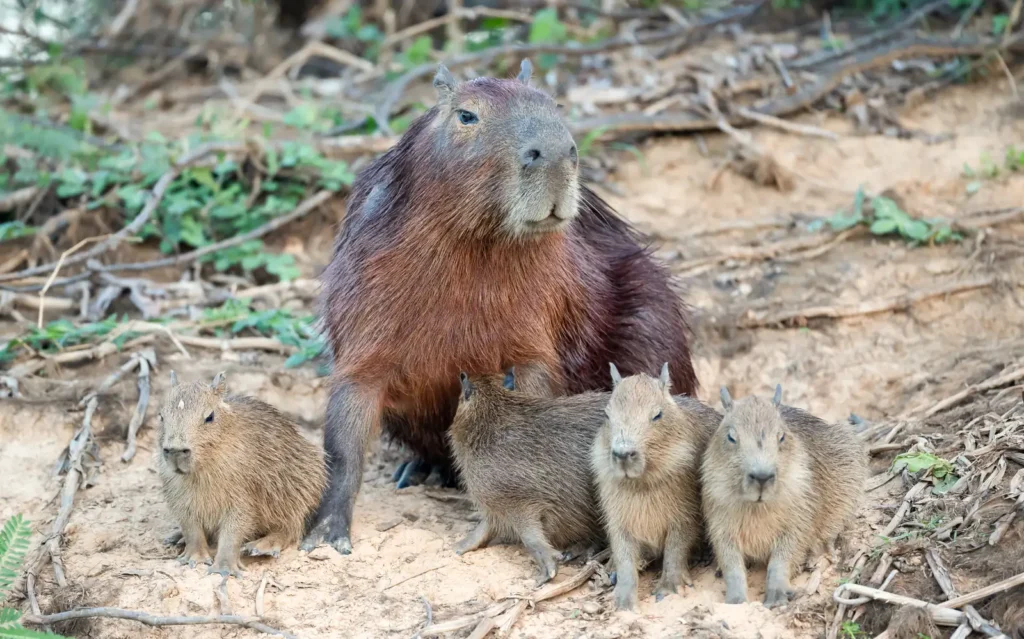
National Capybara Day is an unofficial awareness day dedicated to the capybara (Hydrochoerus hydrochaeris), the largest living rodent on Earth.
Also on 10 July: Don’t Step on a Bee Day · International Skinny Dip Day
How to Celebrate National Capybara Day
National Capybara Day is celebrated each year on 10 July, and in 2026 it falls on a Friday. The day honours the capybara, the world’s largest rodent, and gives people across the globe a reason to learn about this calm, sociable semi-aquatic mammal of South America. It began as a memorial to a much-loved pet capybara and has since grown into a wider celebration of the species, its watery wetland homes, and the conservation of the habitats it depends on.
There are plenty of ways to mark the day, whether you live near a zoo with a capybara enclosure or simply want to learn something new from home. Here are eight ideas to get you started.
- Visit a zoo or wildlife park that houses capybaras and watch how they interact with their group and the water around them.
- Read up on capybara biology and share three surprising facts with friends or family during the day.
- Donate to a wildlife charity working to protect South American wetlands and the species that rely on them.
- Follow a reputable conservation organisation on social media and reshare its capybara content to widen its reach.
- Set up a small craft session for children, drawing or modelling capybaras and the marshes they call home.
- Watch a documentary or short film about the Pantanal, the Amazon basin, or other wetland regions where capybaras live.
- Cook a meal inspired by South American cuisine and use the occasion to talk about the continent’s wildlife.
- Post about the day online using the official hashtags so more people discover the celebration.
What is National Capybara Day?
National Capybara Day is an unofficial awareness day dedicated to the capybara (Hydrochoerus hydrochaeris), the largest living rodent on Earth. Native to almost every country in South America, the capybara is a semi-aquatic herbivore that lives in and around rivers, lakes, marshes, and flooded grasslands. The day combines appreciation for this gentle animal with a quieter message about protecting the wetland ecosystems it inhabits.
It is sometimes called Capybara Appreciation Day, and it has been embraced by zoos, animal welfare groups, wildlife charities, and online communities. The capybara’s relaxed temperament and habit of letting other animals perch on its back have made it a firm internet favourite, which has helped the celebration spread well beyond its original audience.
When is National Capybara Day?
National Capybara Day takes place on 10 July every year. In 2026, that date fell on a Friday. The fixed date makes it easy to plan ahead, whether you are a zoo organising a themed event, a teacher building a lesson around South American wildlife, or simply someone who wants to give the world’s largest rodent a moment in the spotlight.
Plan around National Capybara Day and every key date in July
The Awareness Days Toolkit puts every awareness day for 2026 and 2027 in a spreadsheet, printable PDF calendars and an iCal feed that keeps itself up to date.
The History of National Capybara Day
The date traces back to a pet capybara named Caplin Rous, who was born on 10 July 2007 in Texas. His owner documented his life through a blog and video channel, and Caplin became one of the first widely recognised pet capybaras online. After Caplin died in early 2011, his owner founded a memorial observance and held the first celebration on 10 July that year, choosing his birthday as the date.
His owner also established a foundation to fund capybara veterinary research, helping to turn personal grief into a lasting contribution to animal welfare. Over the years the observance was taken up by a much larger community. Zoos, animal pages, and wildlife accounts adopted the date, and it gradually broadened into the appreciation day many people recognise now, blending its memorial roots with a genuine celebration of the species.
Fun Facts About Capybaras
Capybaras are full of surprises. Here are six facts that show why this oversized rodent has won so many admirers.
- An adult capybara can weigh up to around 79kg and measure more than a metre in length, making it the heaviest rodent in the world.
- They are excellent swimmers and can hold their breath underwater for up to five minutes to escape predators.
- Capybaras have partially webbed toes that help them move easily through water and soft, muddy ground.
- They are highly social and usually live in groups of around ten to twenty, though gatherings can swell to a hundred during the dry season.
- Capybaras are most active at dawn and dusk, grazing and socialising while staying cool and alert.
- Their teeth grow continuously throughout life, so constant grazing on grasses and aquatic plants keeps them worn down.
Why National Capybara Day Matters
While capybaras are currently classed as a species of Least Concern, the wetlands they depend on are under growing pressure. Forests are cleared and marshes are drained to make way for crops and cattle, and these changes affect not only capybaras but the many species that share their habitat. By drawing attention to the world’s largest rodent, National Capybara Day offers an accessible way into bigger conversations about wetland conservation and biodiversity in South America.
The day also celebrates the simple value of curiosity about the natural world. A friendly, photogenic animal can be the spark that gets children and adults alike interested in wildlife, and that interest often leads to greater care for the ecosystems behind it. In that sense, the capybara is an ideal ambassador for the wider cause.
Frequently Asked Questions
Is the capybara really the largest rodent in the world?
Yes. The capybara is the largest living rodent, with adults reaching well over a metre in length and weighing as much as a large dog.
Where do capybaras live in the wild?
They are found across most of South America, always near water, in habitats such as wetlands, riverbanks, flooded grasslands, and the edges of forests.
Are capybaras dangerous to people?
Capybaras are generally calm and not aggressive towards humans. As with all wild animals, they should be observed respectfully and not approached or fed in the wild.
Hashtags
Links






Frequently asked questions
When is National Capybara Day?
National Capybara Day is on 10 July 2027. It is held every year on 10 July.
What is National Capybara Day?
National Capybara Day is an unofficial awareness day dedicated to the capybara (Hydrochoerus hydrochaeris), the largest living rodent on Earth.
More awareness days in July
See all → 17 Jul17 JulSaturdayFun & QuirkyInternationalWorld Emoji Day 2027
 24 Jul24 JulSaturdayHealth & WellbeingUK, US, Australia and worldwideInternational Self-Care Day 2027
 28 Jul28 JulWednesdayEnvironmentInternationalWorld Nature Conservation Day
 30 Jul30 JulFridayCommunityInternationalWorld Friendship Day / International Day Of Friendship 2027
 1–31 JulMonth1 Jul to 31 JulMonthEnvironmentInternationalPlastic Free July 2027
 4 Jul4 JulSundayArts & CultureInternationalIndependence Day 2027
 7 Jul7 JulWednesdayFood & NutritionUK, US, Australia and worldwideWorld Chocolate Day 202710Jul10 Jul10 JulSaturdayFun & QuirkyInternationalInternational Skinny Dip Day