September 2, 2027
| Date | Thursday 2 September 2027 |
|---|---|
| When it falls | Every year on 2 September |
| Where | International |
About Calendar Adjustment Day
Calendar Adjustment Day 2026 was on Wednesday 2 September 2026. The next Calendar Adjustment Day is on Thursday 2 September 2027.
Calendar Adjustment Day is observed on 2 September each year, marking the anniversary of one of the most extraordinary moments in the history of timekeeping: the night in 1752 when Britain went to sleep on 2 September and woke up on 14 September, having officially lost eleven days to bring the country’s calendar into alignment with the rest of Europe and the astronomical year.
What is Calendar Adjustment Day?
Calendar Adjustment Day is an informal commemorative observance that marks the anniversary of Britain’s switch from the Julian calendar to the Gregorian calendar in September 1752. The switch required the removal of eleven days from the calendar to correct a centuries-old discrepancy between the Julian calendar and the actual length of the solar year. The day invites reflection on the history of timekeeping, the relationship between human systems of measurement and astronomical reality, and the surprisingly contentious politics that can surround something as apparently neutral as a calendar.
When is Calendar Adjustment Day?
Calendar Adjustment Day falls on 2 September every year, the date of the last day of the old Julian calendar before the eleven days were removed. When Britons went to sleep on 2 September 1752, they woke up to 14 September 1752, with the intervening days having been officially erased from existence to bring the calendar back into step with the solar year.
Why Was the Calendar Adjusted?
The Julian calendar, introduced by Julius Caesar in 46 BC, was a significant improvement over the Roman calendar it replaced. It introduced the concept of the leap year, adding an extra day every four years to account for the fact that the solar year is approximately 365.25 days long. However, the actual solar year is slightly shorter than 365.25 days: it is approximately 365.2422 days. This small discrepancy, of about eleven minutes per year, accumulated over centuries until the Julian calendar had drifted noticeably out of sync with the astronomical seasons.
By the sixteenth century, the vernal equinox, which should fall around 21 March, was arriving around 10 March according to the Julian calendar. This mattered enormously for the Christian Church, which used the equinox to calculate the date of Easter. Pope Gregory XIII commissioned a reformed calendar, and in 1582 the Gregorian calendar was introduced, removing ten days and introducing a modified leap year rule that prevented the same drift from recurring. Catholic countries adopted it immediately, but Protestant nations, including Britain, were suspicious of a papal initiative and refused to follow.
Britain continued using the Julian calendar for nearly two centuries after most of Europe had switched. By 1750, the discrepancy had grown to eleven days, and British merchants, diplomats, and scientists found it increasingly inconvenient to work with two different calendar systems depending on which country they were dealing with. The Calendar (New Style) Act 1750 finally mandated the switch, taking effect in September 1752.
Why Calendar Adjustment Day Matters
The calendar adjustment story is a fascinating case study in how profoundly timekeeping systems shape human life. The eleven days removed from September 1752 caused genuine disruption: landlords debated whether rent should be paid on the old or new date, annual fairs had to be rescheduled, and the tax year was adjusted, a legacy that persists today, explaining why the British tax year ends on 5 April rather than the more logical 31 March.
The episode also illustrates the relationship between scientific knowledge and political or religious resistance. The Gregorian calendar was more accurate than the Julian calendar by any objective measure, yet its adoption was delayed for nearly two centuries in Britain because of its association with Roman Catholicism. When the switch finally happened, popular legend holds that people rioted in the streets demanding their eleven days back, though historians now regard this as largely mythologised, with the actual public reaction being more subdued.
Calendar Adjustment Day also prompts reflection on how many current systems carry the legacy of historical decisions. The British tax year, the start of the financial year, and various traditional feast days and fairs were all adjusted or fixed at their current positions as a direct result of the 1752 reform.
How to Celebrate Calendar Adjustment Day
- Read about calendar history – The history of the Gregorian reform and Britain’s delayed adoption is genuinely fascinating. The Calendar (New Style) Act 1750 and its consequences are well documented and worth exploring.
- Think about timekeeping systems – Different cultures around the world use different calendars, from the Hebrew and Islamic calendars to the Chinese lunisolar calendar. Calendar Adjustment Day is a good prompt to learn about this diversity.
- Mark the phantom days – Consider what you might have done on 3 to 13 September 1752, the eleven days that technically never existed in British history. It is a thought experiment with a pleasantly vertiginous quality.
- Discuss it with others – Few people know the story of Britain’s calendar adjustment. Sharing it makes for an excellent conversation starter.
- Visit a historical archive – Parish records from 1752 often show the abrupt jump in dates, and many UK archives hold documents from this period that reflect the adjustment.
History of the Calendar Adjustment
The process leading to the 1752 adjustment was a long one. Following the introduction of the Gregorian calendar in 1582, most of Catholic Europe switched rapidly, while Protestant and Orthodox countries continued with the Julian calendar. Scotland adopted the Gregorian calendar in 1600, before England, creating the odd situation where the two nations of Britain operated on different calendar systems for over 150 years.
When the Calendar (New Style) Act 1750 was passed, it specified that 2 September 1752 would be followed immediately by 14 September 1752. It also moved the legal start of the new year from 25 March to 1 January, aligning Britain with the continental European convention. The British Empire, including the American colonies at the time, adopted the change simultaneously.
Noteworthy Facts About Calendar Adjustment Day
- Scotland adopted the Gregorian calendar in 1600, meaning it switched 152 years before England and Wales.
- Russia did not adopt the Gregorian calendar until 1918, following the Russian Revolution. This is why events of October 1917 under the Julian calendar are sometimes called the November Revolution in other countries, where the Gregorian calendar placed the same events in November.
- The British tax year ends on 5 April because the financial year previously ended on 25 March (Lady Day, the old New Year). After the calendar change, eleven days were added to maintain the equivalent solar date, producing 5 April.
- The Gregorian calendar itself is not perfectly accurate: it gains one day approximately every 3,030 years. A further reform will eventually be needed, though not for many centuries.
- George Washington’s birthday illustrates the confusion caused by the two calendars. He was born on 11 February 1731 under the Julian calendar, which corresponds to 22 February 1732 under the Gregorian calendar, which is why his birthday is now celebrated on 22 February.
Hashtags for Calendar Adjustment Day
- #CalendarAdjustmentDay
- #CalendarHistory
- #GregorianCalendar
- #TimekeepingHistory
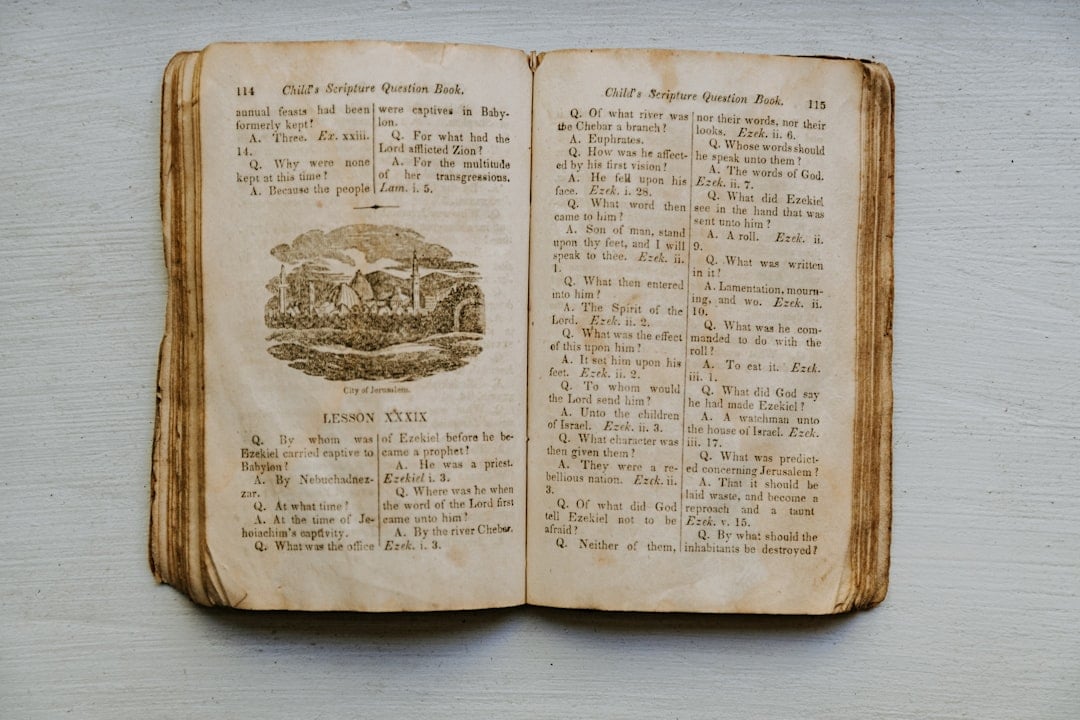
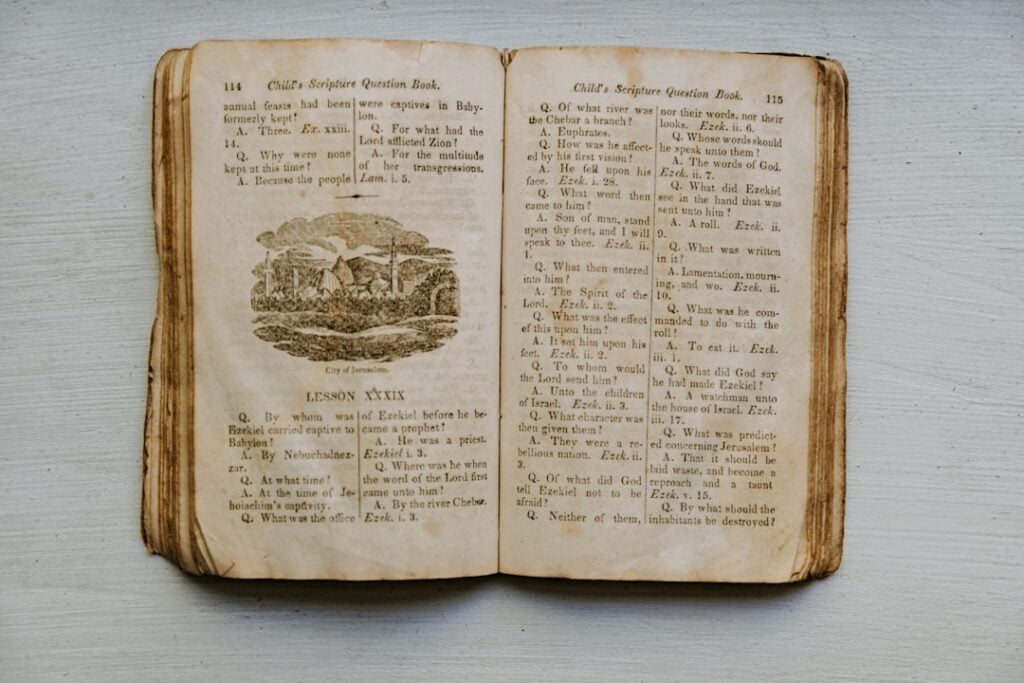
Featured image: Photo by Kelly Sikkema on Unsplash.
When is Calendar Adjustment Day?
| Year | Date |
|---|---|
| 2026 | Wednesday 2 September |
| 2027 | Thursday 2 September |
| 2028 | Saturday 2 September |







2026 Awareness Days Wall Planner
Every key awareness day at a glance. Perfect for offices, staff rooms, and team planning.
View Calendar →