
Bolivia Independence Day 2027
Friday 6 August 2027
Bolivia Independence Day is the national day of Bolivia, observed every year on 6 August. It commemorates the signing of the country’s Declaration of Independence in 1825, which ended more than two centuries of Spanish colonial rule.
Add this date to my calendarA full year of awareness dates, ready to edit, print or sync.
Get the full 2027 awareness days calendar£49.99 a year. Renews annually.
On this page
Dates and event details
Bolivia Independence Day 2026 was on Thursday 6 August 2026. The next Bolivia Independence Day is on Friday 6 August 2027.
| Where | Bolivia |
|---|
About Bolivia Independence Day
Bolivia Independence Day is the national day of Bolivia, observed every year on 6 August. It commemorates the signing of the country’s Declaration of Independence in 1825, which ended more than two centuries of Spanish colonial rule. In 2027 it falls on Friday 6 August, and is marked across the country with military parades, folk dancing, fireworks and civic ceremonies.
When and Where is Bolivia Independence Day Celebrated?
Bolivia Independence Day is a fixed-date public holiday held on 6 August each year. In 2027 it falls on a Friday. It is observed nationwide, with the largest official ceremonies traditionally held in Sucre, the constitutional capital and birthplace of the republic, and in La Paz, the seat of government. Celebrations also take place wherever Bolivian communities have settled around the world, from neighbouring South American countries to cities in North America and Europe.
The Story Behind Bolivia Independence Day
The territory that became Bolivia was known under Spanish rule as Charcas, or Upper Peru, and had been governed from the colonial centre at Chuquisaca, the city known today as Sucre. The struggle to break free of Spain was long and costly. It began on 25 May 1809 with the Chuquisaca Revolution, often called the “Primer grito libertario”, or first cry for freedom, and widely regarded as one of the earliest popular uprisings in Spanish America. The wars that followed lasted sixteen years.
The Venezuelan general Simón Bolívar, the great liberator of much of South America, was central to the cause, but it was his trusted ally Antonio José de Sucre who delivered the decisive military victories in Upper Peru. On 6 August 1825, a congress convened in Chuquisaca and adopted the Act of Independence, formally proclaiming the birth of a sovereign republic. The document was signed in the Casa de la Libertad, a building that still stands in Sucre and is today a national monument.
The new nation was named Bolivia in honour of Bolívar, who briefly served as its first head of state before handing power to Sucre, after whom the constitutional capital was later renamed. Bolívar had favoured uniting the territory with Peru, but local leaders pressed for full independence, and the country took his name partly as a gesture to secure his goodwill. The choice of 6 August carried added weight because it echoed the anniversary of the Battle of Junín, a key engagement in the wider South American independence wars. In 2025 Bolivia marked the bicentenary of these events, two hundred years since the republic was founded.
Traditions and Customs
The day blends solemn civic ritual with exuberant folk celebration, reflecting Bolivia’s rich indigenous and Andean heritage.
- Military and civic parades – Armed forces, police, schoolchildren and civic groups march through the main squares of Sucre, La Paz and other cities, often watched by national leaders.
- Folk dances – Vibrant performances of the Diablada, Morenada and Caporales fill the streets, with dancers in elaborate, colourful costumes telling stories drawn from history and tradition.
- Andean music – The sound of charangos, panpipes and drums accompanies the festivities, lending an unmistakably Andean character to the celebrations.
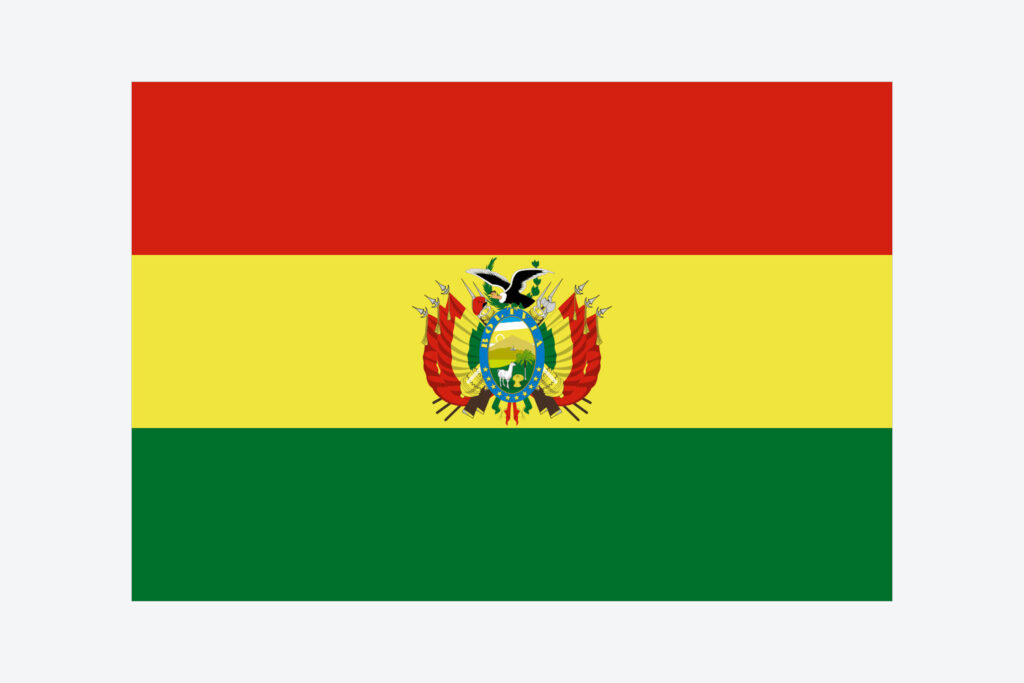
- Flags and decorations – The red, yellow and green national flag, alongside the multicoloured indigenous wiphala, is hung from homes, balconies and public buildings.
- Fireworks and gatherings – Evening fireworks, gun salutes, street fairs and shared meals bring families and neighbours together to honour the nation’s founding.
Ways to Mark Bolivia Independence Day
Whether you are Bolivian, have Bolivian heritage or simply want to learn about the country, there are many ways to take part.
- Attend a parade or community event – If you live near a Bolivian community, look for local festivities, cultural shows or embassy receptions held to mark the day.
- Cook a Bolivian dish – Try making salteñas, silpancho or a hearty plate of pique macho to bring a taste of the country to your table.
- Learn the history – Read about the Chuquisaca Revolution, Simón Bolívar and Antonio José de Sucre to understand how the republic came to be.
- Listen to Andean music – Seek out recordings featuring the charango and panpipes, or watch performances of the Diablada and Morenada online.
- Share the colours – Display the Bolivian flag or wiphala, or wear the national colours of red, yellow and green to show your support.
- Explore Bolivian culture – Discover the landscapes of the Andes, the Salar de Uyuni salt flats and Lake Titicaca through books, documentaries or travel writing.
Facts and Figures
- Bolivia declared its independence on 6 August 1825, ending roughly 280 years of Spanish colonial control.
- The country is named after Simón Bolívar, making it one of the few nations in the world named after a single individual.
- Bolivia has two capitals: Sucre is the constitutional capital and home to the Supreme Court, while La Paz is the seat of the executive and legislative branches of government.
- The Declaration of Independence was signed in the Casa de la Libertad in Sucre, which survives today as a museum and national landmark.
- Bolivia has a population of around 12 million people and is one of the most ethnically and culturally diverse countries in South America.
Links
Hashtags
Share Bolivia Independence Day with your community using #BoliviaIndependenceDay and #BoliviaIndependenceDay2027. Whether you mark the occasion with a Bolivian meal, a folk song or simply by learning more about the country’s history, every bit of awareness helps keep this proud tradition alive.
Frequently asked questions
What is Bolivia Independence Day?
Bolivia Independence Day is the national day of Bolivia, commemorating the signing of the country’s Declaration of Independence from Spain on 6 August 1825. It is celebrated with parades, folk dancing, music and fireworks across the country.
When is Bolivia Independence Day in 2027?
Bolivia Independence Day falls on Friday 6 August 2027. The date is fixed and is observed on 6 August every year.
Why is Bolivia named after Simón Bolívar?
The republic was named in honour of Simón Bolívar, the Venezuelan general who led much of South America’s fight for independence. Local leaders chose the name partly to recognise his role and partly to secure his support for full independence rather than union with Peru.
More awareness days in August
See all → 8 Aug8 AugSundayAnimals & WildlifeUK, US, Australia and worldwideInternational Cat Day 2027
 19 Aug19 AugThursdayCommunityInternationalWorld Humanitarian Day 2027
 19 Aug19 AugThursdayArts & Culture AwarenessInternationalWorld Photography Day 2027
 23 Aug – 6 SepWeek23 Aug to 6 SepWeekSeasonalInternationalBack to School 2027