CalendarCultural tradition
Chinese New Year (Lunar New Year)
Saturday 6 February 2027
ConfirmedDate confirmed with chinesenewyear.net, checked 18 November 2026.
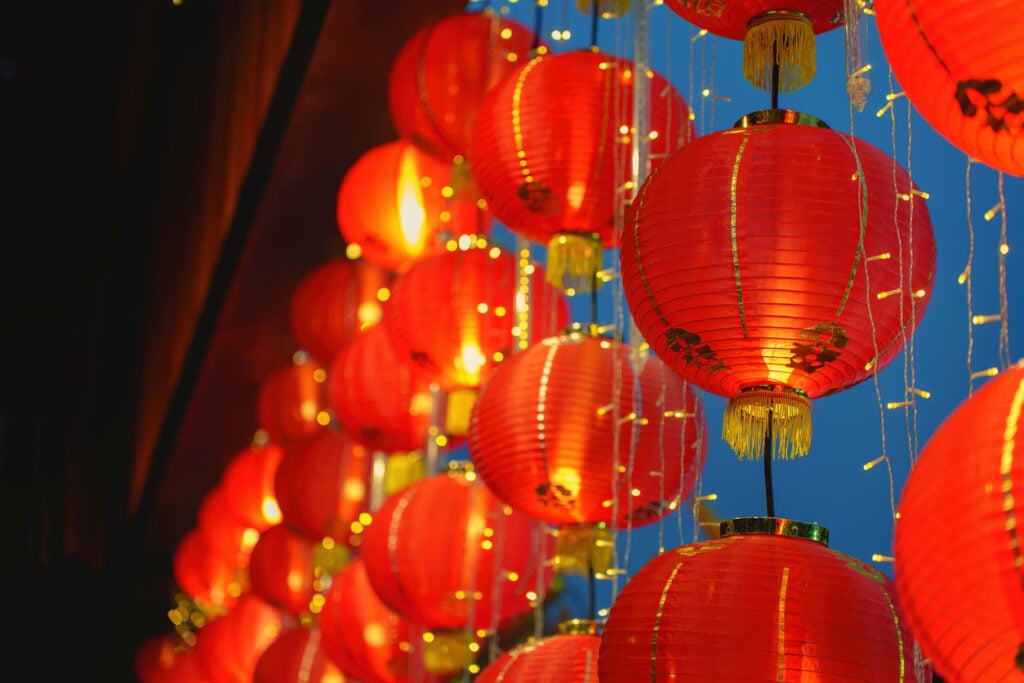
Chinese New Year, also called Lunar New Year or Spring Festival, is the most important holiday in Chinese culture and starts a new year on the lunisolar calendar.
- Rule
- Set each year by the organiser
- Length
- One day
- Type
- Cultural tradition · public holiday
- About
- Arts and culture, Nations and places
- Standing
- No owner; kept by custom
- Observed in
- Worldwide
- Started in
- China
- Search rank among cultural traditions
- UK: 5th of 25 · US: 7th of 25
- Official website
- chinesenewyear.net
- Hashtag
- #ChineseNewYear
Download the 2027 template Get the data Every date on this site as an editable calendar, or as an API and data feed.
How big it is
- US24%
- Singapore9%
- UK9%
- Australia7%
- Canada6%
Dates by year
| 2027 | Saturday 6 February 2027 |
|---|
About Chinese New Year (Lunar New Year)
Chinese New Year, also known as Lunar New Year or the Spring Festival, falls on Saturday 6 February 2027, ushering in the Year of the Goat. The festival marks the start of a new year on the traditional Chinese lunisolar calendar and is the most important holiday in Chinese culture. Celebrations begin on New Year’s Eve and run for fifteen days, ending with the Lantern Festival on 20 February 2027.
The Story Behind Chinese New Year
Chinese New Year has been celebrated for more than 3,500 years, with origins traced back to the Shang Dynasty (c. 1600 to 1046 BCE), when families held sacrificial ceremonies in honour of gods and ancestors at the start of each year. The festival evolved over centuries, absorbing local customs, religious beliefs, and agricultural rituals tied to the end of winter and the start of the spring planting season.
One of the most famous legends connected to Chinese New Year is the story of Nian, a fearsome beast said to emerge each year to attack villages. According to tradition, villagers discovered that Nian was terrified of loud noises, bright lights, and the colour red. To this day, Chinese New Year celebrations are marked by red decorations, firecrackers, and lion dances, all rooted in the effort to drive Nian away.
The fifteen-day festival follows the lunar calendar, which is why the date shifts each year between late January and mid-February. Each year is associated with one of twelve zodiac animals, cycling through Rat, Ox, Tiger, Rabbit, Dragon, Snake, Horse, Goat, Monkey, Rooster, Dog, and Pig. 2027 is the Year of the Goat, the eighth animal in the zodiac, associated with gentleness, creativity, and calm.
Today the festival is celebrated not only across mainland China, Taiwan, Hong Kong, and Macau, but also throughout Southeast Asia, in Chinese diaspora communities worldwide, and increasingly as a mainstream cultural event in cities such as London, San Francisco, Sydney, and New York.
When and Where is Chinese New Year Celebrated?
Chinese New Year’s Day in 2027 falls on Saturday 6 February. The Spring Festival public holiday in China typically runs for around a week from New Year’s Eve. The Lantern Festival, which marks the end of celebrations, takes place on Saturday, 20 February 2027. Major celebrations are held in Beijing, Shanghai, Hong Kong, Singapore, Kuala Lumpur, and across Chinatowns worldwide. London hosts one of the largest celebrations outside Asia, with parades and performances in Trafalgar Square and around Chinatown.
Traditions and Customs
Chinese New Year is rich with rituals passed down through generations:
- Spring cleaning – Homes are thoroughly cleaned before the new year to sweep away bad luck. Cleaning during the festival itself is avoided, as it is thought to remove good fortune.
- Red decorations – Red lanterns, Chinese knots, and spring couplets featuring poetic blessings are hung at doors and windows to invite prosperity and ward off evil.
- Reunion dinner – On New Year’s Eve, families gather for a lavish meal often featuring fish (which sounds like “surplus” in Mandarin), dumplings, sticky rice cake, and longevity noodles.
- Red envelopes – Known as hongbao or lai see, these red packets containing money are given by elders to children and unmarried adults to bring good luck and blessings.
- Lion and dragon dances – Performed in streets, restaurants, and shopping centres to drive away evil spirits and bring prosperity for the year ahead.
Ways to Celebrate Chinese New Year
Whether or not you have Chinese heritage, you can mark the festival in meaningful ways:
- Attend a parade – Most major cities with Chinese communities host public parades with lion dances, drumming, and food stalls. Check listings for London, Manchester, New York, and other Chinatowns.
- Cook a traditional dish – Try making dumplings, spring rolls, or longevity noodles at home. Each dish carries symbolic meaning.
- Decorate with red – Hang red lanterns, paper cuts, or couplets at your home or workplace.
- Give red envelopes – Share hongbao with family, friends, or colleagues with even-numbered amounts inside (avoiding the number 4, which sounds like “death” in Mandarin).
- Visit a temple or cultural centre – Many host special performances, calligraphy demonstrations, and tea ceremonies.
- Learn about your zodiac animal – Find out what year you were born under and read about the personality traits and fortunes associated with that animal.
Facts and Figures
- Chinese New Year 2027 begins on 6 February and is the Year of the Goat, the eighth animal in the Chinese zodiac.
- The Spring Festival travel period, known as Chunyun, sees billions of trips made within China, making it the largest annual human migration on earth.
- The traditional reunion dinner is considered the most important meal of the year in Chinese culture.
- Chinese New Year is a public holiday in countries including China, Singapore, Malaysia, Indonesia, the Philippines, South Korea, and Vietnam.
- The festival ends with the Lantern Festival on the 15th day of the lunar new year, which falls on 20 February 2027.
Frequently Asked Questions
What is Chinese New Year?
Chinese New Year, or Lunar New Year, is the most important festival in Chinese culture, marking the start of the new year on the lunisolar calendar. Celebrations last fifteen days and centre on family reunions, food, and traditions designed to bring good fortune.
When is Chinese New Year in 2027?
Chinese New Year falls on Saturday 6 February 2027, beginning the Year of the Goat. The fifteen-day festival ends on 20 February 2027 with the Lantern Festival.
What does the Year of the Goat mean?
The Goat is the eighth animal in the Chinese zodiac and is associated with gentleness, creativity, and calm. Those born in a Year of the Goat are traditionally thought to be kind, artistic, and considerate, valuing peace and harmony.
Related Awareness Days
- Cinco de Mayo – Another major cultural celebration with deep traditions and worldwide diaspora reach.
- Halloween – A seasonal celebration steeped in folklore, much like Chinese New Year’s legend of Nian.
- Mexican Independence Day – A national festival celebrated with parades, food, and family gatherings.
Links
Related awareness days
- Burns NightCultural traditionConfirmed
- Chinese / Lunar New YearCultural traditionConfirmed
- Casimir Pulaski DayPublic holidayConfirmed
- National Irish-American Heritage MonthCelebrationConfirmed
- Tartan DayCelebrationConfirmed
- Cinco de MayoCultural traditionConfirmed
More from the calendar
February awareness daysInternationalArts & Culture AwarenessArts, Culture & HeritageSeasonal CelebrationsTravel Awareness DaysFull calendar
From the Almanac
Record 75355. Guide last edited 28 September 2026. Spotted a wrong date? Tell us and we will check it with the organiser.
Get this record as data