

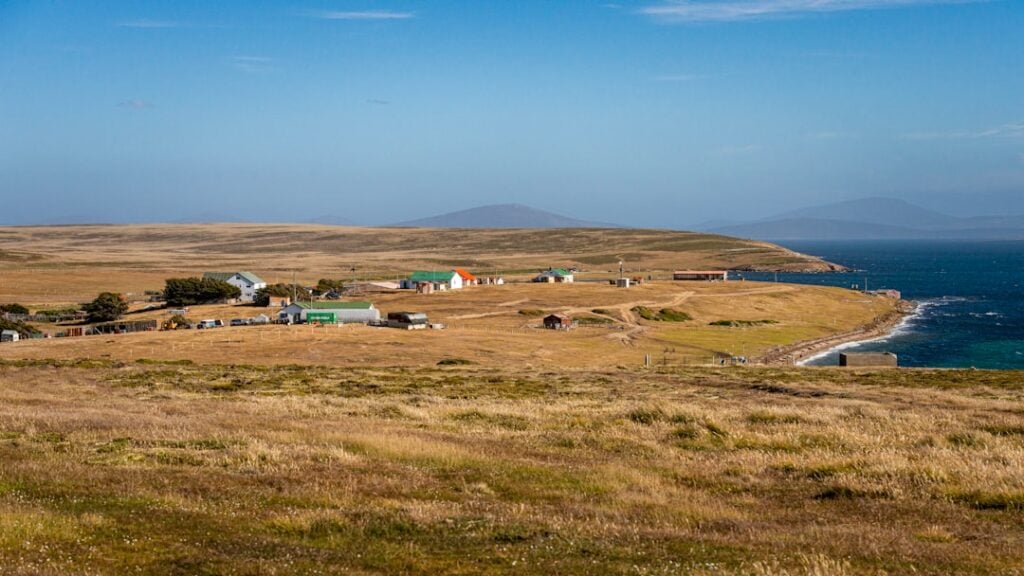
Falkland Islands – Liberation Day 2027
Monday 14 June 2027 · every year on 14 June
Liberation Day is the national day of the Falkland Islands, observed every year on 14 June.
Also on 14 June: Men’s Health Week · Loneliness Awareness Week · Diabetes Awareness Week
The Story Behind Liberation Day
Liberation Day is the national day of the Falkland Islands, observed every year on 14 June. It marks the date in 1982 when Argentine forces occupying the islands surrendered to British troops, ending a 74-day conflict and returning the Falklands to British administration. The day is a public holiday across the archipelago and is honoured with solemn ceremonies of remembrance and thanksgiving in the capital, Stanley.
The events that gave rise to Liberation Day began in the early hours of 2 April 1982, when Argentine forces launched an amphibious invasion of the Falkland Islands in an operation codenamed Rosario. The small Royal Marines garrison was quickly overwhelmed, and the islands’ roughly 1,800 inhabitants found themselves under military occupation. Argentina had long claimed sovereignty over the islands, which it calls the Islas Malvinas, and the ruling military junta in Buenos Aires hoped a swift seizure would rally domestic support. The islanders, almost all of British descent, wished to remain British.
The British government responded within days. On 5 April 1982 a naval task force set sail from Portsmouth and other ports for the South Atlantic, a journey of some 8,000 miles. Over the following weeks the conflict escalated at sea, in the air, and eventually on land. British forces landed at San Carlos Water on East Falkland on 21 May and began a difficult advance across cold, boggy terrain towards Stanley. Fierce battles were fought for the high ground surrounding the capital, including at Goose Green, Mount Longdon, Two Sisters, Mount Harriet, Wireless Ridge, and Mount Tumbledown.
By 14 June 1982, British troops had fought their way into the outskirts of Stanley. With his position no longer tenable, General Mario Menendez, the commander of the Argentine garrison, agreed to a ceasefire. At around 21:00 local time that evening he surrendered to Major General Jeremy Moore, the commander of British land forces. The word “unconditional” was removed from the surrender document during negotiation, and the Argentine units were permitted to retain their flags and remain under the control of their own officers. The fighting was over, and the Falkland Islands were free.
In total, 255 British servicemen, 649 Argentine personnel, and three Falkland Islanders lost their lives in the conflict. Liberation Day exists both to celebrate the return of the islands to the islanders and to remember everyone who died.
When and Where is Liberation Day Celebrated?
Liberation Day falls on 14 June every year, the anniversary of the 1982 surrender. In 2027 the anniversary falls on Monday 14 June. It is a public holiday in the Falkland Islands, and the principal commemorative ceremony is held on the 14th. The day is marked chiefly in Stanley, the island capital, though Falkland Islanders and veterans around the world also pause to remember.
Plan around Falkland Islands – Liberation Day and every key date in June
The Awareness Days Toolkit puts every awareness day for 2026 and 2027 in a spreadsheet, printable PDF calendars and an iCal feed that keeps itself up to date.
Traditions and Customs
The commemorations in Stanley follow a long-established pattern that blends solemn remembrance with quiet celebration.
- Thanksgiving service – A service of thanksgiving and remembrance is held at Christ Church Cathedral, the southernmost Anglican cathedral in the world, bringing together islanders, veterans, and serving personnel.
- Wreath laying at the Liberation Memorial – Wreaths are laid at the Liberation Monument, which stands in front of the Secretariat and bears the names of the British units that took part in the campaign.
- Military parade – A parade and ceremony take place at around 11am, with representatives of the Royal Navy, Army, Royal Air Force, the Falkland Islands Defence Force, and the Merchant Navy.
- Civic reception – The Falkland Islands Government hosts a civic reception to which residents and members of the armed services are invited, gathering the community together after the formal ceremonies.
- Veterans returning home – Many British veterans of the 1982 campaign travel back to the islands for significant anniversaries, often joined by youth groups and the families of those who served.
Ways to Celebrate Liberation Day
You do not need to be in Stanley to mark Liberation Day. There are many ways to reflect on the occasion and learn from it.
- Learn the history – Read a reliable account of the 1982 conflict from a source such as the Imperial War Museums or the National Army Museum to understand the events behind the day.
- Attend a remembrance event – Veterans’ associations in the United Kingdom and elsewhere hold their own services on or near 14 June that are often open to the public.
- Support a veterans’ charity – Organisations such as the South Atlantic Medal Association 82 (SAMA82) support those who served and their families, and welcome donations and volunteers.
- Visit a memorial – The Falklands campaign is commemorated at the National Memorial Arboretum in Staffordshire and at memorials across the country.
- Speak to a veteran – First-hand testimony brings history to life. Many veterans are willing to share their experiences with schools and community groups.
- Reflect on the islanders’ story – Read about life in the Falklands today, a self-governing British Overseas Territory whose community has rebuilt and thrived since 1982.
Facts and Figures
- The Falklands conflict lasted 74 days, from the Argentine invasion on 2 April 1982 to the surrender on 14 June 1982.
- The British task force travelled around 8,000 miles to reach the South Atlantic.
- 255 British servicemen, 649 Argentine personnel, and three Falkland Islanders died during the conflict.
- General Mario Menendez surrendered to Major General Jeremy Moore at approximately 21:00 local time on 14 June 1982.
- The Falkland Islands remain a self-governing British Overseas Territory, and in a 2013 referendum islanders voted overwhelmingly to retain that status.
Hashtags
Links
Featured image: Photo by Paul Carroll on Unsplash.




Frequently asked questions
What is Liberation Day?
Liberation Day is the national day of the Falkland Islands, held on 14 June each year. It commemorates the surrender of Argentine forces in 1982 that ended the occupation of the islands and honours all those who died in the conflict.
When is Liberation Day in 2027?
Liberation Day falls on Monday 14 June 2027, the anniversary of the 1982 surrender.
Why did the Falklands War happen?
Argentina had long claimed sovereignty over the islands and invaded on 2 April 1982. The United Kingdom dispatched a task force to retake the territory, whose population wished to remain British, and the campaign ended with the Argentine surrender on 14 June.
More awareness days in June
See all → 14–20 JunWeek14 Jun to 20 JunWeekFood & NutritionUKNational Picnic Week
 14–20 JunWeek14 Jun to 20 JunWeekHealth & WellbeingInternationalMen’s Health Week 2027
 19 Jun19 JunSaturdayGlobal & NationalUSJuneteenth
 20 Jun20 JunSundayJune Awareness DaysUKFather’s Day UK
 21 Jun21 JunMondaySeasonalInternationalSummer Solstice 2027
 21 Jun21 JunMondayArts & CultureInternationalWorld Music Day
 22 Jun22 JunTuesdayGlobal & NationalInternationalWindrush Day 2027
 28 Jun – 11 JulWeek28 Jun to 11 JulWeekSeasonalInternationalWimbledon 2027